

2 Cranks vs 3 Cranks Hospital Bed: Complete Guide by Henyuan Medical
When it comes to manual hospital beds, understanding the difference between 2 crank and 3 crank hospital beds is crucial for healthcare providers, home care patients, and facility managers. Henyuan Medical offers high-quality, reliable manual hospital beds designed for comfort, safety, and ease of use. In this guide, we will cover key differences, technical specifications, real-life applications, and a comprehensive buying guide to help you make the right decision.
Understanding the Basics
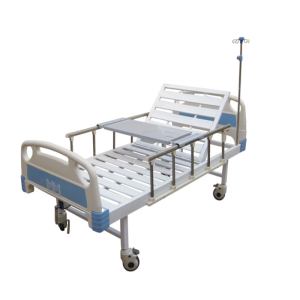
2-crank hospital bed
- Functionality: Adjusts the backrest and the leg/knee section.
- Use case: Suitable for basic positioning and comfort, where overall bed height adjustment is not a primary need.
3-crank hospital bed
- Functionality: Adjusts the backrest, leg/knee section, and the overall height of the bed.
- Use case: Provides greater flexibility and comfort, especially for patients who need frequent repositioning. The height adjustment is beneficial for patient transfers, caregiver ergonomics, and ensuring proper posture.
2 Crank Manual Hospital Bed
A 2 crank hospital bed typically features two hand cranks:
-
Backrest Adjustment: Allows raising and lowering the patient’s upper body to achieve a comfortable angle, usually from 0° to 75°.
-
Legrest Adjustment: Provides control over the knee or lower leg elevation, often from 0° to 40°.
These beds are commonly used in hospitals and home care settings where basic positional adjustments are sufficient. They are cost-effective, easy to operate, and ideal for patients who do not require frequent height adjustments.
Related Keywords: manual crank hospital bed, backrest adjustment, legrest adjustment, hospital bed features.
3 Crank Manual Hospital Bed
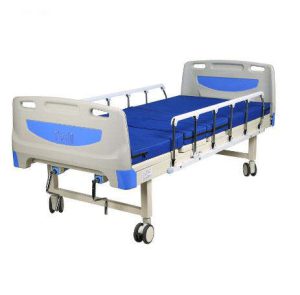
The 3 crank hospital bed adds a third crank for height adjustment:
-
Backrest Adjustment: 0°–75° for optimal patient comfort.
-
Legrest Adjustment: 0°–40° to reduce pressure points.
-
Height Adjustment: Enables caregivers to raise or lower the bed for easier patient transfer, medical procedures, and improved ergonomics.
Optional configurations may include Trendelenburg or Reverse Trendelenburg functionality, allowing tilting of the bed for specific therapeutic purposes.
Related Keywords: 3 crank hospital bed, height adjustment, Trendelenburg function, manual bed, patient comfort.
2 Cranks vs 3 Cranks: Feature Comparison
| Feature | 2 Crank Manual Bed | 3 Crank Manual Bed |
|---|---|---|
| Backrest Adjustment | Yes | Yes |
| Legrest Adjustment | Yes | Yes |
| Height Adjustment | No | Yes |
| Trendelenburg Function | Optional | Optional |
| Cost | Lower | Higher |
| Best Use | Basic patient care, home use | Full care, hospital, adjustable ergonomics |
From this table, it is clear that 3 crank beds offer enhanced functionality, making them more suitable for intensive care or situations where caregiver convenience is critical.
Real-Life Applications by Henyuan Medical
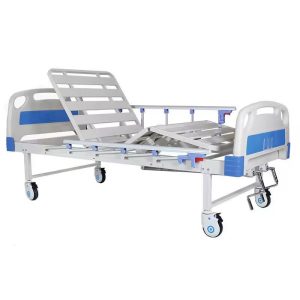
2-crank hospital bed
- Functions: Adjusts the patient’s backrest to sit up or recline, and raises or lowers the knee section to elevate the legs.
- Best for:
- Low-budget environments: They are significantly less expensive than 3-crank or electric beds, making them popular in resource-limited areas or for home care.
- Patients with basic needs: These beds are suitable for patients who are bedridden but only need basic repositioning for comfort and to prevent pressure sores.
- Short-term recovery: Ideal for post-surgical recovery or temporary illnesses where the patient does not need complex, frequent adjustments.
- Power-independent settings: The manual operation ensures the bed remains functional in places with unreliable power, such as emergency and disaster relief centers.
- Limitations: All adjustments must be done manually by a caregiver, which requires physical effort. A patient with limited mobility cannot reposition themselves independently.
3-crank hospital bed
- Functions: Adjusts the backrest, the knee section, and raises and lowers the entire bed.
- Best for:
- Caregiver ergonomics: Adjusting the bed height prevents back strain and injury for caregivers when helping a patient in and out of bed or performing medical tasks.
- Patients with severe conditions: Severely ill or heavily dependent patients often require the bed to be raised and lowered for different clinical procedures.
- Enhanced patient safety: The ability to lower the bed closer to the floor reduces the risk of injury from patient falls.
- Easier transfers: A caregiver can adjust the bed height to be level with a wheelchair, gurney, or walker, making patient transfers safer and more comfortable.
- Disadvantages: A 3-crank bed is more expensive than a 2-crank bed. While it offers more features, it still requires manual labor from a caregiver and is not as convenient as a powered electric bed.
Case 1: Home Care Patient
-
Patient: 78-year-old recovering from hip surgery.
-
Requirement: Easy back and leg adjustment for daily comfort.
-
Solution: Henyuan Medical 2 crank manual hospital bed provided a safe, cost-effective solution without unnecessary height adjustment.
Case 2: Rehabilitation Facility
-
Patient Group: Multiple patients requiring frequent transfers and physiotherapy.
-
Requirement: Adjustable bed height for caregivers to reduce strain.
-
Solution: Henyuan Medical 3 crank hospital bed improved workflow efficiency and patient safety.
These examples demonstrate how understanding the specific needs of patients and caregivers helps in selecting the appropriate bed type.
Technical Specifications
| Specification | 2 Crank Bed | 3 Crank Bed |
|---|---|---|
| Frame Material | Powder-coated steel | Powder-coated steel |
| Maximum Load | 200–250 kg | 200–250 kg |
| Bed Surface | Perforated steel for ventilation | Perforated steel for ventilation |
| Side Rails | Optional foldable | Optional foldable |
| Dimensions | 200cm × 90cm | 200cm × 90cm |
| Crank Handles | 2 | 3 |
| Mattress Compatibility | Standard hospital mattress | Standard or specialized mattress |
Buying Guide: How to Choose the Right Bed
2-crank hospital beds
- Functionality: Adjusts the head and knee sections to help with comfort, basic positioning, and transitions to a sitting position.
- Best for: Patients who have some mobility and need assistance with head and knee elevation, and for those seeking a budget-friendly, straightforward bed.
- Ideal settings: Home care and general hospital wards.
3-crank hospital beds
-
Functionality:Adds a third crank to control the overall bed height, in addition to the head and knee adjustments.
-
Best for:Patients who require a wider range of motion and caregivers who need to frequently adjust the bed’s height to assist the patient or perform care tasks.
-
Ideal settings:
Environments where caregivers need to raise the bed to a more convenient height for procedures or to lower it to the floor for safety.
How to decide
-
Assess the user’s needs:A patient with limited mobility and a need for more frequent transfers may benefit from the height adjustment a 3-crank bed provides. A patient who only needs minor position changes may be fine with a 2-crank model.
-
Consider caregiver needs:If you are the primary caregiver, the ability to adjust the bed’s height can reduce strain and make tasks easier.
-
Factor in your budget:2-crank beds are generally more affordable, making them a good choice for basic needs and budget constraints.
-
Consider the duration of use:For temporary recovery, a 2-crank bed might suffice. For long-term care, the extra functionality of a 3-crank bed may be a better investment for long-term comfort and care.
-
Assess Patient Needs: Determine if height adjustment is critical.
-
Consider Caregiver Ergonomics: Frequent transfers may require 3 crank beds.
-
Budget Constraints: 2 crank beds are more cost-effective; 3 crank beds provide more functionality.
-
Optional Features: Side rails, Trendelenburg position, perforated bed surface for ventilation.
-
Durability & Safety: Ensure the bed frame supports intended patient weight and complies with safety standards.
Summary
Choosing between a 2 crank and 3 crank hospital bed depends on the patient’s condition, caregiver requirements, and budget. Henyuan Medical offers both options with high-quality materials, ergonomic design, and reliable manual operation. By understanding the differences in crank functionality, you can make an informed decision that enhances patient comfort and caregiver efficiency.
