

Hospital Bed Full Rails vs Half Rails: What You Need to Know
Hospital beds are essential for providing patient comfort, safety, and care efficiency. Among the most debated features is the bed rails configuration. Specifically, the choice between full rails vs half rails impacts patient safety, mobility, and caregiver workflow. Henyuan Medical, a leading manufacturer of hospital beds, offers a full range of options to meet diverse patient needs.
In this guide, we will explore the differences, applications, and advantages of each rail type, with technical specifications, real-life cases, and an expert selection guide.
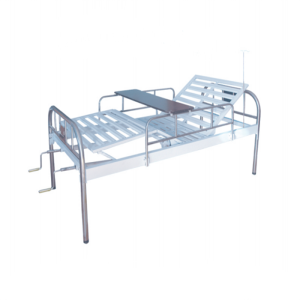
1. Understanding Full Rails and Half Rails
Full rails
-
Purpose:
To prevent patients from falling out of bed and to deter unsafe exit attempts.
-
Best for:
Patients at a high risk of falling, individuals with cognitive impairments like dementia, or those who may become agitated during sleep and roll out of bed.
-
Considerations:
Full rails can make the patient feel trapped, and they should always be used under the supervision of a caregiver to ensure safety and prevent injuries.
Half rails
-
Purpose:
To provide support and prevent a patient from falling out of one side of the bed, while still allowing access from the other side.
-
Best for:
Patients who need mild support, who are able to move in and out of bed with some assistance, or who need a place to store a remote control or other small items.
-
Considerations:
Half rails are easier to navigate for getting in and out of bed and offer a balance of safety and independence, but they may not be sufficient for patients with a high risk of falling.
Key differences at a glance
|
Feature
|
Full Rails
|
Half Rails
|
|---|---|---|
|
Coverage
|
Extends the entire length of the bed
|
Covers only a portion of the bed’s length
|
|
Primary Use
|
Maximum fall protection
|
Support and safety with greater independence
|
|
Ideal User
|
High-risk fall patients, those with cognitive decline
|
Patients with mild fall risk, those needing assistance to get in/out
|
|
Mobility
|
Limits patient mobility
|
Allows for easier movement in and out of bed
|
Full Rails:
-
Extend the entire length of the bed, from head to foot.
-
Provide maximum protection against falls and accidental rolling.
-
Ideal for long-term bedridden patients or those with high fall risk.
Half Rails:
-
Cover partial sections, typically the head and upper body or midsection.
-
Offer balance between safety and mobility, allowing patients to enter or exit the bed easily.
-
Suitable for ambulatory patients or those with moderate fall risk.
Expert Insight: Henyuan Medical’s full rails are designed with robust steel frames and smooth sliding mechanisms, while half rails feature adjustable height and locking systems to maximize both safety and accessibility.
2. Why the Choice Matters
Choosing between full rails and half rails affects:
-
Patient Safety: Full rails prevent accidental falls but may limit independence.
-
Mobility & Comfort: Half rails allow easier repositioning and getting in/out of bed.
-
Caregiver Convenience: Full rails may require more effort to access the patient; half rails simplify caregiving tasks.
-
Regulatory Compliance: Healthcare facilities must consider CMS and OSHA guidelines regarding restraint use.
Case Example: A rehabilitation center equipped with Henyuan Medical half-rail beds observed higher patient satisfaction and easier caregiver intervention, whereas full-rail beds were prioritized in high-risk fall wards.
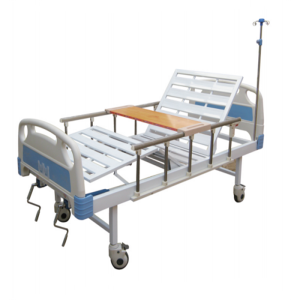
3. Types of Henyuan Medical Bed Rails
| Rail Type | Coverage | Recommended Use | Key Features |
|---|---|---|---|
| Full Rails | Entire bed length | High fall risk, long-term bedridden | Heavy-duty steel, lockable, integrated panels |
| Half Rails | Upper or midsection | Ambulatory patients, moderate risk | Adjustable height, foldable, partial restraint |
Henyuan Medical designs both manual and semi-electric models, ensuring compatibility with adjustable hospital beds.
4. Technical Specifications
| Specification | Henyuan Medical Full Rail | Henyuan Medical Half Rail |
|---|---|---|
| Material | Powder-coated steel | Powder-coated steel |
| Height | 24–30 inches | 12–18 inches adjustable |
| Length | Full bed length (78–84 inches) | Half bed length (36–48 inches) |
| Load Capacity | 300–500 lbs | 200–400 lbs |
| Locking Mechanism | Yes, secure lock | Yes, adjustable lock |
| Compatibility | Manual/Semi-electric/Full-electric beds | Manual/Semi-electric/Full-electric beds |
Tip: For elderly patients, full rails are ideal for high-risk scenarios, while half rails suit those who still retain some mobility.
5. Advantages and Disadvantages
Full Rails
Advantages:
-
Maximum fall protection
-
Enhances safety for bedridden patients
-
Suitable for long-term care facilities
Disadvantages:
-
Can restrict mobility and independence
-
May require caregivers to unlock for patient access
-
Potential for patient entrapment if not installed correctly
Half Rails
Advantages:
-
Balances safety with mobility
-
Easier for patient to enter and exit the bed
-
Simplifies caregiver access
Disadvantages:
-
Provides partial fall protection
-
May not be suitable for high-risk patients
Henyuan Medical beds include ergonomically designed rails to reduce entrapment risks and enhance safety compliance.
6. Selecting the Right Bed Rail
When selecting bed rails, consider:
-
Patient Mobility: High-risk patients benefit from full rails; ambulatory patients may use half rails.
-
Caregiver Access: Consider how often caregivers need to reach the patient.
-
Room Space: Full rails require more clearance during bed repositioning.
-
Bed Type: Ensure compatibility with manual, semi-electric, or full-electric Henyuan Medical beds.
-
Additional Features: Look for foldable or removable rails, integrated IV pole mounts, and emergency release mechanisms.
Expert Advice: Henyuan Medical half rails with adjustable heights allow gradual mobility training for patients transitioning from long-term bed rest.
Compatibility and Bed Type
Not all rails fit all beds. Ensure the rail is compatible with your specific bed type, such as standard home beds, hospital beds, adjustable beds, or platform beds.
Safety and Sturdiness
-
Sturdy construction:
Look for durable materials like steel or aluminum for the frame to ensure it can withstand regular use.
-
Weight capacity:
Ensure the rail is rated to support the weight of the person using it, especially if they will be using it for repositioning.
-
Secure handle and grips:
A secure, non-slip, and ergonomic handle is crucial for a safe and confident grip.
-
Locking mechanism:
A secure locking mechanism prevents accidental movement of the rail, which is a critical safety feature.
-
Entrapment risk:
Be aware of the risk of entrapment between the rail and the mattress. Proper installation and using the correct type of rail for the individual are vital to minimize this risk.
Installation and Adjustability
-
Ease of installation:
Choose a rail that is easy to install, ideally with a tool-free setup, for quick and hassle-free use.
-
Adjustability:
Opt for rails with adjustable height and length to customize the fit for the individual’s needs and bed size.
-
Flexibility:
Some rails offer features like swing-away or removable options for more flexibility in use.
Additional features
- Accessories: Some rails come with extra accessories like storage pockets, which can be convenient.
- Padding: Foam padding on the rail can add a layer of comfort and protection.
7. Real-Life Applications
| Setting | Bed Type | Rail Type | Benefits |
|---|---|---|---|
| Home Care | Henyuan Medical Semi-Electric | Half Rails | Easier in/out access, moderate fall protection |
| Rehabilitation Center | Henyuan Medical Full Electric | Full Rails | Maximum safety for high-risk patients |
| Nursing Facility | Henyuan Medical Manual | Full Rails | Durable, long-term use, secure restraint |
Practical Example: An elderly patient recovering from a stroke used a Henyuan Medical full-rail bed to prevent falls at night, while daytime mobility was facilitated with temporarily lowered rails.
8. FAQs
Q1: Can half rails be upgraded to full rails?
A1: Henyuan Medical beds allow certain models to swap or add rail panels for greater safety.
Q2: Are full rails suitable for all patients?
A2: Only for patients with limited mobility or high fall risk. For active patients, half rails are preferred.
Q3: How do I maintain bed rails?
A3: Regularly check locks, bolts, and moving parts. Clean powder-coated surfaces with mild detergent to prevent corrosion.
9. Summary
Choosing between full rails vs half rails is a critical decision in hospital and home care bed setups. Henyuan Medical provides a versatile range of manual, semi-electric, and full-electric hospital beds with both rail options.
-
Full Rails: Maximum safety for high-risk or bedridden patients.
-
Half Rails: Enhanced mobility and caregiver access for moderately independent patients.
-
Adjustable features: Compatible with all Henyuan Medical bed models.
-
Ergonomic design: Reduces entrapment risks, improves comfort, and simplifies care.
Investing in the right bed rails ensures patient safety, caregiver convenience, and compliance with care standards.
