

For hospitals, nursing homes, and home care settings, patient safety and comfort are paramount. One common concern is how to lock a hospital bed mattress from readjusting, preventing it from sliding or moving when the bed’s position is adjusted. A secure mattress not only improves patient comfort but also reduces risks such as falls, entrapment, or injury. In this guide, Henyuan Medical shares practical methods, technical specifications, and real-world examples to help you achieve optimal bed mattress stability.
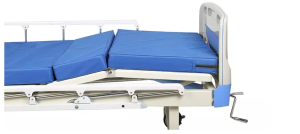
Understanding the Problem: Mattress Sliding and Its Risks
Causes of a sliding mattress
- Lack of friction: The most common culprit is a slick surface on the underside of the mattress or the bed base. Some materials, like memory foam and latex, are more prone to this problem. Dust and debris can also make the surface more slippery.
- Wrong size mattress or bed frame: A mattress that is too small for its frame will have room to wiggle and shift. Similarly, a mattress that is too large can overhang, creating an unstable surface.
- Poor support: An uneven bed frame or bed slats that are too far apart can reduce support and cause the mattress to move.
- Missing bed rails: Some bed frames, especially metal or platform beds, lack the headboard, footboard, or side rails needed to hold the mattress securely in place.
- Uneven weight distribution: In two-person beds, an unequal distribution of weight can cause the mattress to shift, as can constant tossing and turning.
- Old or worn-out mattress: Over time, body oils, sweat, and general wear and tear can degrade the mattress material, making it more slippery.
Risks and health concerns
- Disrupted sleep quality: Constant movement throughout the night can cause micro-awakenings, which interrupt your sleep cycles and result in fragmented, non-restorative sleep.
- Back pain and muscle tension: An unstable or misaligned sleeping surface can lead to awkward sleeping positions, poor spinal alignment, and the formation of painful pressure points.
- Increased risk of falls: For active sleepers or those with limited mobility, a sliding mattress can create a fall risk, especially when getting in or out of bed. This can be a particular concern with adjustable or hospital beds.
- Strain for caregivers: In medical settings, a sliding mattress puts both the patient and the caregiver at risk. Caregivers can sustain back injuries from repeatedly repositioning the patient, while the patient faces risks of shearing injuries and bed sores.
- Annoyance and frustration: Having to constantly adjust a shifting mattress can be a source of daily frustration and stress, leading to a negative start and end to the day.
How to prevent mattress sliding
- Use a non-slip mattress pad: Place a rubber or non-slip pad, similar to a rug gripper, between the mattress and the bed frame to increase friction.
- Apply hook-and-loop tape: Securely fasten the mattress to the bed frame using industrial-strength velcro strips.
- Add railings or retainers: Install a headboard, footboard, or specialized mattress retainer bars to prevent movement. This is a common and necessary solution for adjustable beds.
- Fill the gaps: For slightly mismatched frames, a mattress extender or foam gap filler can create a snug fit.
- Vacuum the surface: Regularly vacuuming the underside of your mattress and the bed frame can remove accumulated dust and debris, restoring some friction.
- Ensure the correct size: When purchasing a new mattress or frame, always ensure they are compatible sizes to avoid movement issues from the start.
- Consider a new mattress: If your mattress is old, worn, or incompatible with your bed frame, it may be time to invest in a new one.
Hospital bed mattresses often slide due to frequent adjustment of the bed’s backrest and leg sections. Patients, especially those with limited mobility, may be at risk of rolling off the bed if the mattress is not properly secured. Key risks include:
-
Sliding or shifting during patient repositioning
-
Entrapment between mattress and bed frame
-
Discomfort caused by uneven support
Related keywords include prevent sliding, reduce shear, mattress retention, and bed modification, all of which will be addressed in this article.

Core Methods to Lock a Hospital Bed Mattress
Built-in hospital bed retention features
- Mattress retainer bars: These U-shaped bars are attached to the frame, typically at the foot of the bed. They slide under the mattress to create a barrier that prevents the mattress from sliding down the frame.
- Built-in retention clips and magnets: Some adjustable bases have magnetic connections or clips that secure a compatible mattress to the base. This is common on mattresses designed for that specific frame.
- Adjustable retainer sections: The head and foot sections of some beds have adjustable mattress retainers that can be moved into slots to fit different mattress lengths, holding it snugly in place.
Friction-based locking methods
- Anti-slip pads or mats: Placing a non-slip pad, like a silicone mat, rubber mat, or rug gripper, on the bed frame under the mattress increases friction and prevents shifting.
- Velcro strips: Industrial-grade Velcro can be used to secure the mattress to the frame. Attach one strip to the underside of the mattress and the other to the bed frame or box spring to create a secure bond.
- Carpet tape: Double-sided carpet tape provides a strong, temporary fix to prevent sliding, though it may be less effective over time as dust accumulates.
Alternative barrier methods
- Mattress safety straps: Products like Skil-Care Mattress Safety Straps are durable nylon straps that wrap around the mattress and bed frame at both the head and foot to hold it in place.
- Pool noodles or foam tubing: Cutting a pool noodle or foam pipe insulation lengthwise and wrapping it around the side and foot rails of the bed frame creates a soft bumper. This prevents the mattress from sliding over the metal frame.
- DIY retainer bar: For a low-cost solution, some caregivers use tie-down straps or other large strapping to secure the mattress to the frame as a temporary retainer.
Best practices to prevent sliding
- Correct mattress size: Ensure the mattress is the right size for the bed frame. A mattress that is too small for the frame is more likely to slide.
- Use proper positioning techniques: When adjusting the bed, raising the patient’s knees can help prevent them from sliding down toward the foot of the bed. Some advanced mattresses have an automatic Fowler adjustment feature that controls pressure to prevent this.
- Keep surfaces clean: A build-up of dust and debris can reduce friction. Periodically vacuuming the bed frame and the underside of the mattress will help it grip better.
1. Bed Rails and Side Safety Accessories
Installing bed rails or side supports is one of the most effective methods to secure a mattress. Henyuan Medical offers high-quality rails compatible with most standard hospital beds. Benefits include:
| Feature | Description |
|---|---|
| Material | Stainless steel or reinforced aluminum |
| Height | Adjustable 18–24 inches above mattress surface |
| Safety Lock | Automatic locking mechanism for bed movement |
Bed rails not only prevent the mattress from shifting but also provide safety for patients prone to rolling or falling.
2. Non-Slip Mattress Covers and Friction Mats
Another simple yet effective method is using non-slip mattress covers or friction mats. These increase the friction between the mattress and bed frame, keeping it in place even during frequent adjustments. Advantages include:
-
Easy to clean and maintain
-
Compatible with all standard hospital bed sizes
-
Reduces shear forces on patients during repositioning
Case Example: At a nursing home in Chicago, applying a friction mat under a Henyuan Medical bariatric mattress reduced mattress sliding incidents by 90% over three months.
3. Velcro Straps and Mattress Retention Systems
For additional security, Velcro straps or specialized mattress retention systems can be used. These straps attach the mattress to the bed frame, effectively locking it in place. Henyuan Medical provides adjustable retention straps designed for all mattress types:
| Parameter | Specification |
|---|---|
| Length | Adjustable 1.2–2 meters |
| Width | 5 cm |
| Load Capacity | Up to 200 kg |
These straps are particularly useful in ICU beds or beds with frequent positional adjustments.
4. Foam Wedges and Wedges for Knee Section Elevation
Sliding often occurs when patients’ legs are elevated. Using foam wedges to slightly raise the knee section reduces downward sliding. Benefits:
-
Improves patient posture and comfort
-
Reduces risk of sliding while lying down
-
Compatible with Henyuan Medical adjustable hospital beds
Practical Tip: Place the wedge directly under the mattress at the knee section and pair it with a friction mat for optimal results.
5. Bed Frame Modifications
In some cases, minor bed frame modifications can improve mattress stability. Henyuan Medical engineers suggest:
-
Reinforcing frame edges to prevent mattress gaps
-
Adding central support bars to reduce mattress sagging
-
Using anti-slip silicone pads at mattress corners
These adjustments are low-cost but highly effective in clinical settings.
Technical Guidelines and Safety Standards
Following safety guidelines ensures both stability and compliance with regulations:
| Standard | Recommendation |
|---|---|
| FDA Hospital Bed Guidelines | Ensure mattress retention systems meet entrapment reduction requirements |
| Maximum Mattress Overhang | ≤ 2 cm on all sides to prevent slippage |
| Mattress Type | Memory foam, hybrid, or bariatric mattress compatible with retention straps |
Henyuan Medical’s products are designed with these standards in mind, ensuring both safety and comfort.
Selecting the Right Mattress Locking Solution
Mattress locking solutions by type
Non-slip pads and rubber matting
- How they work: You place a textured, non-adhesive rubber or PVC pad between your mattress and your bed frame or box spring. The rough surface increases grip and stops the mattress from shifting.
- Best for: Memory foam mattresses, which are prone to sliding, and platform beds or box springs that are otherwise too smooth.
- Pros: Easy to install, affordable, and requires no permanent modifications to your bed. Many are also trimmable to fit any size mattress.
- Cons: Not suitable for heavy-duty security. The friction may not be enough to stop movement on adjustable beds or for very active sleepers.
Velcro strips
- How they work: Apply one side of the adhesive velcro tape to your bed frame (around the perimeter or in the corners) and the other side to the underside of your mattress.
- Best for: Securing mattresses to metal or wood slats, as long as the surface is clean and the adhesive can bond properly.
- Pros: Provides a strong hold that won’t shift with movement. It’s also relatively easy to reposition the mattress if needed.
- Cons: The adhesive can lose its stickiness over time or collect debris. Some people may also be bothered by the sound of the velcro shifting during the night.
Retainer bars and brackets
- How they work: You install these metal brackets onto your bed frame, creating a barrier that prevents the mattress from moving. On adjustable beds, a retainer bar at the foot of the bed stops the mattress from sliding down when the head is elevated.
- Best for: Adjustable beds, platform beds, and heavy mattresses that are prone to significant movement.
- Pros: Offers the most secure and reliable hold. It’s a permanent solution that requires minimal upkeep.
- Cons: Requires drilling or screwing into the bed frame for installation, which is not suitable for all frames. The bars are also visible, which may not align with your aesthetic preferences.
Mattress gap fillers
- How they work: You place the extenders or fillers along the edges of the mattress to eliminate any gaps between the mattress and the frame. This removes the space for the mattress to move.
- Best for: Mattresses that are slightly too small for a particular bed frame or to combine two smaller mattresses (e.g., twin mattresses on a king frame).
- Pros: Addresses a sizing mismatch problem and doesn’t require any hardware.
- Cons: Can be less effective for major sliding issues and may create an uneven or uncomfortable sleep surface if not installed properly.
How to choose the right solution
- For minor shifting on a platform bed: Start with an inexpensive non-slip pad. It’s the easiest and least invasive fix for increasing friction.
- For secure attachment on a compatible frame: If you have a solid wood or metal frame and want a more permanent fix, velcro strips offer a strong bond without the hardware of retainer bars.
- For adjustable beds or heavy movement: Use retainer bars. These are specifically designed to prevent the constant sliding that occurs with adjustable frames and are the most robust solution available.
- For an oversized frame: If your issue is a gap between the mattress and frame, use mattress gap fillers to create a snugger fit.
- For the cleanest look: A non-slip pad is completely hidden, while specialized sheet holders like the ZlumberLock™ keep the sheets from bunching and are discreet.
When choosing a mattress locking solution, consider the following factors:
-
Bed Type: Manual, electric, ICU, or bariatric beds
-
Patient Mobility: High-risk patients may require multiple retention systems
-
Ease of Cleaning: Anti-slip mats and straps should be easily removable and washable
-
Compatibility: Ensure accessories are compatible with the Henyuan Medical bed model
Real-World Case Studies
-
Hospital A in New York: Replaced standard mattress covers with Henyuan Medical non-slip covers and installed side rails. Result: 95% reduction in mattress sliding complaints.
-
Home Care Scenario: Using foam wedges and retention straps for an elderly patient reduced the risk of falling while adjusting the bed for sleep or physiotherapy.
-
ICU Setting: Installing friction mats and adjustable straps on Henyuan Medical ICU beds improved patient safety and nurse efficiency.
Conclusion
Securing a hospital bed mattress is essential for patient safety, comfort, and compliance with healthcare regulations. By combining bed rails, non-slip covers, Velcro retention straps, foam wedges, and minor bed frame modifications, healthcare providers can effectively lock a hospital bed mattress from readjusting. Henyuan Medical offers a complete range of products designed to maximize stability while ensuring patient comfort.
For hospitals, nursing homes, or home care providers, implementing these strategies reduces risks and improves the overall patient experience.
