

Can a Bed Rail Be Used on a Hospital Bed? A Complete Guide by Henyuan Medical
When caring for patients in hospitals, nursing homes, or at home, safety and mobility are essential. One of the most frequently asked questions from caregivers and facility managers is:
Can a bed rail be used on a hospital bed?
The answer is yes, but it depends on the type of hospital bed, rail design, and safety compliance. In this comprehensive guide, Henyuan Medical, a trusted manufacturer of hospital furniture and patient safety accessories, explains everything you need to know — from rail types and installation to safety considerations, technical details, and buying tips.
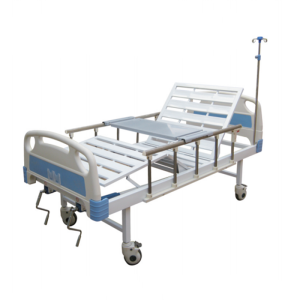
1. What Is a Hospital Bed Rail?
Uses and benefits
- Fall prevention: Full-length rails provide maximum security to prevent patients from accidentally rolling out of bed.
- Mobility assistance: They provide a hand-hold for a person to use when shifting position, getting out of bed, or moving to a wheelchair.
- Comfort and security: Bed rails can offer a sense of stability and security for the occupant.
Types of bed rails
- Full-length side rails: Extend along the entire length of the bed for maximum support.
- Half-length side rails: Cover only a portion of the bed, making it easier to get in and out.
- Assist bars/grab bars: These are smaller, single-sided bars that attach to the bed frame to aid with positioning and transfers.
Important considerations
- Safety: It is crucial to ensure rails are compatible with the bed and mattress and are installed correctly to prevent entrapment, which can be dangerous.
- Patient condition: The right type and length of rail depend on the patient’s medical condition, mobility, and needs.
- Medicare: Note that portable bed rails designed for regular beds are not considered Durable Medical Equipment (DME) and are not covered by Medicare, unlike rails for specialized hospital beds.
A hospital bed rail (also called a side rail or safety rail) is a device attached to the sides of a bed to prevent patients from falling or rolling out.
It can also assist patients in repositioning, getting in or out of bed, and providing emotional security.
Common Types of Bed Rails:
| Type | Description | Typical Use |
|---|---|---|
| Full-Length Rail | Covers the entire bed side; provides maximum protection. | ICU beds, post-surgery recovery. |
| Half-Length Rail | Protects the upper body; easier for patient transfer. | Rehabilitation and home care. |
| Assist Rail / Grab Bar | Compact handle for mobility support. | Home and elderly care. |
| Split Side Rail | Divided sections for flexible movement. | Modern electric hospital beds. |
Henyuan Medical provides all major types of adjustable aluminum and stainless-steel bed rails, compatible with both manual and electric hospital beds.
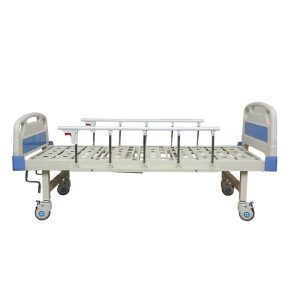
2. Can Bed Rails Be Used on Any Hospital Bed?
Compatibility is key
- Specific design: Hospital bed rails are designed to work with specific hospital bed models and are often integrated as accessories.
- Portable bed rails: Rails from different manufacturers may not be interchangeable, especially portable rails.
- Check guidelines: Always check the manufacturer’s guidelines to confirm that the rails are compatible with your specific hospital bed model to ensure they fit securely.
- Safety first: Using incompatible rails can lead to serious safety issues such as entrapment, asphyxiation, or falls, as a loose or improperly fitted rail can be a hazard.
Important considerations for selecting bed rails
-
- Assess needs: Choose rails that are appropriate for the patient’s age, size, weight, and medical condition.
- Avoid entrapment: Opt for solid plastic rails with grip handles over chrome rungs to reduce the risk of entrapment.
- Consider alternatives: If full side rails are not permitted or appropriate, consider alternatives like “assist bars” which help with getting in and out of bed but do not prevent someone from leaving the bed.
- Check mattress compatibility: Hybrid mattresses or mattress overlays may raise the patient’s height, so it’s essential to check the distance between the mattress top and the rail to ensure it meets safety standards.
Not all bed rails are universal. Compatibility depends on the bed frame design and mounting system.
-
Electric hospital beds often have integrated rails designed to move with the bed platform.
-
Manual beds may use detachable or clamp-on rails.
-
Home care beds require simpler, lighter rails, sometimes with quick-release brackets.
Henyuan Medical engineers recommend checking the bed model, frame slot size, and patient needs before installation.
For example, our ICU electric beds come with split stainless-steel side rails, ensuring safe adjustment at every bed angle.
3. Safety Standards and Guidelines
Installation and use
- Secure attachment: Verify that all rails are firmly secured to the bed frame and that latches are properly engaged.
- No gaps: Ensure there are no gaps between the mattress and the rails or bed frame that are wide enough to cause entrapment. This includes checking under the rail, between split rails, and at the head and foot of the bed.
- Correct height: The top of the rail should be at least 4 inches (100mm) higher than the top surface of the mattress.
- Manufacturer’s instructions: Always follow the manufacturer’s instructions for installation and use.
- Alternatives and consent: Before installing rails, consider if alternatives like bed alarms or low bed height can be used. If rails are installed, obtain informed consent from the patient or their representative after discussing risks and benefits.
Inspection and maintenance
- Regular checks: Conduct frequent inspections of the bed, rails, and mattress for signs of damage, wear, or improper installation.
- Assess equipment: Regularly evaluate if the equipment is still appropriate for the patient’s needs. Re-assess the situation immediately if an entrapment or near-entrapment occurs.
- Monitor patient needs: Update risk assessments whenever the patient’s condition, weight, or mobility changes.
Key entrapment zones
- Zone 3: The space between the inside of the rail and the compressed mattress.
- Zone 5: The space between split bed rails.
- Zone 2: The space under the rail between the rail supports.
- Zone 4: The space between the rail and the headboard or footboard.
- Zone 6: The space between the side of the rail and the headboard or footboard.
Using bed rails requires compliance with medical safety regulations. According to FDA, MHRA, and EU MDR standards, caregivers should always:
-
Ensure proper installation and locking before use.
-
Leave adequate gaps between rail bars to prevent entrapment.
-
Regularly inspect for loosened fasteners or corrosion.
-
Train staff or family members in safe patient transfer procedures.
Henyuan Medical’s bed rails are tested for:
-
Static load capacity: ≥ 100 kg
-
Gap distance: ≤ 60 mm (anti-entrapment standard)
-
Material durability: ≥ 10,000 lift cycles
-
Surface treatment: anti-bacterial powder coating or polished stainless steel
4. Real-World Applications and Case Examples
Hospital Use Case:
At a regional hospital in Southeast Asia, Henyuan Medical’s aluminum split rails were installed on 200 electric ICU beds.
After training the nursing staff, patient falls were reduced by 45%, while maintaining accessibility for caregivers.
Home Care Case:
For elderly home users, the Henyuan HM-203 assist rail provides a lightweight solution that can be attached to adjustable home beds.
Its quick-release feature allows family caregivers to lower the rail instantly when needed.
5. Installation and Maintenance Guide
Installation
-
- Check for compatibility: Ensure the bed rails are compatible with your specific bed frame model, as not all rails fit all beds.
- Position the bed: Place the bed in the flat position before you begin.
- Attach the cross bar/bracket:
- For some models, attach a cross bar to the bed frame, ensuring it’s the correct length and securely locked.
- For other models, you may need to attach brackets to the bed frame, aligning them with marked spots.
- Mount the rail:
- If the rail is one piece, you may need to unscrew a fastener, attach the bottom, and then rotate and tighten the top.
- For other designs, slide the rail’s telescoping tube into the barrel of the cross brace, adjust its height using the spring-loaded knob, and release to secure it.
- Secure all parts: Double-check that all fasteners, clamps, and screws are tight and that all locking mechanisms are engaged.
- Install safety straps: If your model includes a safety strap or retention system, ensure it is attached and secured to the bed frame according to the manufacturer’s instructions.
- Check for gaps: Make sure there are no gaps large enough to cause entrapment between the rail, mattress, and bed frame.
Maintenance and safety
- Regularly inspect: Periodically check that the rails are still installed correctly and have not shifted or loosened.
- Check for entrapment: Routinely inspect for any potential entrapment hazards, such as gaps, sharp edges, or pinch points, especially after the mattress has compressed or shifted.
- Test mechanisms: Practice raising and lowering the rails to ensure they latch securely in both positions.
- Address damage: Do not operate the bed if the cords are damaged. Refer any electrical issues or repairs to a qualified technician.
- Follow manufacturer instructions: Always follow the specific recommendations and specifications provided by the manufacturer for both installation and maintenance.
- Assess the patient’s needs: Regularly reassess the patient’s needs to ensure the rails remain appropriate for them.
Installation Steps:
-
Identify the mounting slots or brackets on the bed frame.
-
Align the rail connector pins.
-
Tighten the locking screws until secure.
-
Test the rail’s lifting function.
-
Confirm safety with the patient lying in bed.
Maintenance Tips:
-
Clean weekly with mild disinfectant.
-
Lubricate moving joints every 3 months.
-
Replace worn parts immediately.
-
Perform annual inspection in hospital environments.
6. How to Choose the Right Bed Rail
When selecting a bed rail, consider these factors:
| Parameter | Recommendation | Example (Henyuan Model) |
|---|---|---|
| Bed Type | Electric or manual | HM-600 Electric ICU Bed |
| Rail Length | Full / half / split | HM-R2 Split Rail |
| Material | Stainless steel / Aluminum | HM-SS304 / HM-ALU |
| User Type | Adult / Pediatric / Elderly | HM-KID Bed Rail |
| Function | Foldable, detachable, assist | All available |
7. Common Misconceptions
-
Myth: Bed rails are only for elderly patients.
Fact: They are also crucial for post-surgery recovery and pediatric safety. -
Myth: All rails fit all beds.
Fact: Compatibility depends on the mounting system and bed design. -
Myth: Bed rails cause entrapment.
Fact: Certified products like those from Henyuan Medical meet anti-entrapment standards.
8. Regulatory and Ethical Considerations
Healthcare providers must evaluate whether the use of bed rails is clinically necessary and ethically appropriate.
They should respect patient autonomy and comfort while ensuring safety. Henyuan Medical supports hospitals by offering customized solutions and risk assessment training.
9. Buying Bed Rails from Henyuan Medical
Henyuan Medical supplies:
-
Hospital Bed Rails (ICU, Manual, Home Care)
-
Adjustable Side Rails
-
Assist Grab Bars
-
Child and Pediatric Rails
-
Mounting Accessories and Lock Kits
All products are manufactured under ISO 13485 and CE certification, ensuring global compliance.
For bulk orders or OEM requests, contact us at
? [email protected]
? www.henyuanmedical.com
10. Conclusion
So, can a bed rail be used on a hospital bed?
Absolutely — when chosen and installed correctly. Bed rails play an essential role in patient safety, comfort, and mobility, especially when designed and tested by trusted manufacturers like Henyuan Medical.
By understanding the types, installation methods, and safety standards, caregivers can ensure the best care experience for every patient.
