

Crank of Bed: The Ultimate Guide by Hengyuan Medical
Manual and semi-electric hospital beds are essential tools in healthcare settings, from hospitals to home care environments. One of the most critical components of these beds is the crank of bed, which allows caregivers or patients to adjust the bed’s position for comfort, safety, and clinical needs.
In this guide, Hengyuan Medical provides a detailed overview of the crank mechanisms, types of manual hospital beds, technical specifications, practical usage tips, and a buying guide. We’ll also include real-life case studies, ensuring you understand how to maximize the benefits of crank-adjustable beds.
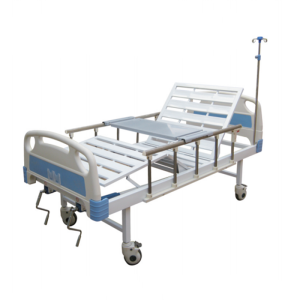
1. What Is a Crank of Bed?
- Function: The cranks allow a caregiver to adjust the bed’s position for patient comfort and clinical needs, such as raising the head or legs.
- Number: The number of cranks determines the number of functions. For example, a one-crank bed might only adjust height, a two-crank bed adjusts the back and legs, and a three-crank bed can also adjust height.
- Emergency use: Electric hospital beds often include an emergency crank that can be used to manually operate the bed during a power outage.
The crank of bed is a mechanical device used to adjust different sections of a manual or semi-electric hospital bed. Depending on the bed model, a crank can control:
-
Headrest / backrest angle
-
Leg section / knee elevation
-
Bed height
Hengyuan Medical’s manual hospital beds come with single, double, and triple crank systems, providing different levels of functionality depending on patient needs.

2. Types of Crank-Adjustable Beds
2-Crank Adjustable Beds
- Functionality: Adjusts the backrest and knee section.
- Mechanism: Typically uses two manual cranks, one at the head and one at the foot of the bed.
- Best for: Patients who need a positionable backrest and leg elevation.
3-Crank Adjustable Beds
- Functionality: Adjusts the backrest, knee section, and the overall height of the bed.
- Mechanism: Adds a third crank to control the bed’s height, making it easier for caregivers to assist patients or change linens.
- Best for: Patients with higher care needs where caregiver accessibility is a priority.
4-Crank and 5-Crank Adjustable Beds
- Functionality: Include all functions of a 3-crank model plus additional adjustments, such as diagonal tilting of the bed frame.
- Mechanism: Incorporates more manual cranks for increased positioning options.
- Best for: Specific medical applications that require more complex positioning.
2.1 Single Crank Beds
-
One crank usually adjusts head and foot positions or bed height.
-
Cost-effective and ideal for home care or low-risk patients.
-
Simple design, easy to maintain.
2.2 Three-Crank Beds
-
Head crank: adjusts backrest up to 75°
-
Leg crank: adjusts knee section up to 40°
-
Height crank: adjusts bed height for patient transfer or caregiver ergonomics
-
Suitable for hospitals, rehabilitation centers, and intensive care units.
2.3 Semi-Electric Beds with Single Crank
-
Motorized head and foot adjustments, while bed height is controlled by manual crank.
-
Combines the benefits of manual and electric operation.
-
Maintains affordability while improving functionality.
3. Key Features of Hengyuan Medical Crank Beds
| Feature | Specification / Description |
|---|---|
| Crank Type | Single, Double, Triple |
| Maximum Load | 200–350 kg (depending on model) |
| Sections Adjustable | Headrest, Leg/Knee, Bed Height |
| Frame Material | Heavy-duty steel |
| Side Rails | Full-length detachable rails |
| Wheels / Castors | Lockable for patient safety |
| Compliance | ISO, CE, FDA guidelines |
| Optional Features | Trendelenburg / Reverse Trendelenburg tilt, ABS boards |
Hengyuan Medical ensures that all crank beds are compatible with standard hospital and home care beds, offering reliable mechanical adjustment and long-term durability.
4. Advantages of Crank-Adjustable Beds
Cost and maintenance
- More affordable: Crank-adjustable beds are generally less expensive than fully electric models, making them a more budget-friendly option.
- Low maintenance: They have fewer complex electrical parts, which simplifies maintenance and reduces long-term costs.
Reliability and power independence
- No power needed: These beds are manual, so they can be adjusted even during a power outage or in areas without electricity.
- Highly reliable: Their mechanical design makes them less prone to malfunctions compared to electric beds.
Customization and comfort
-
- Adjustable positions: Users can raise or lower the head and foot sections to find a position that is most comfortable for sleeping, resting, or reading.
- Improved health: Adjusting the bed can help with issues like back pain, acid reflux, and poor circulation by changing the body’s position to reduce pressure and improve blood flow.
- Caregiver assistance: They make it easier for caregivers to adjust the bed without using significant energy, which is especially helpful for patients with mobility challenges.
Ease of use
- Simple controls: The manual crank system is straightforward and easy to operate for both patients and caregivers.
- Greater control: Patients can make their own adjustments to head and foot positions, which promotes a sense of independence and dignity.
-
Patient Comfort: Crank beds allow precise adjustment of head, leg, and height positions, improving sleep and therapy.
-
Pressure Management: Proper adjustment reduces pressure ulcer risks in bedridden patients.
-
Caregiver Ergonomics: Adjustable height cranks facilitate safe patient transfers and repositioning, reducing caregiver strain.
-
Cost-Effectiveness: Manual crank systems are more affordable and require less maintenance than fully electric beds.
-
Versatility: Suitable for home care, hospitals, rehabilitation centers, and specialty care environments.
5. Real-Life Use Cases
Case 1: Rehabilitation Hospital
A hospital implemented Hengyuan Medical three-crank beds in its rehabilitation ward:
-
Patients experienced improved comfort during physiotherapy sessions.
-
Staff reported reduced strain when repositioning patients.
-
Bed durability and reliability minimized maintenance costs.
Case 2: Home Care
An elderly patient recovering from surgery at home used a single-crank Hengyuan Medical bed:
-
Simple crank allowed the caregiver to adjust head and foot positions easily.
-
Bed height adjustment facilitated safe transfers in and out of bed.
Case 3: Semi-Electric Combination
In a home care setting, a semi-electric bed with a manual height crank:
-
Allowed caregivers to adjust bed height efficiently.
-
Motorized head and foot controls improved patient comfort.
-
Cost remained lower than full-electric beds.
6. How to Use a Bed Crank Safely
To use a bed crank safely, first locate the crank and ensure the bed’s wheels are locked unless you are moving it. Connect the crank to the appropriate socket to adjust the bed’s height or head/foot sections. Turn the crank clockwise to raise and counter-clockwise to lower. Always ensure the bed is stable and resting on its legs or that casters are locked before use.
Before you begin
- Lock the wheels: Make sure the wheels are locked at all times unless you need to move the bed.
- Locate the crank: Find the manual crank, usually stored at the foot of the bed under the mattress.
- Unplug the bed: If it’s an electric bed, unplug it from the power source before using the manual crank.
How to use the crank
-
- Attach the crank: Insert the notched end of the crank into the correct socket on the bed’s mechanism. Some beds have different sockets for overall height, head section, and foot section.
- Adjust the height:
- To raise the entire bed, turn the crank clockwise.
- To lower the entire bed, turn the crank counter-clockwise.
- Adjust the head/foot sections:
- Different cranks control different parts, such as the headrest or footrest.
- Consult the bed’s manual for specific instructions on which crank controls which section and which direction to turn.
- Return the crank: When finished, remove the crank and store it properly. Some models have a specific place to put it back, such as a bracket or a storage position under the bed.
Safety precautions
- Check stability: Before a person uses the bed, ensure it is stable and resting on its legs or that all caster brakes are engaged.
- Position the patient: Make sure the person is securely positioned in the bed before and after adjustments.
- Keep the hand control within reach: Place the bed’s hand control within easy reach of the person, but never place it through the bed rails.
- Follow manufacturer instructions: Always follow the specific instructions for your model of bed.
- Use side rails: Keep side rails up if there is a risk of falling, unless the person needs to get in or out of bed.
- Avoid hazards: Do not smoke or use candles or matches near the bed.
-
Check the crank mechanism before each use for smooth operation.
-
Do not exceed the recommended load capacity.
-
Adjust sections slowly to avoid sudden movements that may startle the patient.
-
Ensure side rails are correctly installed and do not block the crank’s movement.
-
Regular maintenance: lubricate moving parts, inspect for wear, and replace defective cranks.
7. Buying Guide for Crank Beds
Assess your needs
- Usage duration: Determine if you need a short-term rental or a long-term purchase, and how many hours per day the bed will be used.
- User mobility: Consider how the user will transfer in and out of the bed. Some models may require the use of a transfer sling.
- Medical needs: Account for any other medical needs the user has in addition to mobility issues.
Key features to consider
-
- Adjustability: Crank beds have manual adjustment options, but check how easy they are to use and the range of motion for the head and foot sections. Some semi-electric models use a crank for height adjustment and a motor for head and foot sections.
- Safety: Ensure the bed has safety features like side rails and, for electric models, consider bed exit alarms and locking mechanisms.
- Durability: Look for high-quality materials like stainless steel or heavy-duty plastic frames that can withstand frequent use and cleaning.
- Size and weight capacity: Choose a bed that fits the room, accommodates the user’s height, and has a weight capacity that matches the user’s needs.
- Comfort: Select a mattress and padding that provides adequate comfort and support for the user’s body type.
- Mobility: If you need to move the bed, look for models with locking wheels. Ensure they lock securely when stationary.
Before you buy
- Compare suppliers: Shop around and compare options from at least three different suppliers to find the best value.
- Request a demonstration: Ask for a demonstration to ensure you understand how the bed operates and that it meets your needs.
- Check quality standards: Look for a supplier that adheres to international quality standards like CE and ISO 13485.
- Check insurance coverage: Inquire if your insurance, such as Medicare Part B, covers the cost of the bed as durable medical equipment.
- Consider your budget: Prices vary, so establish a budget and choose a bed that offers the features you need without unnecessary extras.
When selecting a Hengyuan Medical crank bed, consider:
-
Number of Cranks: Single, double, or triple depending on patient needs.
-
Bed Size: Ensure compatibility with standard or customized hospital bed frames.
-
Material & Durability: Heavy-duty steel frame and high-quality crank mechanism.
-
Safety Features: Side rails, castors with brakes, compliance with ISO/CE/FDA standards.
-
Optional Features: Trendelenburg / Reverse Trendelenburg tilt, ABS head/foot boards.
Hengyuan Medical provides customizable options to meet both hospital and home care requirements.
8. Maintenance Tips
-
Clean with mild disinfectant to maintain hygiene.
-
Inspect crank assembly monthly to detect wear.
-
Lubricate gears and joints for smooth operation.
-
Replace worn parts immediately to ensure patient safety.
9. Conclusion
The crank of bed is an essential component in manual and semi-electric hospital beds.
Hengyuan Medical offers reliable single, double, and triple crank beds that maximize patient comfort, caregiver convenience, and cost-effectiveness.
Whether for home care, rehabilitation centers, or hospital wards, understanding the types, technical specifications, and proper usage of crank beds ensures the safety, comfort, and wellbeing of patients.
By selecting the right crank system, caregivers can provide therapeutic positioning, pressure relief, and enhanced mobility while maintaining a cost-effective solution.
