

How to Take a Semi-Electric Hospital Bed Apart: Hengyuan Medical Guide
Disassembling a semi-electric hospital bed may seem daunting at first, but with proper guidance, tools, and safety precautions, it can be performed efficiently. Hengyuan Medical’s semi-electric beds are designed for durability, flexibility, and easy maintenance, making them ideal for hospitals, nursing homes, and home care environments.
This comprehensive guide will cover:
-
Tools required for safe disassembly
-
Step-by-step bed frame and component removal
-
Safety precautions
-
Technical specifications and assembly notes
-
Real-life use cases and tips for healthcare providers
1. Understanding the Semi-Electric Hospital Bed
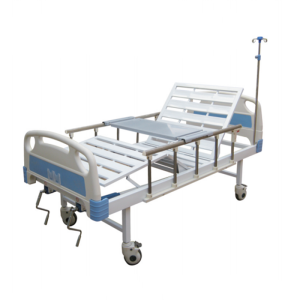
A semi-electric hospital bed combines electric and manual adjustments, allowing a patient to electronically raise or lower the head and foot sections using a bedside remote. The overall height of the bed, from the floor to the mattress, must be adjusted manually, typically with a hand crank. This makes them a more affordable option than fully electric beds, while still providing comfort and positioning adjustments.
Key features and benefits
- Electric head and foot adjustment: Uses a motor and a hand-held control or pendant to adjust the head and foot sections of the bed.
- Manual height adjustment: The entire bed platform is raised or lowered using a hand crank.
- Quiet operation: The electric motors are designed to operate quietly and smoothly.
- Power outage backup: The manual height adjustment still works during a power outage.
- Cost-effective: Generally less expensive than fully electric beds.
Best suited for
-
- Individuals who need to adjust their sleeping position frequently but do not require frequent height adjustments.
- Situations where a caregiver is available to adjust the bed’s height when needed for transfers.
- Those seeking a more affordable solution with both electric and manual features.
How it works
- Patient control: The patient can use the pendant to raise or lower their head and feet for comfort or to get into a better position for eating or watching TV.
- Caregiver control: A caregiver uses the hand crank to adjust the overall height of the bed to a more suitable level for transfers, such as getting in or out of bed.
A semi-electric hospital bed is partially powered, usually controlling backrest and leg section adjustments via an electric motor, while height adjustment may be manual using a crank mechanism. Hengyuan Medical’s semi-electric beds combine ergonomic design with safety features:
-
Adjustable head and foot sections
-
Side rails for patient safety
-
Sturdy frame compatible with hospital-grade mattresses
-
Hand control or remote operation for patient comfort
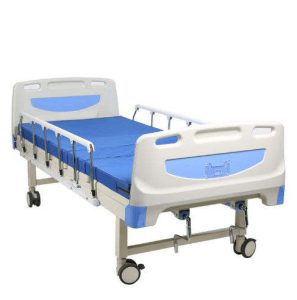
Understanding the structure of the bed is essential before attempting disassembly.
2. Tools Required for Disassembly
Before beginning, gather the necessary tools:
| Tool | Purpose |
|---|---|
| Screwdrivers (Phillips and flathead) | Remove screws securing side rails, bed frame, and motor covers |
| Wrench set | Disconnect bolts securing bed legs or frame segments |
| Allen keys | For motor assembly or actuator brackets |
| Work gloves | Protect hands during disassembly |
| Safety goggles | Prevent debris or small parts from injury |
| Plastic bins or labeled bags | Organize screws, bolts, and small parts |
Proper organization of parts during disassembly ensures easy reassembly and maintenance.
3. Step-by-Step Disassembly Guide
To disassemble a semi-electric hospital bed, first remove the mattress and side rails. Next, lower the foot section with the pendant control before disconnecting the hi-lo rod. Then, detach the headboard and footboard by disconnecting the drive shaft and removing pins or clips. Finally, lift the bed frame sections apart, which can be easier with two people.
Step 1: Preparation and safety
- Unplug the bed: Before you begin, disconnect the bed from the main power supply.
- Clear the area: Make sure there is enough space to work around the bed and for the disassembled parts.
- Gather tools: You may need a flathead screwdriver, a mallet, and a few large containers or boxes to store the hardware.
- Remove the mattress: Take the mattress off the bed frame and set it aside.
Step 2: Disconnect electrical and mechanical components
-
- Lower the foot section: Use the pendant control to lower the foot section of the bed to its lowest position.
- Disconnect the hi-lo rod: Locate the hi-lo rod (the rod that connects the motor to the bed frame). Compress the spring fitting on one or both ends and detach the rod.
- Disconnect the drive shaft coupler: The drive shaft connects the motor to the footboard. Disengage the coupler (the connection point) by pushing a spring-loaded collar back. You may need a screwdriver to help push the collar, as shown in this Amazon.com document.
Step 3: Detach the headboard and footboard
- Remove the footboard: Slide the footboard off the drive shaft.
- Remove the headboard: The headboard is often attached with hooks or clips that are secured by a pin and clasp. Remove the pin and clasp, then lift the headboard off.
Step 4: Separate the bed frame
- Lift and pull apart: With the headboard, footboard, and drive shaft removed, the two sections of the bed frame can be separated.
- Separate the sections: With help from another person, it is easier to hold onto the frame and pull it apart.
Step 5: Reassembly and final steps
- Reverse the process: To reassemble the bed, simply reverse the disassembly steps.
- Secure components: Make sure to securely fasten all pins, clips, and the drive shaft when reassembling.
- Handle with care: Lift the bed from the frame itself and not the mattress deck to avoid damage.
Step 1: Power Down and Disconnect
-
Unplug the bed from electrical outlets
-
Remove batteries if the bed has a backup system
-
Ensure the bed is in a flat, neutral position
Step 2: Remove Mattress and Accessories
-
Take off the mattress and mattress protectors
-
Remove all bedding and bed linens
-
Detach any attached pillows or padding
Step 3: Detach Side Rails
-
Hengyuan Medical beds have removable side rails
-
Use appropriate screwdrivers or bolts to disconnect rails
-
Place rails aside safely to avoid damage
Step 4: Remove Motor and Hand Control
-
Locate the actuator motor unit
-
Disconnect all wiring connectors carefully
-
Detach hand control unit and its cable
Step 5: Disassemble Bed Frame
-
Use wrench or Allen key to remove bolts connecting bed legs and frame
-
Separate the head section, foot section, and middle frame
-
Organize all hardware in labeled containers
Step 6: Transport or Store Components
-
Move components individually for storage or transport
-
Keep delicate items like motors and actuators protected
-
Avoid stacking heavy parts directly on fragile components
4. Safety Precautions
-
Always disconnect power before starting
-
Avoid forcing parts; use proper tools
-
Lift heavy sections with assistance to prevent injury
-
Label all parts to simplify reassembly
-
Inspect wiring and actuator components before reuse
5. Technical Specifications of Hengyuan Medical Semi-Electric Beds
| Feature | Specification |
|---|---|
| Adjustable Sections | Head, back, leg |
| Height Adjustment | Manual crank |
| Side Rails | Detachable, durable steel |
| Mattress Compatibility | Standard hospital mattress 36″x80″ or 36″x84″ |
| Actuator Motor | 24V DC, 400N–600N lift capacity |
| Bed Frame Material | Powder-coated steel, anti-corrosion |
| Max Load | 200–250 kg |
| Warranty | 2 years for frame and motor unit |
These specifications ensure that the disassembly process is predictable and compatible with replacement parts.
6. Other Related Components
-
Mattress: Remove before disassembly to prevent damage
-
Side Rails: Hengyuan Medical’s detachable rails simplify both disassembly and bed transport
-
Motor Units: DC motors controlling head/foot adjustments; handle carefully
-
Crank Mechanisms: For semi-electric beds, used for height adjustments
-
Hand Control: Detachable to prevent accidental activation
7. Real-Life Use Cases
Case 1: Hospital Room Maintenance
-
Nursing staff need to move beds for deep cleaning
-
Hengyuan Medical semi-electric beds allow quick detachment of side rails and mattress
-
Motor units remain safe when properly disconnected
Case 2: Home Care Setup
-
Family caregivers relocated a semi-electric bed to a new room
-
Following the disassembly guide, bed frame sections were moved individually, preventing damage to walls or floor
Case 3: Bed Repair and Replacement
-
Actuator motor failed and required replacement
-
Disassembling the bed frame using this guide allowed motor replacement without damaging bed structure
8. Tips for Efficient Disassembly and Reassembly
To efficiently disassemble a semi-electric hospital bed, first, remove the mattress and side rails, then use the hand control to lower the bed to its lowest position. Next, disconnect the footboard by disengaging the spring-loaded coupler between the motor and the bed end, followed by the drive shaft, which connects the head and foot sections. Reassembly is the reverse process, and for both, organize all hardware and work with a partner for safety and ease.
-
- Prepare the bed: Strip the bed of all linens and the mattress. Remove the side rails, which may be secured with wing nuts or clips.
- Lower the bed: Use the hand pendant to lower the bed to its lowest setting. This is a critical step that releases tension in the frame, making it easier to separate the sections.
- Disconnect the footboard: Find the spring-loaded coupler connecting the motor to the foot end of the frame. Push down and turn the spring to disengage it, then lift the footboard off.
- Remove the drive shaft: The drive shaft connects the head and foot sections. It is spring-loaded on one end. Grab the spring-loaded side, pull it to detach it from the head section, and then slide it out of the foot section.
- Separate the bed sections: With the drive shaft removed, the head and foot sections can be pulled apart. Be sure to lift from the frame, not the deck panels, and have a partner help to carry each section safely.
Reassembly and General Tips
- Gather tools and hardware: Before you start, collect all necessary tools, such as wrenches or a socket wrench, and keep all small parts like screws and bolts organized in a bag to prevent loss during reassembly.
- Work with a partner: Disassembly and reassembly are much easier and safer with two people, especially when lifting and carrying the heavy sections.
- Follow the manual: Always refer to the manufacturer’s instructions for specific details about your model, as some steps and mechanisms may vary.
- Connect parts in reverse: The reassembly process is the reverse of disassembly. Start by re-attaching the bed sections and the drive shaft, then reconnect the footboard, and finally, reattach the side rails and mattress.
- Test all functions: After reassembly, plug the bed in and test all the electric functions using the hand pendant to ensure everything is connected and working correctly.
- Lock casters: Make sure to lock the casters before the patient gets in or out of the bed to prevent the bed from rolling unexpectedly.
-
Label all screws and bolts during disassembly
-
Take photos of electrical connections for accurate reconnection
-
Store small parts in bins to prevent loss
-
Use two people for lifting heavy components
-
Follow manufacturer’s torque specifications when reassembling bolts
9. Conclusion
Knowing how to take a semi-electric hospital bed apart is essential for hospital staff, home caregivers, and maintenance teams. Hengyuan Medical’s semi-electric beds are designed to be user-friendly, safe, and durable, making disassembly straightforward when following proper procedures.
By understanding the components, using correct tools, and following step-by-step instructions, healthcare providers can ensure safe, efficient, and damage-free disassembly of semi-electric beds for maintenance, repair, or relocation.
