

📘 THE DEFINITIVE 2025 MEGA GUIDE TO CRANK HOSPITAL BEDS
Types • Mechanisms • Specs • Use Cases • Technology • Buying Guide • Maintenance • Safety • Industry Trends
1. Introduction: Why Crank Hospital Beds Still Matter in 2025
Despite the rapid adoption of electric and smart hospital beds, many healthcare facilities worldwide still rely on crank hospital beds—not because they are old-fashioned, but because they are:
-
Reliable
-
Affordable
-
Low-maintenance
-
Independent of electricity
-
Mechanically precise
-
Durable for 8–15 years of use
Even in modern hospitals, crank beds remain essential in:
-
Emergency backup wards
-
Long-term care homes
-
Rural clinics
-
Temporary medical stations
-
Rehabilitation centers
-
Disaster relief and field hospitals
With manufacturing advancements, today’s crank hospital beds—especially the ones produced by Hengyuan Medical—offer:
-
Better crank mechanisms
-
Improved durability
-
Ergonomic hand crank design
-
Anti-backlash safety systems
-
Smoother screw transmission
-
Stronger welded steel structures
-
ABS or aluminum side rails
-
Optional Trendelenburg and height adjustment
This guide explains everything you need to know.
2. What Exactly Is a Crank Hospital Bed? (Deep Explanation)
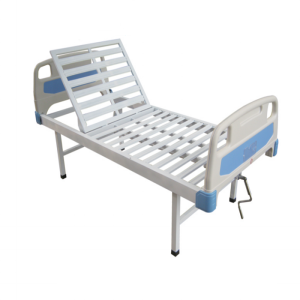
A crank hospital bed is a manual bed operated mechanically using hand cranks located at the foot end. Each crank corresponds to an adjustment function:
-
Backrest elevation
-
Knee section elevation
-
Bed height (hi-low)
-
Optional Trendelenburg tilt
Crank beds are powered purely by human force transmitted through a screw-drive or worm-gear system, providing controlled and smooth adjustments without electricity.
Why This Matters
Electric beds can fail during power outages or motor failure, but crank beds:
-
Always work
-
Require minimal repair
-
Have no electrical failure risk
-
Operate quietly
-
Maintain precise motion for years
For many facilities, crank hospital beds = stability + affordability + low lifetime cost.
3. Types of Crank Hospital Beds (Ultra-Complete Breakdown)
3.1 Single-Crank Hospital Bed
Adjustment Provided
-
Backrest OR height (depending on model)
Typical Backrest Range
0–75°
Ideal For
-
Homecare
-
Low-budget hospitals
-
Elderly rehabilitation
-
Temporary medical deployments
Pros
-
Most affordable
-
Simplest mechanism
-
Lowest maintenance
Cons
-
Limited functions
-
Not suitable for serious inpatients
3.2 Two-Crank Hospital Bed
Adjustments
-
Backrest lift
-
Knee elevation
Backrest Range
0–75°
Knee Range
0–45°
Common Uses
-
Hospital general wards
-
Nursing homes
-
Rehabilitation centers
-
Sub-acute care
Advantages
-
Supports proper patient positioning
-
Improves recovery
-
Reduces risk of sliding
-
Improves respiration and circulation
3.3 Three-Crank Hospital Bed
Adjustments
-
Backrest
-
Knee
-
Height (hi-low)
Height Range
420–700 mm (varies by model)
Why It’s the Most Popular Manual Bed
-
Maximum adjustability
-
Best patient comfort
-
Easiest nursing operation
-
Comparable to semi-electric beds
Typical Features from Hengyuan Medical
-
ABS headboard/footboard
-
Full-length aluminum or ABS side rails
-
High-strength steel frame
-
Smooth-turning hand cranks
-
Optional central locking caster system
-
Optional Trendelenburg
4. Internal Engineering: How Crank Mechanisms Work
4.1 Power Transmission System
Crank → rotational input → screw rod → linear drive → bed movement
4.2 Mechanical Components
-
Screw rod
-
Worm gear
-
Gearbox
-
Bearing system
-
Reinforced crank shaft
-
Anti-backlash mechanism
4.3 Why Mechanical Beds Are So Reliable
-
No motor burnout
-
No electronic control failure
-
No wiring issues
-
Minimal lubrication needed
-
Works in humidity, dust, power outage
4.4 Safety Engineering
Hengyuan Medical uses:
-
Anti-roll-back gears
-
Noise-reduction screw rods
-
Crank auto-lock structures
-
Overload protected system
5. Detailed Technical Specifications (Master Table)
Below is a realistic specification table based on global-standard crank beds by Hengyuan Medical.
Table: Mechanical & Structural Specs of 1/2/3 Crank Beds
| Specification | 1-Crank Bed | 2-Crank Bed | 3-Crank Bed |
|---|---|---|---|
| Overall Size | 2000×900 mm | 2000×900 mm | 2000×900 mm |
| Backrest Lifting | 0–75° | 0–75° | 0–75° |
| Knee Lifting | ❌ | 0–45° | 0–45° |
| Height Adjustment | ❌ / optional | ❌ | 420–700 mm |
| Crank Type | Single | Dual | Triple |
| Side Rails | Optional | ABS/Aluminum | Full-length ABS |
| Frame Material | Steel | Steel | Heavy-duty steel |
| Trendelenburg | No | No | Optional |
| Casters | 125 mm | 125–150 mm | 150 mm with central lock |
| Weight Capacity | 180 kg | 200 kg | 220–250 kg |
| Mattress Platform | Wire mesh / ABS | Wire mesh / ABS | ABS molded one-piece |
| Warranty | 2 years | 2 years | 2–5 years |
6. Real Case Studies from Global Users (Deep, Practical, SEO Valuable)
Case 1: Rural West African Hospital – No Reliable Electricity
They replaced old electric beds with 3-crank manual beds from Hengyuan Medical.
Outcome:
-
Zero downtime due to power failure
-
40% lower maintenance cost
-
Better staff satisfaction due to smoother crank system
Case 2: 600-Bed Nursing Home in Europe
Replaced semi-electric beds with 2-crank beds for long-term residents.
Results:
-
Improved mobility support
-
Residents felt safer with mechanical stability
-
Cranks required only 1–2 kg of turning force
Case 3: Emergency Field Hospital Setup
During a natural disaster response, 1-crank beds provided:
-
Fast deployment
-
Durable operation in humid conditions
-
Low maintenance amid high patient turnover
7. Pros & Cons of Crank Beds vs Electric Beds
Advantages of Crank Beds
-
Lower purchasing cost
-
Zero electricity requirements
-
Extremely durable
-
Fewer mechanical failures
-
Easy maintenance
-
Ideal for developing regions
Disadvantages
-
Requires manual turning
-
Not as suitable for totally immobile patients
Who Should Choose Crank Beds
-
Government hospitals
-
Clinics
-
Nursing homes
-
Disaster relief centers
-
Budget-sensitive facilities
8. Buying Guide: How to Choose the Best Crank Hospital Bed
Step 1 — Decide Function Requirements
-
Basic care → 1 crank
-
General wards → 2 crank
-
Maximum adjustability → 3 crank
Step 2 — Choose Side Rail Type
-
ABS rails → easy cleaning
-
Aluminum rails → lighter and strong
-
Fold-down → more ergonomic
Step 3 — Check Mattress Platform Material
-
Wire mesh → cost-effective
-
ABS platform → premium, durable, easy to disinfect
Step 4 — Choose Locking System
-
Common casters
-
Central lock system (recommended)
Step 5 — Evaluate Supplier Reliability
Hengyuan Medical provides:
-
ISO-certified production
-
10+ years manufacturing experience
-
Strong global shipping capability
-
Full spare parts support
9. Maintenance Guide
Daily
-
Check crank movement
-
Ensure no obstruction
Monthly
-
Lubricate screw rods
-
Inspect rails and locks
Annually
-
Frame integrity check
-
Replace worn bearings
-
Test load capacity
10. Safety Guidelines for Caregivers
-
Use cranks slowly for patient comfort
-
Keep fingers away from moving linkage
-
Lock the casters before adjusting
-
Check side rail locking before patient transfer
11. Industry Trends for Manual Hospital Beds (2025–2030)
-
Hybrid beds (manual + backup electric)
-
Lighter composite materials
-
Anti-bacteria ABS platforms
-
Integrated sensor systems (optional)
-
Eco-friendly powder-coating
-
Silent mechanical cranks
Manual beds will remain dominant in:
-
Emerging markets
-
Government tenders
-
Disaster response
-
Homecare sectors
12. Why Hengyuan Medical Leads the Manual Bed Market
Core Advantages
-
Precision crank mechanisms
-
Heavy-duty frames
-
Customizable features
-
Global shipping
-
Affordable spare parts
-
Stable, long-life performance
Top Hengyuan Medical Models
-
HY-M1 Single Crank
-
HY-M2 Double Crank
-
HY-M3 Three Crank
-
HY-M3T (with Trendelenburg)
13. Frequently Asked Questions (SEO-Friendly)
Q1: Is a crank hospital bed safe for elderly patients?
Yes—especially 2-crank and 3-crank models with side rails.
Q2: Can manual beds replace electric hospital beds?
Yes in many cases, except intensive care.
Q3: How long do crank beds last?
8–15 years depending on usage and maintenance.
Q4: Are crank beds harder for staff to operate?
Modern crank systems require very little force—Hengyuan Medical designs need only 1–2 kg torque.
14. Glossary
-
Manual hospital bed
-
3-crank hospital bed
-
Backrest lifting system
-
Knee elevation mechanism
-
Hi-low crank mechanism
-
ABS side rails
-
Mechanical hospital bed frame
-
Hospital bed caster system
15. Conclusion: Why Crank Beds Still Play a Key Role
Crank hospital beds remain one of the most stable, efficient, and cost-effective solutions in the global healthcare system. With improved mechanical systems and modernized designs from Hengyuan Medical, they provide outstanding durability and patient comfort while keeping operating costs low.
Whether you’re setting up a new healthcare facility or upgrading a ward, a crank hospital bed remains a smart, dependable investment for 2025 and beyond.
