

The Ultimate Guide to Bed Rails for Hospital Beds: Enhancing Safety and Mobility
When it comes to long-term care, whether in a professional facility or at home, safety is the paramount concern. For many patients and caregivers, bed rails for hospital beds are an essential accessory. Not only do they serve as a critical tool for fall prevention for seniors, but they also act as bed assist rails, helping patients reposition themselves and gain independence.
In this guide, Hengyuan Medical explores the different types of rails available, the technical standards for safety, and how to choose the right model for your specific medical needs.
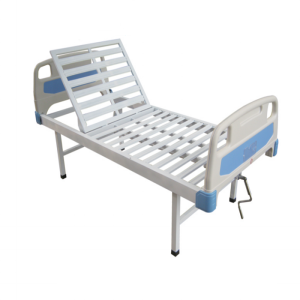
1. Why Are Bed Rails Necessary?
The primary function of hospital bed rails is to provide a physical barrier that prevents accidental falls. However, modern medical engineering has expanded their utility. Today, high-quality rails from Hengyuan Medical serve as:
-
Assistance Tools: Providing a stable bed assist handle for patients to pull themselves up.
-
Security: Reducing the “fear of falling” for patients with vertigo or cognitive impairments.
-
Medical Equipment Anchors: Providing a place to attach nurse call buttons or drainage bags.
The Clinical & Psychological Necessity of Hospital Bed Rails
While many view hospital bed rails as simple physical barriers, their necessity is rooted in complex patient care requirements. For Hengyuan Medical, engineering a rail involves understanding the intersection of biomechanics and patient dignity.
1. Mitigating the “Gap and Edge” Risk (Bio-mechanical Safety)
The human body, especially during sleep or under sedation, loses its “proprioception”—the subconscious sense of where the body is in space.
-
The Rolling Reflex: In a standard bed, a patient might roll toward the edge. Without a safety rail for the elderly, there is no tactile feedback to tell the brain to stop.
-
Hengyuan Medical’s Solution: Our side rails provide a “sensory boundary.” Even light contact with the rail signals the patient to shift back toward the center of the pressure redistribution mattress, preventing a fall before it happens.
2. Facilitating “Active Mobility” and Self-Transfer
Modern nursing philosophy emphasizes “Active Mobility.” A bed assist handle is not just for safety; it is an empowerment tool.
-
Leverage for Repositioning: Patients with limited core strength use grab rails to pull themselves up or turn over. This is critical for preventing pressure ulcers, as it allows the patient to perform micro-movements that relieve tissue ischemia.
-
The “Pivot” Point: For patients transitioning from bed to a wheelchair, a Hengyuan Medical secure bed handle provides a stable pivot point. This reduces the physical strain on caregivers and minimizes the risk of “shear” injuries to the patient’s skin during manual transfers.
3. Psychological Security and the “Enclosure Effect”
For patients with cognitive impairments or dementia, a large, open hospital bed can feel disorienting and “unsafe.”
-
Reducing Nighttime Anxiety: Clinical studies show that a head-end bed rail provides a sense of enclosure that can reduce sun-downing symptoms and nighttime wandering.
-
Hengyuan Medical Design: We focus on “Vision-Friendly” rail designs. By using spaced bars or transparent materials in our safety bed rails for seniors, we provide security without the patient feeling “caged,” which is essential for maintaining mental well-being.
4. Supporting Post-Operative and Clinical Procedures
In an institutional setting, bed rails for hospital beds serve as a mounting platform for life-saving interventions.
-
Attachment Points: Rails are necessary for securing IV poles, nurse call buttons, and oxygen tubing.
-
Stability during Articulation: When a Hengyuan Medical bed moves into a Trendelenburg or Fowlers position, the telescoping bed rails ensure the patient remains aligned with the mattress, preventing them from sliding into dangerous entrapment zones.
Technical Summary: The Functional Necessity Matrix
| Patient Need | Rail Function | Clinical Outcome |
| Cognitive Impairment | Tactile Boundary | Reduced wandering & fall risk |
| Post-Surgical Recovery | Grab Rail Leverage | Accelerated independent mobility |
| Respiratory Distress | Articulation Support | Safe positioning in Fowler’s mode |
| Skin Integrity Risk | Repositioning Assist | Reduced friction/shear during turns |
2. Understanding the Types of Hospital Bed Rails
Not all hospital beds are the same, and neither are the rails. Choosing the right length and mechanism is vital for both safety and functionality.
Full-Length Bed Rails
These rails run the entire length of the bed from head to foot. They provide maximum protection against rolling out of bed. Hengyuan Medical’s full-length options often feature telescoping bed rails technology, allowing them to expand or contract based on the bed’s articulation.
Half-Length and Quarter-Length Rails
Often preferred in rehabilitation settings, half-length rails or quarter-length bed rails (split rail systems) provide protection at the head end while leaving the foot end open. This allows the patient to exit the bed without having to lower the rail, promoting autonomy.
Swing-Down and Fold-Down Mechanisms
For caregivers, ease of access is crucial. Swing-down rails or fold-down bed rails can be tucked out of the way with a single lever, making it easier to perform patient transfers or change linens.
A Comprehensive Guide to Hospital Bed Rail Configurations & Mechanisms
Not all bed rails for hospital beds are created equal. The “right” choice depends on the patient’s mobility level, the bed frame type, and the clinical goals. At Hengyuan Medical, we categorize our support systems into four primary types to ensure maximum entrapment prevention and user comfort.
1. Full-Length Rails: Maximum Perimeter Protection
Target Keywords: Full-length bed rails, telescoping bed rails, total perimeter safety, institutional bed rails.
Full-length rails run from the headboard to the footboard, creating a complete safety barrier.
-
The Hengyuan Advantage: Our full-length models feature telescoping bed rails technology. As the hospital bed articulates (raises the head or knees), the rails adjust their length to maintain a constant gap-free barrier.
-
Best For: Patients with high fall risk, those with involuntary movements during sleep, or patients under heavy sedation who require total perimeter safety.
2. Half-Length and Split Rail Systems: The Balance of Safety and Liberty
Target Keywords: Half-length rails, split rail systems, quarter-length bed rails, head-end bed rails.
Modern clinical guidelines often recommend “Split Rails” over full-length barriers to avoid the feeling of restraint.
-
Mechanism: These are typically installed as a pair of head-end bed rails. They protect the upper torso but leave the foot of the bed open.
-
The Hengyuan Advantage: Hengyuan Medical’s split rails are designed for “Dual-Functionality.” They serve as a safety barrier while the patient is sleeping and transform into a bed assist handle when the patient is ready to exit.
-
Best For: Rehabilitation patients who need a grab rail to sit up but want the freedom to swing their legs out of bed independently.
3. Swing-Down and Fold-Down Rails: Caregiver Efficiency
Target Keywords: Swing-down rails, fold-down bed rails, drop-side medical rails, easy-access bed rails.
For caregivers, the ability to quickly access a patient is vital for hygiene, wound dressing, and emergency transfers.
-
Mechanism: These rails feature a pivot point that allows the rail to drop below the level of the mattress.
-
The Hengyuan Advantage: We utilize a one-hand release mechanism. Our swing-down rails operate silently to avoid startling sleeping patients and feature a “soft-drop” design to prevent pinching.
-
Best For: Patients requiring frequent nursing interventions or those using a mechanical lift for transfers.
4. Clamp-On and Universal Bed Rails: Versatile Home Care Solutions
Target Keywords: Clamp-on bed rails, universal bed rails, tool-free installation, portable bed rails.
Compatibility is the biggest pain point for home-care buyers. Many fear that a rail won’t fit their specific bed frame.
-
Mechanism: These rails use heavy-duty steel clamps to attach directly to the metal angle iron of the bed frame.
-
The Hengyuan Advantage: Our universal bed rails are engineered with adjustable “cross-bars” that fit 95% of manual, semi-electric, and full-electric hospital beds. The clamp-on design requires no drilling, preserving the integrity of the bed frame.
-
Best For: Families transitioning a loved one from a hospital to home care using rented equipment.
Comparative Technical Matrix: Which Type Do You Need?
| Rail Type | Primary Keyword | Patient Profile | Best Use Case |
| Full-Length | Telescoping Bed Rails | High-risk / Sedated | Maximum fall prevention |
| Half-Length | Bed Assist Handle | Active Rehab | Repositioning & Independent exit |
| Quarter-Length | Grab Rails | High Mobility | Focused head-end support |
| Fold-Down | Swing-down Rails | Requires Nursing Care | Easy patient transfers & hygiene |
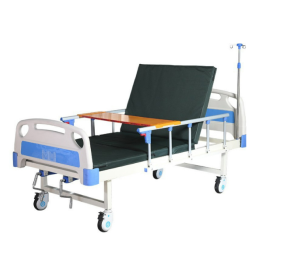
3. Technical Specifications: The Hengyuan Medical Standard
When comparing institutional bed rails, look for durability and ease of installation. Below are the technical parameters of our top-tier Hengyuan Medical series:
| Feature | Specification | Clinical Benefit |
| Material | Chrome-plated Heavy-duty Steel | High durability & infection control |
| Mounting Type | Clamp-on bed rails (Universal) | Tool-free, universal bed rails compatibility |
| Adjustment | Spring-loaded / Telescoping | Fits various bed heights and lengths |
| Safety Standard | FDA Entrapment Zone Compliant | Minimizes risk of limb or neck injury |
| Weight Capacity | Bariatric (up to 600 lbs) | Supports heavy-duty mobility needs |
4. The Critical Safety Concept: Entrapment Prevention
One of the most important aspects of safety bed rails for seniors is the prevention of “entrapment.” This occurs when a patient becomes stuck between the rail bars or between the rail and the mattress.
At Hengyuan Medical, we strictly follow the FDA entrapment zone guidelines. Our designs minimize gaps to ensure that patients—especially those with dementia or high frailty—cannot accidentally injure themselves. Whether you are using fixed bed rails or portable bed rails, ensuring a snug fit with the mattress is the first step in entrapment prevention.
5. Medicare and Insurance: Does Medicare Cover Bed Rails?
A common question for families is: “Does Medicare cover bed rails for the elderly?” Based on current Durable Medical Equipment (DME) guidelines:
-
Integrated Rails: If the bed rails are part of the original design of a medically necessary hospital bed, they are typically covered under Medicare Part B.
-
Standalone Rails: If purchased separately as safety rails for elderly use on a standard home bed, they are often classified as “convenience items” and may not be covered.
-
Hengyuan Medical Tip: Always consult with your healthcare provider to ensure the rails are coded correctly as a medical necessity for fall protection rails.
6. Real-World Case Study: Recovery and Independence
Consider the case of a patient recovering from a stroke at home. Initially, the family used a standard bed, but the risk of nighttime falls was high. By installing a Hengyuan Medical bed side assist rail with a grab rail function, the patient was able to:
-
Stabilize themselves while sitting up.
-
Use the secure bed handle to transition safely to a walker.
-
Avoid the psychological distress of being “caged in” by using a head-end bed rail rather than a full-length barrier.
This transition from total dependence to assisted mobility is the core goal of our mobility bed rails.
Case Study — Restoring Patient Autonomy with Hengyuan Medical Assist Solutions
In the field of geriatric and rehabilitative care, the transition from “total assistance” to “assisted independence” is the ultimate goal. Below is a clinical case study involving the strategic implementation of Hengyuan Medical safety bed rails for seniors.
Patient Profile: The Challenge of Post-Stroke Recovery
-
Patient: Mr. Anderson, 68 years old.
-
Condition: Left-side hemiparesis (weakness) following an ischemic stroke.
-
Clinical Goal: Safe nighttime containment and independent bed-to-chair transfers.
-
The Problem: Mr. Anderson’s family initially used a standard home bed with no support. This led to a “near-miss” fall when he attempted to stand up at night, causing significant nighttime anxiety for both the patient and his caregivers.
Phase 1: Assessing the Safety-Independence Paradox
The medical team faced a common dilemma: Full-length rails would prevent falls but would also act as a physical restraint, potentially causing agitation and reducing Mr. Anderson’s motivation to move.
Hengyuan Medical’s Solution: We replaced the standard setup with a split rail system consisting of our Elite-Series Quarter-Length Bed Rails.
Phase 2: Implementation of the “Pivot and Assist” Strategy
The installation of Hengyuan Medical grab rails at the head-end of the bed provided two immediate clinical benefits:
-
Lateral Stability: While sleeping, the rails acted as a tactile boundary, providing the fall protection necessary for his weakened left side.
-
Mechanical Leverage: Because the rails were secure bed handles made of heavy-duty chrome-plated steel, Mr. Anderson could use his stronger right arm to pull himself into a sitting position—a process known as “log rolling.”
[Image: Diagram of a patient using a head-end grab rail to transition from lying to sitting]
Phase 3: Measurable Outcomes
After 30 days of using the Hengyuan Medical bed assist rails, the following results were documented:
-
Reduction in Falls: Zero fall incidents or “near-misses” recorded.
-
Caregiver Strain: Caregivers reported a 40% reduction in physical effort required for morning transfers.
-
Psychological Recovery: Mr. Anderson reported a significant decrease in “fear of falling,” leading to better sleep quality and more active participation in his daily physical therapy.
Technical Insight: Why This Case Succeeded
The success of this recovery was due to the universal bed rails‘ ergonomic height. Unlike standard rails that are often too low or too high, the Hengyuan Medical design allowed for an optimal “grip zone,” ensuring the patient’s wrist remained in a neutral position while applying force, preventing secondary strain injuries.
Clinical Outcome Summary Table
| Metric | Before Hengyuan Medical | After Hengyuan Medical Implementation |
| Fall Incidents | 2 “Near-Misses” / Month | 0 Incidents |
| Transfer Method | Total Caregiver Lift | Assisted Pivot Transfer |
| Patient Confidence | High Anxiety / Low Mobility | High Confidence / Active Participation |
| Safety Compliance | Non-Compliant (Standard Bed) | FDA Entrapment Zone Compliant |
7. Selection Guide: How to Choose the Right Rail
To find the perfect bed side assist for your needs, follow this checklist:
-
Check Compatibility: Ensure you buy universal bed rails or clamp-on bed rails if you are not using a matching Hengyuan Medical bed frame.
-
Assess Mobility: Does the patient need a safety grab bar to get out of bed, or a full barrier to stay in?
-
Monitor Mattress Gap: Ensure the rail is compatible with the mattress thickness to prevent gaps.
-
Ease of Use: If the caregiver has arthritis, choose spring-loaded bed rails which require less force to operate.
Conclusion
Whether you are looking for bariatric bed rails for a clinical setting or portable bed rails for home care, safety should never be compromised. Hengyuan Medical is dedicated to providing high-quality, compliant, and durable bed rails for hospital beds that empower patients and provide peace of mind for caregivers.
Would you like us to provide a compatibility chart for specific hospital bed brands or a deeper look into FDA safety regulations? Contact Hengyuan Medical today.
