

Crash Carts & Trolleys
Crash Carts
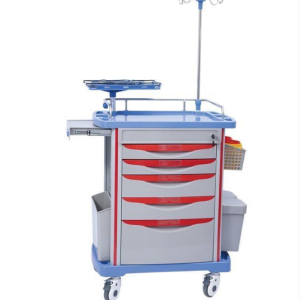
A crash cart is a medical cart equipped with medical equipment and supplies used during emergencies, particularly during a code blue (cardiac or respiratory arrest). These carts are designed to provide quick access to life-saving tools and medications for resuscitation efforts and are found throughout hospitals for quick response in dire situations.
Typical items found on a crash cart include:
Defibrillator- For delivering electrical shocks to the heart to restore a normal rhythm.
Airway supplies- including bag valve masks (BVM), endotracheal tubes, and laryngoscopes for managing breathing and any other items standardized within the hospital.
Medications- including epinephrine, atropine, and others used to treat cardiac arrest or other severe reactions.
Intravenous (IV) equipment For administering fluids and medications.
Suction devices- For clearing the airway of obstructions.
Monitors-To track vital signs like heart rate and oxygen levels.
When supplies are needed immediately, trust Metro crash carts to get the job done. Often when shopping for emergency carts, you are being given a basic medical cart that has simply been adapted to be usable in an emergency. Metro emergency carts are designed for the specific purpose of being used in a code blue. When a life is on the line, your cart should hold you back from getting to the patient quickly. Instead, invest in a cart that was made for quick and efficient treatment.
Henyuan medical takes pride in our ability to create a product that helps everyday heroes do their job better. With Metro’s Lifeline crash cart series, you are given a cart that has been specifically designed to take on emergency systems. The Metro Lifeline crash cart comes with a fifth-wheel steering option for quicker turns and more stable movements. The fifth wheel is controlled with a lever placed conveniently next to the ergonomic steering handle.
Lifeline
Lifeline can be customized to be blue or red in color. Their polymer construction means that they will not get dented when faced with running into walls or getting tossed around. The carts also include a Microban antimicrobial additive that helps keep the carts cleaner between cleanings.
Lifeline also comes with all the needed accessories, including a defibrillator stand that can be moved quickly and efficiently where required. Each cart also includes an extendable IV stand for the immediate administration of medication. For easier management of supplies, Lifeline can be paired with Metro’s easy access security tags.
Metro’s unique seal and security options are designed to take as little time away from the patient as possible. When you open the cart, they simply break off, symbolizing supply management to restock that specific cart area without needing to go through the entire cart. It saves time and gets carts out in the field faster while also decreasing the amount of time supply needs to go through and inventory the cart. Based on your facility’s needs, additional accessories like storage bins and waste bins for easy access during a code.
If you are looking at a less advanced option, consider our more traditional carts. Our Flexline and Basix crash carts are highly customizable to help you create the best cart for your individual needs.
Flexline
Flexline crash carts can be customized in various ways to create the ideal cart for your facility. Flexline is comprised of an advanced heavy-duty polymer that is prepared to take on the hardest hits. Flexline comes with the basics that every crash cart needs, including an oxygen tank holder, divided drawers for easy organization, and an IV pole with a cart mount.
These code carts also come with Microban antimicrobial technology. This additive can help to keep carts cleaner, longer.
Basix
For a more traditional emergency crash cart, consider the Metro Basix. The steel exterior has two layers for added strength. The aluminum drawers make the cart lighter and easy to maneuver through the facility. Basix carts can be customized based on the current guidelines set in your facility.
The ergonomic push handles make maneuvering the cart through winding hallways and rooms easier. Basix carts require a color code upon ordering.
For more information on what to look for in a crash cart read our recent guide.
For our extensive line of pediatric crash carts refer to our pediatric crash cart product page.
Crash Carts & Trolleys Suppliers Africa and Crash Carts & Trolleys Manufacturers Africa:
Kenya (Nairobi), South Africa (Pretoria), Ivory Coast (Yamoussoukro), Cameroon (Yaoundé), Niger (Niamey), Burkina Faso (Ouagadougou), Mayotte (Mamoudzou), Sao Tome (São Tomé), Tunisia (Tunis), South Sudan (Juba), Botswana (Gaborone), Namibia (Windhoek), Gabon (Libreville), Lesotho (Maseru), Guinea Bissau (Bissau), Equatorial Guinea (Malabo), Mauritius (Port Louis), Eswatini (Mbabane), Djibouti (Djibouti), Reunion (Saint-Denis), Comoros (Moroni), Cape Verde (Praia), Western Sahara (Laayoune), Mali (Bamako), Malawi (Lilongwe), Nigeria (Abuja), Ethiopia (Addis Ababa), Egypt (Cairo), DR Congo (Kinshasa), Tanzania (Dodoma), Togo (Lomé), Sierra Leone (Freetown), Libya (Tripoli), Congo (Brazzaville), Central African Republic (Bangui), Liberia (Monrovia), Mauritania (Nouakchott), Eritrea (Asmara), Gambia (Banjul), Seychelles (Victoria), Zambia (Lusaka), Chad (N’Djamena), Somalia (Mogadishu), Senegal (Dakar), Zimbabwe (Harare), Guinea (Conakry), Rwanda (Kigali), Uganda (Kampala), Sudan (Khartoum), Algeria (Algiers), Morocco (Rabat), Angola (Luanda), Ghana (Accra), Mozambique (Maputo), Madagascar (Antananarivo), Benin (Porto-Novo), Burundi (Gitega).Crash Carts & Trolleys Suppliers Europe and Crash Carts & Trolleys Manufacturers Europe:
Austria (Vienna), Belgium (Brussels), Bulgaria (Sofia), Croatia (Zagreb), Cyprus (Nicosia), Czech Republic (Prague), Denmark (Copenhagen), Estonia (Tallinn), Finland (Helsinki), France (Paris), Germany (Berlin), Greece (Athens), Hungary (Budapest), Iceland (Reykjavik), Ireland (Dublin), Italy (Rome), Latvia (Riga), Lithuania (Vilnius), Luxembourg (Luxembourg), Malta (Valletta), Netherlands (Amsterdam), Norway (Oslo), Poland (Warsaw), Portugal (Lisbon), Romania (Bucharest), Slovakia (Bratislava), Slovenia (Ljubljana), Spain (Madrid), Sweden (Stockholm), Switzerland (Bern), United Kingdom (London), Serbia (Belgrade), Montenegro (Podgorica), North Macedonia (Skopje), Belarus (Minsk), Russia (Moscow, European part), Turkey (Ankara, European part).Crash Carts & Trolleys Suppliers Americas and Crash Carts & Trolleys Manufacturers Americas:
Guadeloupe (Basse-Terre), Guatemala (Guatemala City), Guyana (Georgetown), Haiti (Port-au-Prince), Honduras (Tegucigalpa), Jamaica (Kingston), Martinique (Fort-de-France), Mexico (Mexico City), Montserrat (Brades), Nicaragua (Managua), Panama (Panama City), Paraguay (Asunción), Peru (Lima), Puerto Rico (San Juan), Saint Barthelemy (Gustavia), Trinidad and Tobago (Port-of-Spain), Turks and Caicos Islands (Cockburn Town), USA (Washington DC), Uruguay (Montevideo), Venezuela (Caracas), Virgin Islands (Charlotte Amalie), Anguilla (The Valley), Antigua and Barbuda (Saint Johns), Argentina (Buenos Aires), Aruba (Oranjestad), Bahamas (Nassau), Barbados (Bridgetown), Belize (Belmopan), Bermuda (Hamilton), Bolivia (Sucre), Brazil (Brasilia), British Virgin Islands (Road Town), Canada (Ottawa), Cayman Islands (George Town), Chile (Santiago), Colombia (Bogota), Costa Rica (San Jose), Cuba (Havana), Curacao (Willemstad), Dominica (Roseau), Dominican Republic (Santo Domingo), Ecuador (Quito), El Salvador (San Salvador), Falkland Islands (Stanley), French Guiana (Cayenne), Greenland (Nuuk), Grenada (Saint Georges), Saint Kitts and Nevis (Basseterre), Saint Lucia (Castries), Saint Martin (Marigot), Saint Pierre and Miquelon (Saint-Pierre), Saint Vincent and the Grenadines (Kingstown), Sint Maarten (Philipsburg), South Georgia and South Sandwich Islands (King Edward Point), Suriname (Paramaribo).What is a Crash Cart?
A crash cart is a mobile emergency unit used in hospitals and healthcare facilities to store and transport life-saving medical supplies. It contains defibrillators, airway management devices, syringes, emergency medications, IV supplies, and oxygen tanks to ensure rapid response in critical situations. Crash carts are essential for cardiac arrests, respiratory failures, and other medical emergencies, allowing healthcare professionals to act quickly and efficiently.
Why are Crash Carts Important in Hospitals?
Crash carts play a vital role in emergency medical care, as they provide immediate access to essential emergency equipment. During a life-threatening event, such as a cardiac arrest, having a well-organized crash cart ensures that medical teams do not waste precious time searching for supplies. A properly stocked and strategically placed crash cart can improve response time and increase survival rates in emergency situations.
What Should a Crash Cart Contain?
A crash cart typically contains:
- Defibrillator and electrodes for cardiac resuscitation.
- Airway management tools (ambu bag, oxygen masks, laryngoscope, endotracheal tubes).
- IV supplies, including catheters, fluids, and syringes.
- Emergency medications such as epinephrine, atropine, and sodium bicarbonate.
- Basic resuscitation equipment like gloves, gauze, and suction devices.
- Blood pressure monitor and stethoscope for patient assessment.
How Often Should a Crash Cart Be Checked?
Crash carts must be checked daily or at the beginning of every shift to ensure they are fully stocked, all equipment is functional, and medications are within expiration dates. Hospitals and clinics implement strict inventory management protocols to prevent missing or expired supplies, ensuring that carts are always ready for emergencies.
Where Should Crash Carts Be Located?
Crash carts are placed in high-risk areas where emergencies are most likely to occur, including:
- Emergency rooms (ERs) and intensive care units (ICUs).
- Operating theaters and post-anesthesia care units (PACUs).
- Cardiac care units (CCUs) and trauma centers.
- General hospital wards and nursing stations.
- Ambulances and mobile emergency units.
What Makes Schröder Health Projects’ Crash Carts Unique?
Schröder Health Projects designs high-quality, durable, and ergonomic crash carts that prioritize mobility, organization, and efficiency. Their crash carts feature:
- Smooth-rolling, lockable wheels for easy transport and stability.
- Antimicrobial-coated surfaces for improved hygiene.
- Customizable drawer layouts for easy organization.
- Durable, impact-resistant materials for long-lasting performance.
Are Schröder Health Projects’ Crash Carts Customizable?
Yes! Schröder Health Projects offers fully customizable crash carts to meet the unique needs of healthcare facilities. Medical teams can choose:
- Adjustable drawer configurations.
- Different cart sizes and materials (stainless steel or polymer).
- Integrated IV poles, defibrillator mounts, and medication security locks.
How Can I Order Crash Carts from Schröder Health Projects?
Healthcare providers and distributors can order crash carts by contacting Schröder Health Projects directly through their official website or by working with authorized distributors and partners worldwide. The company offers international shipping and support, ensuring that hospitals and clinics receive high-quality emergency medical carts wherever they are needed.
What is an Emergency Cart?
An Emergency Cart, also known as a crash cart, is a mobile unit equipped with essential medical supplies and equipment used during emergency situations. Emergency carts are designed for quick access to life-saving tools such as defibrillators, medications, and airway management devices, ensuring healthcare professionals can respond swiftly to critical patient needs.
What is an Anesthesia Cart?
An Anesthesia Cart is a specialized trolley used in operating rooms to store and organize anesthesia supplies and medications. Anesthesia carts typically feature multiple drawers and compartments for syringes, drugs, intubation equipment, and monitoring devices, facilitating efficient workflow for anesthesiologists during surgical procedures.
What is a Treatment Cart?
A Treatment Cart is a versatile mobile unit designed to hold medical supplies and instruments required for various patient treatments. Commonly used in hospitals and clinics, treatment carts support procedures such as wound care, IV therapy, and minor surgical interventions by providing organized and accessible storage.
What is a Medication Cart?
A Medication Cart is a mobile storage unit used in healthcare settings to securely transport and dispense medications to patients. Equipped with lockable drawers and compartments, medication carts ensure the safe handling of pharmaceuticals and support efficient medication administration by healthcare providers.
What is a Procedure Cart?
A Procedure Cart is a mobile unit designed to store and transport the necessary tools and supplies for specific medical procedures. Procedure carts are customizable to meet the requirements of various specialties, such as cardiology or orthopedics, ensuring that all essential equipment is readily available during procedures.
What is a Stainless Steel Emergency Cart?
A Stainless Steel Emergency Cart is a durable and hygienic crash cart constructed entirely from stainless steel. Ideal for sterile environments, stainless steel emergency carts offer corrosion resistance and easy cleaning, making them suitable for use in operating rooms and intensive care units.
What is a Stainless Steel Anesthesia Cart?
A Stainless Steel Anesthesia Cart is a robust trolley made from stainless steel, designed specifically for organizing and storing anesthesia-related supplies. Stainless steel anesthesia carts durable construction ensures longevity and ease of sterilization, essential for maintaining aseptic conditions in surgical settings.
What is a Stainless Steel Treatment Cart?
A Stainless Steel Treatment Cart is a mobile unit crafted from stainless steel, intended for use in various medical treatments. Stainless steel treatment carts sturdy and hygienic design makes it ideal for procedures requiring a sterile environment, providing ample storage for medical instruments and supplies.