

Can a Hospital Bed Use an Air Mattress? A Complete Guide for Patients and Caregivers
For patients who spend extended periods in bed, comfort and skin protection are critical. One of the most common questions caregivers ask is: “Can a hospital bed use an air mattress?”
The answer is yes — absolutely. Hospital beds are designed to accommodate various types of air mattresses, particularly alternating pressure and low air loss systems, which significantly enhance comfort and prevent pressure injuries.
In this comprehensive guide, Henyuan Medical explains how air mattresses work with hospital beds, what features to consider, and how to choose the right system for your needs.
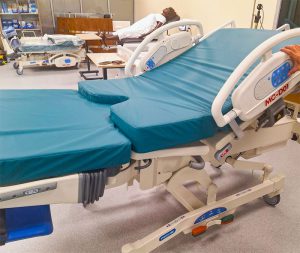
1. Why Use an Air Mattress on a Hospital Bed
Benefits of air mattresses on hospital beds
-
Prevent and treat pressure ulcers:By alternating pressure across the body, an air mattress relieves pressure on any single point, helping to prevent or treat bedsores.
-
Enhance comfort:The constant, dynamic pressure relief provided by an air mattress offers greater comfort for long periods of inactivity compared to a standard mattress.
-
Improve circulation:The alternating pressure cycle improves blood flow by changing the points of contact with the body.
-
Control moisture:“Low air loss” features circulate air across the skin, helping to keep it dry and reducing the risk of maceration and infections.
-
Assist with patient repositioning:Features like rapid deflation for CPR or built-in air side rails can make it easier and safer to transfer patients.
-
Provide pulmonary support:Some advanced air mattresses include percussion vibration to help loosen and clear congestion in the lungs.
-
Manage pain:By relieving pressure points and improving circulation, air mattresses can help manage pain.
Air mattresses for hospital beds, also called alternating pressure mattresses, are specifically designed for people who are bedridden or have limited mobility. Traditional foam mattresses tend to create constant pressure on certain body parts, which can lead to bedsores (pressure ulcers).
Henyuan Medical’s air mattress systems use alternating inflation and deflation cycles to continuously redistribute pressure. This gentle movement enhances blood circulation, relieves localized pressure, and promotes faster recovery.
Main Benefits
-
Pressure Ulcer Prevention: Alternating air chambers reduce prolonged pressure points.
-
Improved Circulation: Gentle airflow movement stimulates blood flow.
-
Moisture and Temperature Control: Low air loss systems regulate skin temperature and humidity.
-
Custom Comfort: Adjustable pressure settings match the patient’s body weight and medical condition.
-
Reduced Caregiver Strain: Easier repositioning and patient handling.
2. How Air Mattress Systems Work
How they work
-
Alternating pressure:The pump inflates some air cells while others deflate, which shifts pressure from one part of the body to another. This cycle repeats, typically every 10 to 25 minutes, to promote blood circulation and prevent pressure sores.
-
Static mode:A static mode can be activated to stop the alternating cycle, allowing the mattress to remain fully inflated for a stable, uniform surface.
-
Low air loss:Some systems have small ventilation holes in the air cells that allow a continuous flow of air to circulate. This helps manage moisture and heat, keeping the skin cool and dry to further reduce the risk of skin breakdown.
-
Pump and hose system:A control unit (pump) is connected to the mattress via an air hose. The pump is responsible for the inflation and deflation cycles.
-
CPR valve:A valve for rapid deflation (CPR valve) is included for emergency situations where the mattress needs to be deflated quickly.
Benefits and use
- Medical purposes: These systems are often used in healthcare to prevent or aid in the healing of pressure injuries, especially for individuals with limited mobility.
- Improved comfort: They can provide enhanced comfort for those who spend long periods in bed.
- Safety features: Many systems include safety features like low pressure alarms and easy-to-clean, launderable covers.
Alternating Pressure Systems
These systems contain a series of air cells that inflate and deflate in cycles. This motion alternates pressure zones, minimizing the risk of pressure sores. They are ideal for medium- to high-risk patients.
Low Air Loss Systems
Low air loss mattresses provide a continuous flow of air through micro-perforated cells. This helps keep the skin cool and dry, preventing moisture buildup that can cause skin breakdown.
Combination Systems
Some advanced models combine both alternating pressure and low air loss functions for optimal protection and comfort.
3. Compatibility: Can All Hospital Beds Use Air Mattresses?
Most Henyuan Medical hospital beds—manual, semi-electric, or fully electric—are compatible with air mattress systems.
However, choosing the right size and fit is essential. The mattress must match the bed frame dimensions (commonly 36” × 80”) and support the patient’s weight capacity.
Technical Specifications Table
| Parameter | Description |
|---|---|
| Mattress Type | Alternating Pressure / Low Air Loss |
| Size | Standard: 36″ × 80″ × 8″ (custom sizes available) |
| Pressure Range | 20–60 mmHg adjustable |
| Weight Capacity | Up to 180 kg |
| Material | Medical-grade PVC or Nylon TPU |
| Cycle Time | 10–12 minutes per full rotation |
| Pump Noise Level | < 30 dB (A) |
| Warranty | 1–3 years depending on model |
4. How to Choose the Right Air Mattress
Size and space
-
Determine the right size:Choose a size that accommodates the number of sleepers, such as a twin or full for one person and a queen or king for two.
-
Measure your space:Before buying, measure the available floor space to make sure the inflated mattress will fit comfortably and leave enough room to move around.
- Consider the pump: Look for an air mattress with a built-in pump for convenience, or ensure you have a compatible external pump. Some models offer adjustable firmness, which is great for customizing comfort.
- Check for comfort features: Features like a built-in pillow top can add extra comfort. Evaluate how the mattress feels, looking for one that provides a stable yet comfortable sleep surface that keeps the spine neutrally aligned.
- Think about height: Taller air mattresses make it easier to get in and out of bed.
Durability and air retention
-
Evaluate durability:For a longer-lasting mattress, look for features like extra-thick vinyl or a puncture-resistant material.
-
Check for air retention:Read reviews to see how well a mattress holds air over time and through the night to avoid waking up on the floor. Some models require topping off after a few days of use.
Inflation and storage
-
Test inflation and deflation:Check how quickly the mattress inflates and deflates. Some models come with a storage bag or box, making them easier to store when not in use.
-
Check the pump:Make sure the pump is easy to use and quiet. Some models may require manual effort to fully deflate before storage.
When choosing an air mattress for a hospital bed, consider these key factors:
| Feature | What to Look For | Why It Matters |
|---|---|---|
| Pressure Settings | Adjustable pump with multiple levels | Allows customization for patient comfort |
| Pump System | Quiet, energy-efficient pump | Reduces noise disturbance during sleep |
| Material & Durability | Medical-grade PVC / TPU coating | Ensures hygiene and long-term use |
| Maintenance | Replaceable air cells, washable cover | Easy cleaning for infection control |
| Safety Features | CPR valve, anti-slip base | Provides safety in emergencies |
| Weight Capacity | Up to 180 kg (400 lbs) | Ensures mattress performance under load |
| Warranty | Minimum 1 year | Guarantees quality and support |
Henyuan Medical offers a full range of air mattress models that meet these requirements.
5. Real-World Example
Case Study: Elderly Care Facility, Singapore
A rehabilitation center equipped their patient rooms with Henyuan Medical alternating pressure air mattresses. Within 8 weeks, they reported:
-
65% reduction in new pressure ulcer cases.
-
Improved patient sleep quality thanks to the quiet pump design.
-
Lower caregiver fatigue due to easier patient repositioning.
Such results confirm that using an air mattress on a hospital bed is not only feasible but highly beneficial for both patients and caregivers.
6. Maintenance and Safety Tips
To ensure long-term reliability:
-
Check air pressure levels daily.
-
Keep the pump filter clean.
-
Wipe the surface with mild disinfectant and ensure dryness.
-
Do not place sharp objects near the mattress.
-
In case of a power outage, switch to manual pressure mode if available.
Regular maintenance extends the life of your hospital bed air mattress and maintains patient safety.
7. Common Questions
Q1: Can I use a regular air mattress on a hospital bed?
No. Regular camping-style air mattresses lack medical features like alternating pressure and low air loss. Use only medical-grade air mattresses designed for hospital beds.
Q2: Is a pump necessary?
Yes. The pump regulates air flow and pressure cycles. Henyuan Medical pumps operate quietly (< 30 dB) and are energy-efficient.
Q3: How long does it take to inflate?
Usually within 5–10 minutes depending on model and size.
Q4: Can it fit home-care beds?
Yes. Henyuan Medical offers universal air mattress systems compatible with most home-care hospital beds.
8. Conclusion
So, can a hospital bed use an air mattress?
Absolutely — and it’s one of the best upgrades for comfort, hygiene, and patient safety.
With alternating pressure, low air loss, adjustable pump systems, and custom fit options, Henyuan Medical provides reliable air mattress solutions trusted by hospitals, nursing homes, and home-care providers worldwide.
If you’re seeking the best air mattress for your hospital bed, explore Henyuan Medical’s range today and experience the next level of patient care.
