

China Obstetric Chair Factory: The Complete Guide by Henyuan Medical
When hospitals, clinics, and maternity centers look for reliable solutions in obstetrics and gynecology, one term often comes to the forefront: China obstetric chair factory. Among these, Henyuan Medical has established itself as a trusted manufacturer, offering high-quality gynecology chairs, obstetric beds, maternity delivery tables, and examination chairs to meet the needs of modern healthcare facilities.
This guide explores everything you need to know about choosing the right obstetric and gynecology chair—from product features to technical specifications, real-world use cases, and a complete buying guide.
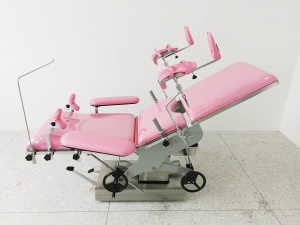
Why Obstetric and Gynecology Chairs Matter
For patients
- Safety and stability: OB/GYN chairs minimize the risk of injury during examinations by providing a secure and stable platform for patients. Features like sturdy leg stirrups and a locking mechanism prevent accidental movement.
- Increased comfort: Exams can be stressful or uncomfortable, and these chairs are designed to mitigate that. They often include adjustable, padded cushioning to reduce pressure points during extended procedures.
- Accessibility for patients with mobility issues: Adjustable chairs can be lowered to a height that makes it easier and safer for patients with limited mobility to get on and off, which is particularly helpful for expectant mothers.
- Privacy and dignity: The ability to adjust the chair allows healthcare providers to ensure patient privacy. Patients can move into a sitting position for conversations and consultations before the physical examination begins.
For healthcare providers
- Improved efficiency and precision: Specialized OB/GYN chairs enable physicians to perform procedures like Pap smears, pelvic exams, and IUD insertions more easily and with greater accuracy. The design and stirrups provide the necessary positioning to minimize patient movement.
- Reduced physical strain: Features like electronic or hydraulic adjustments allow providers to easily raise, lower, or tilt the chair to an ergonomic height, reducing physical strain on their back and neck.
- Versatility in functionality: Some advanced OB/GYN chairs can be adjusted into a flat-bed position, eliminating the need to move a patient to a separate table for procedures like ultrasound imaging.
- Space maximization: Certain models include built-in storage compartments, allowing medical supplies to be kept within arm’s reach while minimizing clutter in smaller exam rooms.
For specific needs
- Birthing chairs: A specialized type of OB/GYN chair, a birthing chair or stool, supports an upright position during childbirth. Studies show this can help gravity assist in labor, potentially shortening the pushing stage and relieving back pain.
- High-capacity models: Some chairs are specifically designed for bariatric patients. They feature wider surfaces and reinforced frames to safely accommodate a diverse patient population.
- Adaptability for adolescents: While not a separate category, the gentle, quiet electronic adjustments available on modern OB/GYN chairs can be especially helpful for easing the stress and anxiety of younger patients.
Obstetric and gynecology chairs are essential for:
-
Maternity wards and delivery rooms, where they support labor and childbirth.
-
Gynecology departments, where precision, patient comfort, and adjustability are critical.
-
Private clinics and examination rooms, where space-saving, versatile chairs improve workflow efficiency.
Unlike standard hospital beds, obstetric chairs require advanced features such as adjustable height, removable leg plates, dual control systems, and antimicrobial upholstery.
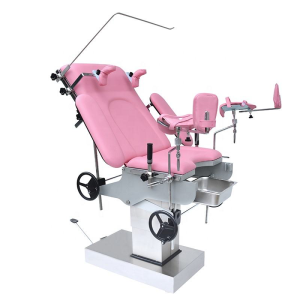
What are the main differences between manual, hydraulic, and electric OB/GYN chairs?
Manual OB/GYN chairs
- Mechanism: Rely on mechanical controls like levers and cranks, requiring a provider to manually lift and adjust the chair’s position.
- Cost: Significantly more affordable upfront and have lower maintenance costs due to fewer moving parts.
- Pros: Highly durable, reliable, and do not need electricity to operate, so they are always functional.
- Cons: Adjusting positions requires physical effort and can be challenging for both the provider and the patient, potentially causing strain. They also have less precise control over adjustments compared to powered chairs.
- Mechanism: Adjustments, particularly height, are powered by a hydraulic system. The provider uses a foot pedal to activate a fluid-filled cylinder, which smoothly raises and lowers the chair. Other adjustments, like the backrest, may still be manual.
- Cost: More expensive than manual chairs, but less so than fully electric models.
- Pros: Offer smoother and easier height adjustments than manual chairs and don’t rely on a power outlet for all functions.
- Cons: While easier to adjust than manual chairs, they may not offer full power functionality, and a provider still needs to apply physical effort. The hydraulic system may also require more maintenance than a manual chair.
Electric OB/GYN chairs
- Mechanism: Motorized controls allow a provider to adjust height, backrest, and tilt with the push of a button or foot control. Some advanced models even have memory presets for common positions.
- Cost: Have the highest initial and maintenance costs due to their electronic components.
- Pros:
- Reduced provider strain: The automated adjustments eliminate the need for manual lifting, reducing the risk of fatigue and injury for providers.
- Enhanced patient comfort: Smooth, quiet, and precise adjustments create a more relaxing experience for patients, especially those with mobility issues or anxiety.
- Increased efficiency: Effortless positioning leads to faster patient turnover in high-volume clinics.
- Accessibility: Allows patients to get on and off the chair safely by lowering it to an ADA-compliant height.
- Cons: Higher initial cost, heavier and less mobile design, and reliance on a power source. If the power fails, the chair may be unusable or require a manual override.
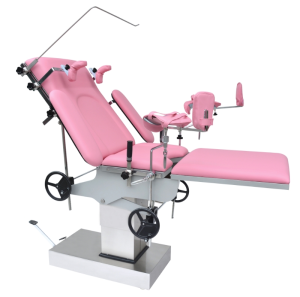
Comparison at a glance
| Feature | Manual | Hydraulic | Electric |
|---|---|---|---|
| Adjustment Method | Manual levers and cranks | Foot pedal and hydraulic fluid for height; others may be manual | Electric motors via push-button or foot controls |
| Provider Effort | High physical effort | Moderate physical effort, mainly with the pedal | Low to no physical effort |
| Patient Comfort | Basic; adjustments can be abrupt | Better than manual due to smoother lift | Highest; offers seamless, quiet adjustments |
| Precision | Basic | Good for height; other movements may be less precise | Highest; allows for minute, repeatable adjustments |
| Initial Cost | Lowest | Mid-range | Highest |
| Power Dependent? | No | Not for all functions | Yes |
| Maintenance | Lowest | Moderate | Highest |
Product Range by Henyuan Medical
Types of Chairs
- Manual Chairs: Simpler models that rely on mechanical adjustments for positioning.
- Electric/Power Chairs: Use motors to provide smooth and precise adjustments for height, backrest, and leg sections, often with a hand-held controller or foot pedal.
- Hydraulic Chairs: Use hydraulic systems for smooth and controlled height adjustments.
- Procedure Chairs: More specialized chairs, sometimes called “beds” or “tables,” designed to lay flat for procedures like ultrasounds, in addition to sitting or reclining positions.
Common Features & Accessories
- Adjustable Sections: Back, seat, and leg positions can be customized for optimal access and patient comfort.
- Stirrups: Integrated or removable leg stirrups are standard for positioning.
- Ergonomic Design: Chairs are built to be sturdy, comfortable, and provide good access for both the patient and the practitioner.
- Medical-Grade Upholstery: Easy-to-clean, seamless, and hygienic materials.
- Mobility: Some models include retractable wheels or a rotating base for easy movement within the clinic.
- Patient Comfort Features: Adjustable headrests, removable cushions, and sometimes even a facial hole for face-down positioning.
- Electric Features: Buttons for smooth electric elevation, a reset function to return the chair to its upright position, and 360-degree rotation.
How They Are Used
- Exams: For routine annual exams, checkups, and patient examinations.
- Procedures: For minor in-office procedures such as biopsies, ultrasounds, and other women’s health treatments.
- Patient Care: They provide a safe, comfortable, and stable environment for patients during potentially uncomfortable procedures.
Henyuan Medical, a China obstetric chair factory, provides a complete portfolio:
-
Gynecology Examination Chairs
-
Designed for routine check-ups, minor surgical procedures, and diagnostics.
-
-
Obstetric Delivery Chairs
-
Electric and manual models with adjustable backrest and leg support.
-
Waterproof, stain-resistant surfaces for hygiene and easy cleaning.
-
-
Maternity Beds
-
Multipurpose beds for labor, delivery, and recovery phases.
-
-
Operating Room Obstetric Tables
-
Sturdy stainless-steel structures with advanced motorized controls.
-
Key Features of Henyuan Medical Obstetric Chairs
| Feature | Specification | Importance |
|---|---|---|
| Control System | Dual control (hand remote + foot switch) | Enhances flexibility for medical staff |
| Upholstery | Antimicrobial, waterproof material | Infection prevention and easy maintenance |
| Leg Plate | Detachable, adjustable | Facilitates childbirth and examinations |
| Height Adjustment | 680–940 mm | Accommodates doctors of different heights |
| Load Capacity | Up to 200 kg | Ensures patient safety |
| Frame | 304 stainless steel | Durability and corrosion resistance |
| Power | 1.0 kW | Strong, stable performance |
Applications of the Obstetric Chair
Applications in Labor:
-
First Stage of Labor:
- Comfort and Support: The chair can be used in various positions, such as sitting forward to lean against the backrest or sitting backward to wrap legs around the back, allowing for support during contractions and rest between them.
- Partner/Doula Assistance: In the backward-facing position, the chair allows a partner or doula to provide back massages or counterpressure.
- Comfort and Support: The chair can be used in various positions, such as sitting forward to lean against the backrest or sitting backward to wrap legs around the back, allowing for support during contractions and rest between them.
-
Second Stage of Labor (Pushing):
- Pelvic Opening: The chair supports a deep squat, which increases the diameter of the pelvis and can help the baby move down more effectively.
- Leverage and Stability: It provides a stable base and leverage for pushing, similar to the feeling of sitting on a toilet, which can be a familiar and effective position.
- Gravity Assistance: The upright position helps gravity to assist in the baby’s expulsion.
- Pelvic Opening: The chair supports a deep squat, which increases the diameter of the pelvis and can help the baby move down more effectively.
Benefits and Features:
-
Promotes Upright Positioning:
It facilitates positions that can alleviate back pressure and make contractions more effective.
-
Mobility and Position Changes:
Birthing chairs are designed for comfort and mobility, allowing easy changes between positions during labor.
-
Historical and Modern Revival:
Birthing chairs have been used for millennia and have seen a resurgence in modern medicine due to their benefits in speeding up labor and increasing comfort.
-
Versatility:Some modern birthing chairs are designed with adjustable features, including backrests and footrests, to adapt to different labor positions like squatting or semi-sitting.
-
Large Hospitals: Delivery chairs used in obstetric departments for safe childbirth.
-
Specialized Clinics: Gynecology chairs supporting minor surgical operations.
-
Community Health Centers: Cost-effective models for general examinations.
-
International Buyers: Hospitals overseas sourcing directly from Henyuan Medical, a China-based manufacturer with OEM/ODM customization.
Technical Specifications Example (Electric Obstetric Chair)
| Parameter | Value |
|---|---|
| Length × Width | 1880 × 600 mm |
| Height Range | 680–940 mm |
| Backrest Tilt | 0–70° |
| Leg Plate | Detachable, adjustable |
| Load Capacity | 200 kg |
| Power | 1.0 kW |
| Material | Stainless steel, antimicrobial upholstery |
| Accessories | Arm supports, leg holders, waste basin |
Buying Guide: How to Choose the Right Obstetric Chair
These are the most common and versatile option in modern maternity wards. Electric beds use motors to adjust the height, backrest, and leg sections via a remote control or foot pedal, which significantly reduces physical strain on staff.
- Best for: Busy maternity facilities, providing maximum customization and ease of use for both patient and medical staff.
- Key features:
- Full adjustability: Allows seamless changes to height, backrest angle, and the Trendelenburg (head-down) or reverse Trendelenburg (head-up) positions.
- Built-in features: Often includes integrated accessories like leg stirrups, hand grips for pushing, and a telescoping work table for the medical team.
- Battery backup: Ensures continued function during a power outage.
- Quiet operation: Low-noise motors ensure a calm environment for the mother.
Hydraulic chairs are a step up from manual models and use a fluid mechanism for easier adjustments. They are more economical than fully electric beds but require more effort from the medical provider.
- Best for: Budget-conscious facilities or those with less frequent, intensive needs for a delivery bed.
- Key features:
- Ease of adjustment: Reduces the physical exertion required for manual height and position changes.
- Reliability: Doesn’t depend on an electric power source for operation.
These are the most basic and affordable option, with adjustments made manually using levers and cranks.
- Best for: Situations where budget is the primary concern and frequent repositioning is not required.
- Key features:
- Affordability: Lowest cost option, though it requires the most physical effort from medical staff.
- Durability: Simplified mechanics mean fewer parts that can break down.
Features to consider
- Comfortable cushioning: Thick, high-density padding on the mattress and upholstery provides support and reduces pressure points during extended labor.
- Ergonomic design: Contour-adapting surfaces, lumbar support, and adjustable seating help maintain a balanced, neutral posture, reducing strain and fatigue.
- Adjustable support: Independently adjustable leg and back sections allow the mother to find comfortable birthing positions, including semi-seated, upright, or side-lying.
- Side rails and hand grips: Padded side rails and integrated handles offer support and a secure grip for the mother during labor contractions.
For safety and function
- Rapid conversion capability: Essential for emergencies, a quality birthing bed should allow for quick conversion to a fully flat or Trendelenburg position. Look for features like quick-drop foot sections and one-touch CPR positioning.
- Adjustable accessories: Look for beds with adjustable and removable leg stirrups, as well as a telescoping work table that provides easy access for the medical team.
- Central locking wheels: Swivel casters make the bed mobile for transport, while a central locking system ensures stability during procedures and transfers.
- Infection control: For hygiene, choose a bed with water-resistant and easy-to-clean upholstery. Materials that are antimicrobial, have seamless surfaces, and feature minimal crevices and seams are best for preventing the spread of infection.
- High weight capacity: Ensure the chair’s maximum weight capacity is sufficient to accommodate a wide range of patients safely.
- Compliance with standards: Prioritize chairs that meet internationally recognized standards such as ISO 13485 (medical devices) and IEC 60601-1 (electrical safety).
Factors for the facility
- Mobility: If the bed needs to be moved between rooms (e.g., from labor to delivery), consider models with durable, central-locking casters.
- Budget: Manual and hydraulic beds are more budget-friendly, while fully electric options offer more advanced features and greater convenience at a higher price.
- Space: Check the dimensions to ensure the bed fits comfortably in your delivery rooms, with enough space for healthcare providers to move around it safely.
- Warranty and support: Confirm the manufacturer offers strong after-sales support, including installation, maintenance, and warranty services.
-
Identify Application Needs
-
Delivery rooms require robust, multifunctional chairs.
-
Clinics may focus on compact gynecology examination chairs.
-
-
Check Technical Parameters
-
Ensure load capacity, control systems, and dimensions fit your facility.
-
-
Consider Hygiene and Durability
-
Look for antimicrobial upholstery, waterproof materials, and stainless-steel frames.
-
-
Evaluate Control Options
-
Dual control systems (remote + foot switch) improve efficiency in high-demand environments.
-
-
Look for OEM & Customization
-
Henyuan Medical offers tailored solutions in size, color, and configuration.
-
Why Choose Henyuan Medical as Your China Obstetric Chair Factory
-
Wide Product Portfolio: From gynecology chairs to delivery beds.
-
Proven Quality: Products tested for safety, durability, and hygiene.
-
OEM/ODM Service: Custom solutions for hospitals, clinics, and distributors.
-
Competitive Pricing: Affordable yet high-quality equipment for global buyers.
-
International Standards: CE-certified, meeting global hospital requirements.
Conclusion
Selecting the right obstetric chair is a decision that impacts both patient safety and clinical efficiency. As a leading China obstetric chair factory, Henyuan Medical combines innovation, durability, and affordability to deliver medical equipment trusted worldwide.
Whether you need a gynecology chair, obstetric delivery bed, or maternity operating table, Henyuan Medical is your reliable partner, ensuring quality solutions for modern healthcare.
