

Crank for Hospital Bed: The Comprehensive Guide
In modern healthcare facilities, hospital beds are more than just furniture—they are critical tools for patient care. One of the essential components that allow adjustable hospital beds to function efficiently is the crank for hospital bed. Whether for home care or clinical settings, these cranks provide smooth control over bed positions, enhancing patient comfort and caregiver efficiency.
In this guide, we explore different types of manual bed cranks, focusing on 2-crank, 3-crank, and 4-crank hospital beds, all offered by Henyuan Medical. We’ll cover features, technical specifications, real-world applications, and a selection guide to help you make informed decisions.
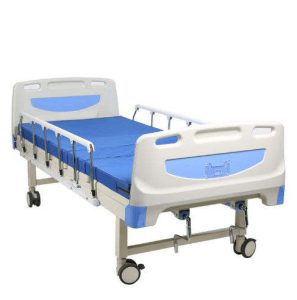
1. Understanding Hospital Bed Cranks
Crank functions
- One crank: Adjusts only the head or foot section, or height.
- Two cranks: Adjusts the head/backrest and the foot/legrest sections.
- Three cranks: Adjusts the head/backrest, the foot/legrest, and the overall height of the bed.
- Four or five cranks: Include additional features, such as Trendelenburg or reverse Trendelenburg positioning, which tilts the entire bed.
How to use the cranks
-
Location:Cranks are typically located at the foot of the bed, often under the mattress.
-
Operation:To raise a section, turn the corresponding crank clockwise. To lower it, turn the crank counter-clockwise.
-
Height adjustment:For a three-crank bed, one crank is dedicated to adjusting the bed’s height. To use it, you may need to insert the crank handle into a separate receptacle and turn it.
-
Storage:When not in use, cranks are often designed to be removed and stored on a bracket on the bed frame.
When to use cranks
-
Budget-friendly alternative:Manual beds with cranks are often less expensive than electric models, making them a good option for home care or facilities with budget constraints.
-
Reliable in emergencies:Since they are manually operated, cranks allow adjustments to be made even during a power outage.
-
Basic patient needs:They are suitable for patients who require basic adjustments for comfort and positioning.
-
Increased caregiver effort:They require more physical effort from the caregiver, especially when frequent adjustments are needed.
A hospital bed crank is a manual mechanism that allows healthcare providers or caregivers to adjust various parts of the bed. Depending on the model, cranks can control:
-
Backrest angle
-
Leg elevation
-
Overall bed height
Henyuan Medical offers high-quality cranks designed for durability, smooth operation, and safety.
Benefits of using a hospital bed crank include:
-
Simple manual operation without electricity
-
Precise adjustment for patient comfort
-
Low maintenance and high reliability
-
Compatibility with different bed models
2. Types of Hospital Bed Cranks
Types of cranks by bed function
- 1-Crank: Typically adjusts only the overall height of the bed.
- 2-Crank: Adjusts the head section (backrest) and the foot section (leg rest).
- 3-Crank: Adjusts the head section, the foot section, and the overall height of the bed.
- 4 or 5-Crank: Includes a fourth and fifth crank for additional functions like Trendelenburg or reverse Trendelenburg positions, which are beneficial for circulation or specific medical treatments.
Types of beds by operation
- Manual beds: Use hand cranks for all adjustments, including head, foot, and height.
- Semi-electric beds: Use an electric motor for head and foot adjustments, controlled by a hand pendant, while height is adjusted manually with a crank.
- Fully-electric beds: Do not use hand cranks. The patient or caregiver uses a hand pendant or remote to control all adjustments, including height.
2.1 2-Crank Hospital Bed
2-crank hospital beds are basic manual beds with two cranks, typically controlling:
-
Backrest elevation
-
Leg rest elevation
Henyuan Medical 2-Crank Bed Features:
| Feature | Specification |
|---|---|
| Cranks | 2 (Backrest, Leg Rest) |
| Recline Angle | 0°–70° Backrest, 0°–45° Leg Rest |
| Weight Capacity | Up to 350 lbs |
| Material | Anti-corrosion steel, powder-coated |
| Operation | Manual crank handle |
Practical Use Case:
Ideal for general wards and home care settings, the 2-crank bed allows caregivers to adjust patient positions efficiently during routine care or rest periods.
2.2 3-Crank Hospital Bed
3-crank hospital beds are versatile beds with an additional crank for height adjustment. Typical functions include:
-
Backrest elevation
-
Leg rest elevation
-
Bed height adjustment
Henyuan Medical 3-Crank Bed Features:
| Feature | Specification |
|---|---|
| Cranks | 3 (Backrest, Leg Rest, Bed Height) |
| Recline Angle | 0°–70° Backrest, 0°–45° Leg Rest |
| Bed Height Range | 16–24 inches |
| Weight Capacity | Up to 350 lbs |
| Material | Durable steel, powder-coated |
| Operation | Smooth manual cranks |
Use Case:
In rehabilitation units, the 3-crank bed is especially useful, providing caregivers control over patient positioning and ergonomics for physical therapy sessions.
2.3 4-Crank Hospital Bed
4-crank hospital beds offer maximum adjustability, typically including:
-
Backrest
-
Leg rest
-
Bed height
-
Trendelenburg/Reverse Trendelenburg position
Henyuan Medical 4-Crank Bed Features:
| Feature | Specification |
|---|---|
| Cranks | 4 (Backrest, Leg Rest, Bed Height, Trendelenburg) |
| Recline Angle | 0°–70° Backrest, 0°–45° Leg Rest |
| Bed Height Range | 16–24 inches |
| Trendelenburg Angle | ±15° |
| Weight Capacity | Up to 350 lbs |
| Material | Heavy-duty steel, anti-rust coating |
| Operation | Manual crank handle with ergonomic grip |
Practical Example:
In intensive care or post-surgical wards, the 4-crank bed allows caregivers to position patients optimally for treatment, circulation, or respiratory support.
3. Henyuan Medical Crank Handle Replacement and Accessories
In addition to complete beds, Henyuan Medical provides replacement crank handles and compatible accessories, including:
-
Footboard cranks
-
Semi-electric bed single crank adapters
-
Nylon and steel crank handles
Technical Table:
| Accessory | Compatible Bed Model | Material |
|---|---|---|
| Bed Crank Handle | Henyuan Medical 2–4 Crank | Steel/Nylon |
| Footboard Crank | Henyuan Medical MDR Series | Powder-coated Steel |
| Semi-Electric Crank Adapter | Henyuan Semi-Electric Beds | Steel |
Example Use Case:
A healthcare facility replacing worn-out cranks can easily swap with Henyuan Medical’s replacement handles, ensuring uninterrupted patient care.
4. Comparison: 2-Crank vs 3-Crank vs 4-Crank Beds
A 2-crank bed adjusts the backrest and leg rest, while a 3-crank bed adds an overall height adjustment. A 4-crank bed provides all the features of a 3-crank model plus the ability to adjust the bed into Trendelenburg and Reverse Trendelenburg positions. The main differences are the number of adjustable functions, with each additional crank offering a new, often more specific, medical positioning capability.
| Feature | 2-Crank Bed | 3-Crank Bed | 4-Crank Bed |
|---|---|---|---|
| Crank Functions | Backrest, Leg Rest | Backrest, Leg Rest, Bed Height | Backrest, Leg Rest, Bed Height, Trendelenburg |
| Ideal Use Case | Home care, general ward | Rehab unit, long-term care | ICU, post-surgical, intensive care |
| Weight Capacity | 350 lbs | 350 lbs | 350 lbs |
| Adjustability | Moderate | High | Maximum |
| Trendelenburg Function | No | No | Yes |
5. Selection Guide: How to Choose the Right Hospital Bed Crank
Assess patient needs
-
Mobility and strength:A manual or semi-electric bed requires a caregiver or the patient to use a crank. A fully electric bed is easier for patients with more independence, as adjustments are made with a hand pendant.
-
Weight:A standard bed is for most patients, but bariatric beds are available for those with higher weight needs.
-
Comfort:Consider features that can relieve pain and improve circulation, such as the ability to adjust the knee and head sections.
Understand bed types and crank functions
-
Manual beds:These require physical effort to turn cranks.
- 2-crank beds: Typically control the backrest and knee section.
- 3- and 4-crank beds: Offer more adjustments for features like head, knee, and bed height.
-
Semi-electric beds:Use one motor for adjustments like bed height, while other adjustments are manual.
-
Fully electric beds:Use multiple motors for all adjustments and are controlled with a hand pendant.
Consider additional factors
- Budget: Manual beds are the least expensive, while fully electric beds are the most expensive. Semi-electric beds offer a balance between cost and convenience.
- Warranty and maintenance: Check the warranty and consider how easy the bed is to maintain.
- Noise: For electric or semi-electric beds, choose a model with a quiet motor for the patient’s comfort and sleep quality.
- Ease of use: Ensure the controls are intuitive for the user.
- Space: Make sure the bed fits in the intended space.
When choosing a crank for hospital bed, consider the following factors:
-
Patient Needs: Mobility-limited or post-surgery patients may require 3- or 4-crank beds.
-
Bed Type: Match crank type with manual or semi-electric beds.
-
Durability: Steel or nylon crank handles provide longevity.
-
Ease of Operation: Ergonomic handles reduce caregiver strain.
-
Replacement Availability: Henyuan Medical offers spare crank handles for maintenance convenience.
Tip: For long-term care, a 3-crank bed is a practical balance between functionality and ease of use. For specialized medical needs, 4-crank beds provide maximum adjustability.
6. Real-World Applications
-
Home Care: Henyuan Medical 2-crank beds provide cost-effective comfort for homebound patients.
-
Rehabilitation Units: 3-crank beds support physiotherapy with adjustable height and positioning.
-
Post-Surgery Wards: 4-crank beds allow Trendelenburg positioning for optimal recovery.
-
Medical Equipment Maintenance: Henyuan Medical crank replacement handles extend bed lifespan and maintain functionality.
7. Conclusion
A crank for hospital bed is a small but essential component that significantly improves patient comfort and caregiver efficiency. Henyuan Medical’s range of 2-crank, 3-crank, and 4-crank beds, along with replacement crank handles, ensures reliable performance in any healthcare environment. By understanding the differences and selecting the appropriate crank system, hospitals and care facilities can enhance patient care, reduce caregiver strain, and extend the lifespan of hospital beds.
