

Electric Hospital Beds: A Complete Guide by Henyuan Medical
Electric hospital beds have become an essential part of modern healthcare, providing patients and caregivers with comfort, flexibility, and safety. Whether used in hospitals, long-term care facilities, or home care environments, electric hospital beds make daily care more efficient and improve patients’ quality of life.
In this comprehensive guide, Henyuan Medical — a global manufacturer specializing in hospital furniture and medical beds — explains everything you need to know about electric hospital beds: their features, prices, technical specifications, and how to choose the right model.
1. What Is an Electric Hospital Bed?
Key features and functions
-
Motorized adjustments:An electric remote control allows for easy and effortless adjustments of the head and foot sections.
-
Height adjustment:The entire bed’s height can be raised or lowered electronically, which is crucial for patient transfers and caregiver comfort.
-
In-bed chair position:Many models can be adjusted to a more upright position, which can improve breathing for some patients and is helpful for sitting up in bed.
-
Manual override:A manual hand crank is often included as a backup for power outages.
-
Safety features:These beds are designed with durable frames and often include safety rails to prevent falls.
-
Trendelenburg and reverse Trendelenburg positions:Advanced models can tilt the entire bed, which is useful in critical care or post-surgery settings.
Benefits for patients and caregivers
-
For patients:Allows for greater independence and comfort by enabling them to change their position without assistance.
-
For caregivers:Simplifies caregiving tasks like changing linens or assisting the patient, as the bed can be raised to a more convenient height.
-
Promotes safety:The ability to lower the bed to a safer height helps prevent falls, while the adjustable features make it easier to get in and out of bed.
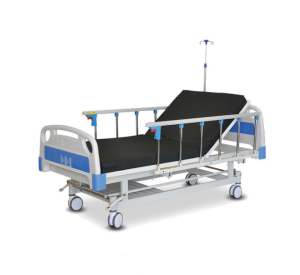
An electric hospital bed is a motorized medical bed designed to adjust height, head, and leg positions through an electric control system. Unlike manual or semi-electric beds, these beds use fully electric motors for smooth, effortless adjustments.
Henyuan Medical’s full-electric beds are ideal for home care, rehabilitation, and intensive care units, offering reliable operation and quiet motors.
Key Features:
-
Full electric height adjustment (hi-low function)
-
Motorized head and leg sections
-
Remote control operation
-
Side rails and safety locks
-
Backup battery and emergency lowering function
-
Compatibility with pressure-relief mattresses
2. Why Choose an Electric Hospital Bed?
Compared with manual models, electric hospital beds deliver superior comfort, safety, and efficiency.
Caregivers can adjust the bed with minimal effort, reducing the risk of back injuries, while patients gain greater independence by adjusting their position via remote control.
Benefits for patients
-
Enhanced comfort:Patients can easily adjust the bed to find a comfortable and supportive position, improving circulation and overall well-being.
-
Greater independence:Remote controls allow for self-adjustments, giving patients more autonomy over their position.
-
Improved recovery:Proper positioning, like elevating the head or legs, can support healing, improve breathing, and help prevent pressure ulcers.
-
Increased safety:Features like height adjustment and safety rails can help prevent falls.
Benefits for caregivers
-
Reduced physical strain:Motorized controls eliminate the need for manual adjustments, which saves caregivers energy and reduces the risk of injury.
-
Easier patient care:Adjusting the bed’s height and position is simple, making it easier to help with bathing, dressing, or other care tasks.
-
Increased efficiency:The ability to make quick, precise adjustments makes bedside care more efficient.
Other considerations
-
Home use:Electric beds allow for hospital-level care in a home setting, which can help patients recover in a familiar environment instead of a facility.
-
Cost:While often more expensive than manual beds, they may be covered by insurance or available for rent.
-
Power and space:These beds require an electrical outlet and can need extra space for the caregiver to move around the bed.
Advantages:
| Feature | Benefit |
|---|---|
| Full Electric Adjustment | Allows effortless positioning for reading, eating, or resting |
| Safety Side Rails | Prevent accidental falls, especially for elderly or post-surgery patients |
| Hi-Low Function | Simplifies patient transfers and medical procedures |
| Mattress Compatibility | Works with foam, air, and alternating pressure mattresses |
| Quiet Motor System | Minimizes noise for home or clinical environments |
3. Types of Electric Hospital Beds (by Henyuan Medical)
Semi-electric beds
- Adjustment: Use electric motors to adjust the head and foot sections of the bed. Height is adjusted using a manual hand crank.
- Best for: Those who need help with head and foot positioning but don’t need frequent height adjustments that require the caregiver to physically lift the bed.
- Caregiver effort: Moderate physical effort is required to raise and lower the bed’s height.
Full-electric beds
-
Adjustment:Use electric motors for all adjustments, including the head, foot, and the overall height of the bed.
-
Best for:Patients or caregivers who need to make frequent height adjustments for comfort, easier transfers, or to tend to the patient.
-
Caregiver effort:Minimal physical effort is needed, as all adjustments are done via a hand pendant, unless the power is out and there is no battery backup.
Specialized electric beds
-
Bariatric beds:Built with a higher weight capacity and often wider dimensions to safely accommodate larger individuals. They typically have the full-electric adjustment features.
-
Trendelenburg beds:High-end, full-electric beds that can tilt the entire bed so the patient’s head is lower than their feet (Trendelenburg) or vice versa (reverse Trendelenburg). These positions can be beneficial for certain medical conditions and therapies.
-
Ultra-low beds:Designed to lower to a much smaller height, which can help reduce the risk of falls for some patients.
-
Standing beds:Special models that can transition a patient between sleeping, sitting, and standing positions with the touch of a button.
Henyuan Medical offers a wide range of electric hospital beds to meet different needs:
-
Full Electric Hospital Beds – Suitable for hospitals and long-term care centers; fully motorized for complete control.
-
Home Care Electric Beds – Designed for home use, lightweight, and easy to assemble.
-
ICU Electric Beds – Advanced models with CPR function, trendelenburg/reverse-trendelenburg positioning, and digital control panels.
-
Adjustable Medical Beds – Customizable beds with ergonomic designs for patient comfort.
-
Pediatric and Bariatric Electric Beds – Special models for children and high-weight capacity patients.
4. How Much Does an Electric Hospital Bed Cost?
The cost of an electric hospital bed varies based on specifications, features, and mattress type.
According to market research and data from reputable medical suppliers, the price range typically falls between $900 and $5,000 USD, depending on functionality.
| Type | Typical Price Range (USD) | Use Case |
|---|---|---|
| Home Care Electric Bed | $900 – $1,500 | Short-term or home recovery |
| Full Electric Hospital Bed | $1,500 – $3,000 | Hospitals and nursing homes |
| ICU Electric Bed | $3,000 – $5,000+ | Intensive care and advanced facilities |
? Example: A standard Henyuan Medical full-electric bed with side rails, mattress, and motorized lifting system costs around $2,000, while premium ICU models with digital controls reach up to $4,500.
5. Medicare and Insurance Coverage
In the United States, Medicare Part B and many private insurers may cover hospital beds if they are deemed “medically necessary” and prescribed by a physician.
Henyuan Medical designs all electric beds to meet durable medical equipment (DME) standards, ensuring compliance with healthcare regulations and eligibility for insurance reimbursement.
6. How to Choose the Right Electric Hospital Bed
1. Assess patient needs and space
-
Patient condition:Consider the duration of use, mobility level, weight, and specific medical needs for features like tilt or extra support.
-
Space:Measure the room to ensure there is enough space for the bed and for caregivers to move around it comfortably.
-
Budget:Determine what you can afford. Semi-electric beds are often more affordable, while fully electric beds offer more convenience.
-
Healthcare provider consultation:A healthcare professional can help identify the best bed based on the patient’s condition.
2. Evaluate key features
-
Adjustability:Look for beds with adjustable head, foot, and height settings. A fully electric bed offers the most flexibility.
-
Weight Capacity:Ensure the bed can support the patient’s weight. Bariatric options are available for heavier patients.
-
Safety features:Look for side rails for fall protection, lockable casters for mobility and stability, and a battery backup for power outages.
-
Mattress compatibility:Check that the bed is compatible with the mattress you plan to use, especially if a specialized pressure-relief mattress is needed.
3. Consider long-term use and maintenance
- Durability: Choose a bed made from high-quality materials that is durable and easy to clean.
- Maintenance: Follow manufacturer guidelines for cleaning and maintenance to ensure longevity and safety.
- Ease of use: Ensure the controls are simple for both the patient and caregivers to use.
4. Check safety standards and certifications
-
Certifications:Make sure the bed meets safety standards like FDA or ISO certification for reliability.
-
Manufacturer reputation:Read customer reviews and research the manufacturer’s reputation for quality and service.
When selecting an electric hospital bed, consider the following factors:
-
Adjustability: Choose full electric models for maximum comfort and independence.
-
Bed Size & Weight Capacity: Ensure the bed fits the room and patient’s body type.
-
Mattress Compatibility: Foam or alternating pressure mattresses improve comfort and prevent bedsores.
-
Safety Features: Look for side rails, CPR functions, and emergency power systems.
-
Ease of Maintenance: Beds with detachable motors and washable surfaces reduce downtime.
Example Configuration – Henyuan Medical Model HY-E700:
| Specification | Details |
|---|---|
| Dimensions | 2150 × 950 × 500–750 mm |
| Motor System | 3 silent linear actuators |
| Load Capacity | 250 kg |
| Controls | Wired & Wireless Handset |
| Accessories | Side Rails, Overbed Table, IV Pole, Mattress |
7. Real-World Applications
Hospital and clinical settings
-
Patient care and recovery:Electric beds allow caregivers and patients to make precise adjustments to position, which is critical for managing pain and promoting healing after surgery or for chronic conditions.
-
Respiratory support:Elevating the head of the bed improves breathing and lung expansion, which is especially important for patients with respiratory conditions.
-
Preventing complications:Raising the legs can improve blood circulation and reduce swelling, while features like lateral tilting can help prevent pressure ulcers and aid in hygiene care.
-
Advanced monitoring:Some beds feature built-in scales for accurate weight measurement and integrated sensors that can monitor vital signs, sleep patterns, and patient movement.
-
Infection control:Beds can be designed with features to aid in infection prevention, such as surfaces that are easy to clean or specific positions that help prevent ventilator-associated pneumonia.
Home and community care
-
Home-based care:For patients who need to spend significant time in bed, an electric hospital bed offers crucial comfort and support in their own home, helping them perform daily tasks like eating, reading, or watching TV.
-
Elderly and disabled assistance:They help elderly or disabled individuals maintain a greater degree of independence by making it easier to get in and out of bed safely, often with the help of side rails or other assistive features.
-
Palliative and end-of-life care:These beds are used in palliative care to maximize comfort and dignity. Features like pressure relief and easy caregiver access are vital for improving quality of life.
Hospitality and wellness
- Luxury hospitality: High-end hotels and wellness centers use advanced electric beds as a luxury amenity to enhance guest experience through greater comfort and personalized control.
Technological integration
-
Data-driven healthcare:The “smart” beds of the future will integrate with hospital systems, using AI and IoT to provide real-time data and potentially automate certain care actions, like repositioning a patient to prevent a pressure sore from forming.
-
Advanced interfaces:Beyond basic controls, some systems offer touchscreens, voice commands, and even brain-computer interfaces to allow patients with limited mobility to operate the bed.
-
Hospitals & Clinics: Improve workflow for nursing staff and enhance patient recovery rates.
-
Home Care: Offer comfort and flexibility for elderly or disabled patients at home.
-
Rehabilitation Centers: Provide adjustable support for physical therapy and patient repositioning.
? Example: A rehabilitation facility in Singapore replaced its manual beds with Henyuan Medical electric hospital beds, reporting a 30% reduction in caregiver workload and improved patient satisfaction scores.
8. Electric Hospital Bed Accessories
To maximize comfort and functionality, Henyuan Medical also provides:
-
Hospital bed mattresses (foam, gel, air, or hybrid)
-
IV stands and overbed tables
-
Bedside cabinets and crash carts
-
Pressure-relief systems for long-term care
These accessories enhance safety, hygiene, and convenience in any care environment.
9. Maintenance and After-Sales Support
Maintenance schedule
-
Daily:
- Visually inspect the bed for signs of damage, wear, or tear.
- Wipe down high-touch areas like side rails and hand controls.
-
Weekly:
- Test adjustable features such as head and foot elevation.
- Lubricate any moving parts.
- Replace bedding.
-
Monthly:
- Inspect mechanical and electrical parts for wear or damage.
- Clean articulating sections and lubricate any moving parts.
-
Annually:
- Schedule a professional inspection to ensure the bed meets safety regulations.
After-sales support
-
Find a service provider:Contact the manufacturer or an insurance provider to find a certified technician in your area.
-
Troubleshoot common issues:Before calling a technician, check basic things like electrical connections and power cords.
-
Use trained technicians:Only trained biomedical technicians should perform repairs on electric hospital beds.
-
Request a service record:Keep a log of all maintenance and repairs performed on the bed.
Electric hospital beds require minimal maintenance. Henyuan Medical’s after-sales service includes:
-
Regular motor inspection and part replacement
-
Spare parts availability within 72 hours
-
Online and on-site technical support
This ensures reliable long-term performance and safety compliance.
10. Conclusion
Electric hospital beds have transformed modern patient care, merging technology with comfort and safety.
Henyuan Medical stands at the forefront of innovation, offering advanced models that meet both professional and home care needs.
Whether you’re looking for a full electric hospital bed, a home care adjustable bed, or a motorized ICU bed, Henyuan Medical provides a complete solution that balances functionality, durability, and affordability.
