

Hospital Bed Controller: The Ultimate Guide
In modern healthcare facilities, hospital beds are not just pieces of furniture—they are essential tools for patient care and safety. One of the critical components that enable hospitals to provide adjustable and comfortable beds is the hospital bed controller. These controllers, whether in the form of hand pendants, remote devices, or control boxes, empower caregivers and patients to adjust bed positions with ease and precision.
Henyuan Medical offers a wide range of hospital bed controllers, suitable for electric, semi-electric, and manual hospital beds. In this guide, we will explore the types of controllers, their features, technical specifications, practical use cases, and selection tips to help you make informed decisions.
Basic functions
-
Height adjustment:Buttons with upward and downward arrows raise or lower the entire bed, making it easier for caregivers to assist the patient without straining their back.
-
Head and foot adjustment:Separate buttons allow for the head and foot sections to be angled up or down.
- Raising the head provides a comfortable sitting position for activities like eating or reading.
- Elevating the foot can help relieve pressure on the legs and promote circulation.
-
“Chair” position:This common advanced function uses a combination of buttons to raise the head and knees while lowering the foot, creating a reclined, chair-like position.
Safety and security features
-
Control lock:A lock function can be engaged to disable some or all of the controls, preventing accidental adjustments by the patient.
-
Manual crank:An emergency hand crank is often included to operate the bed manually in case of a power outage.
-
Automatic stop:Some beds have a mechanism that automatically stops the bed from descending below a safe threshold to prevent entrapment.
-
Backlit buttons:These allow for easy operation in low-light conditions.
-
Wiring and connectors:Manufacturers design these to prevent electrical failures and short circuits.
Advanced features
- Memory function: This stores preferred bed positions for easy recall.
- Massage: Some controllers have buttons to activate a gentle vibration massage.
- Under-bed lighting: Some beds are equipped with lights to help users see at night.
- Integrated monitoring: “Smart” beds can use sensors to monitor vital signs and bed-exit alarms, alerting staff to potential issues.
How to use the controller
-
Identify functions:Look for buttons with icons or text to understand their purpose.
-
Adjust as needed:Press and hold the appropriate button (e.g., up/down arrows) to move the desired section of the bed. Release the button when the desired position is reached, which will stop the motor.
-
Lock controls:When finished or for patient safety, press the lock button to disable the controls.
-
Check manufacturer instructions:Since features can vary, always refer to the specific bed’s instructions for guidance on its unique controls and safety features.
1. Understanding Hospital Bed Controllers
A hospital bed controller is a device that allows caregivers or patients to adjust the bed’s functions, including:
-
Backrest elevation
-
Leg rest adjustment
-
Bed height modification
-
Trendelenburg or reverse Trendelenburg positioning
Controllers vary in type and functionality, and Henyuan Medical provides high-quality options compatible with various hospital bed models.
Benefits of Hospital Bed Controllers:
-
Convenient adjustment of bed positions for comfort and therapy
-
Reduced physical strain for caregivers
-
Enhanced patient independence for electric models
-
High durability and low maintenance
2. Types of Hospital Bed Controllers
Types of controllers
-
Manual Controllers:These are hand cranks used to change the bed’s height and positions.
- Pros: Simple, require no power.
- Cons: Difficult to use, especially for patients with limited strength, and may be less comfortable for caregivers.
-
Semi-Electric Controllers:These use an electric motor for head and foot adjustments but require a hand crank for the height adjustment.
- Pros: Easier to adjust the backrest and footrest than manual beds.
- Cons: Height adjustment is still manual and requires physical effort.
-
Fully-Electric Controllers:These use electric motors to control all bed functions, including height, head, and foot positions.
- Pros: Operated with a remote, making it easier for patients to adjust their position independently and for caregivers to assist with adjustments or sheet changes.
- Cons: Requires power to function.
Controller interface types
- Wired/Cabled: A wired remote control is physically connected to the bed.
- Wireless: A remote control that communicates with the bed wirelessly, offering greater flexibility.
- Basic Handset: A simple remote with buttons for different functions.
- Advanced Handset: Some advanced models may include an integrated display for more information.
2.1 Hand Control Pendant
Hand control pendants are wired devices that connect directly to the bed’s control system. Henyuan Medical’s hand pendants are ergonomic, intuitive, and compatible with most electric hospital beds.
Technical Specifications Example:
| Feature | Henyuan Medical Hand Pendant |
|---|---|
| Connection Type | Wired |
| Buttons | Backrest, Leg Rest, Bed Height, Trendelenburg |
| Material | ABS Plastic, Anti-bacterial |
| Cable Length | 6 feet |
| Compatibility | Henyuan Electric Hospital Beds |
Practical Use Case:
In a rehabilitation ward, a patient recovering from surgery can independently adjust the backrest and leg rest using a Henyuan Medical hand pendant, improving comfort and autonomy.
2.2 Remote Controller
Remote controllers offer wireless functionality for added convenience. These controllers are ideal for home care or facilities where mobility around the bed is necessary.
Technical Specifications Example:
| Feature | Henyuan Medical Remote Controller |
|---|---|
| Connection Type | Wireless (RF or Bluetooth) |
| Buttons | Backrest, Leg Rest, Bed Height, Trendelenburg |
| Battery Life | 6–12 months |
| Material | ABS Plastic, Shock-resistant |
| Compatibility | Henyuan Electric Beds, Semi-Electric Beds |
Use Case:
In a home care setting, caregivers can adjust the patient’s bed from a distance using the wireless remote, allowing for smoother operations and enhanced patient comfort.
2.3 Control Box / Junction Box
The control box is the core of the hospital bed’s electronic system. Henyuan Medical provides durable control boxes that integrate with bed actuators and controllers.
Technical Specifications Example:
| Feature | Henyuan Medical Control Box |
|---|---|
| Function | Centralized bed control, actuator integration |
| Input Voltage | 110–220V AC |
| Output Channels | 2–4 channels (Backrest, Leg Rest, Bed Height) |
| Material | High-strength plastic and steel |
| Compatibility | All Henyuan Electric Beds |
Use Case:
Hospitals using semi-electric beds rely on Henyuan Medical control boxes to coordinate multiple actuators, ensuring smooth bed adjustments and patient safety.
3. Key Features to Consider
When choosing a hospital bed controller, consider:
-
Compatibility: Ensure the controller is compatible with your Henyuan Medical bed model.
-
Type of Control: Wired hand pendant vs. wireless remote.
-
Functionality: Number of adjustable functions (backrest, leg rest, bed height, Trendelenburg).
-
Durability: High-quality materials for long-term use.
-
Ease of Use: Ergonomic design with clear, responsive buttons.
Comparison Table: Hand Pendant vs Remote Controller
| Feature | Hand Pendant | Remote Controller |
|---|---|---|
| Connection | Wired | Wireless |
| Mobility | Limited to cable length | Full room mobility |
| Number of Functions | Up to 4 | Up to 4 |
| Ease of Replacement | Easy | Moderate |
| Ideal Use Case | Hospitals, rehab units | Home care, mobile environments |
4. Practical Applications
-
Rehabilitation Centers: Patients use Henyuan Medical hand pendants to adjust bed angles during therapy sessions.
-
ICUs and Wards: Nurses quickly change bed positions for patient care using wired or wireless controllers.
-
Home Care: Wireless remote controllers enhance patient independence and caregiver convenience.
-
Maintenance & Upgrades: Control boxes and replacement pendants ensure continued operation of existing Henyuan Medical beds.
5. Selection Guide
Key features to look for
-
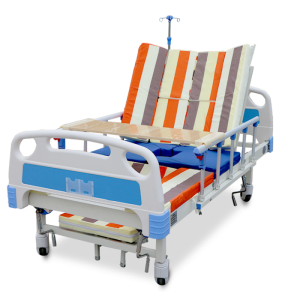
Adjustability:Ensure the bed offers the specific adjustments needed, such as head, foot, and height controls.
- Manual: Requires physical cranking to adjust positions.
- Semi-electric: Allows for electric adjustment of the head and foot, but height is adjusted manually.
- Fully electric: Provides complete electric control over head, foot, and height.
-
Motor and control system:
- Assess whether a manual, semi-electric, or fully electric system best fits the user’s needs and budget.
- Look for a standardized interface for consistent operation in different care environments.
- Consider beds with features like cardiac chair position or Trendelenburg for advanced medical needs.
-
Power backup:For electric beds, a battery backup is crucial to ensure the bed can still be adjusted during a power outage.
-
Weight capacity:Choose a bed with a weight capacity that safely supports the patient, including bariatric options if necessary.
-
Mobility:Features like casters or a 5th wheel make it easier to move the bed for cleaning or repositioning. Some advanced models offer a power drive system.
-
Safety:
- Ensure the bed has appropriate safety rails for fall protection.
- Look for very low height capabilities for patients with cognitive impairment to prevent falls.
-
Mattress compatibility:Check that the bed is compatible with the intended mattress, especially if a specialized pressure-relief or therapeutic mattress is needed.
Additional considerations
-
User needs:Select a bed based on the patient’s specific health condition and their ability to operate the controls.
-
Space:Confirm the bed will fit in the intended space, which is particularly important for home use.
-
Budget:Compare prices and consider options like renting or buying used if the budget is a primary concern.
-
Supplier:Research the supplier’s reputation, customer reviews, and customer service to ensure you have support for setup, operation, and maintenance.
Choosing the right hospital bed controller requires balancing functionality, ease of use, and patient needs:
-
For Home Care: Wireless remote controllers offer flexibility and convenience.
-
For Hospitals: Wired hand pendants provide reliability and durability.
-
For Multi-Function Beds: Ensure the controller supports all adjustment features including Trendelenburg positions.
-
Maintenance Considerations: Opt for controllers with easily replaceable components to reduce downtime.
6. Conclusion
A hospital bed controller is an essential component for any modern healthcare facility or home care setup. Henyuan Medical’s range of hand control pendants, remote controllers, and control boxes ensures high functionality, ease of use, and long-term reliability. By understanding the different types, features, and use cases, caregivers can enhance patient comfort, safety, and independence while ensuring efficient care delivery.
