

Hospital Bed Master Control vs Side Rail Control: Complete Guide with Henyuan Medical
In modern healthcare, patient safety, comfort, and ease of use are critical considerations. One of the most important decisions when selecting a hospital bed is choosing between master control and side rail control systems. Both play pivotal roles in ensuring patient mobility, fall prevention, and caregiver convenience. In this comprehensive guide, we will explore the differences between master control and side rail control, cover real-life cases, technical specifications, types of bed rails, and offer a practical buying guide, all featuring Henyuan Medical solutions.
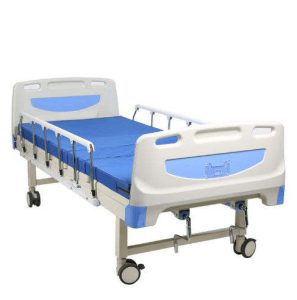
1. Understanding Master Control vs Side Rail Control
Master control
- User: Primarily for medical staff and caregivers.
- Location: Often on a footboard control panel or a separate, more advanced wired or wireless remote.
- Functionality: Complete control over all bed movements. This includes all functions accessible to the patient, as well as critical adjustments for medical procedures and safety.
- Key features:
-
- Lockout functions: A master control often has the ability to lock out all other controls on the bed, including those on the side rails. This prevents patients from accidentally changing critical bed positions, such as the Trendelenburg position or bed height.
- Advanced positioning: Can control specialized positions like Trendelenburg, reverse Trendelenburg, and cardiac chair, which are often not available to patients.
-
- Enhanced safety: By securing the bed’s position, the master control ensures stability during transfers or medical procedures.
Side rail control
- User: Designed for the patient, giving them a degree of independence and control.
- Location: Integrated into the bed’s side rails, putting the buttons within easy reach of the occupant.
- Functionality: Provides basic, limited control, typically for adjusting the head and foot sections of the bed for comfort.
- Key features:
- Basic adjustments: Controls for raising or lowering the head and foot of the bed. Some models may offer more advanced features like massage functions.
- Reduced complexity: The controls are simple to operate for patients and are designed to prevent them from making unsafe adjustments.
- Patient convenience: These controls are placed for easy access, allowing the patient to adjust their own position without needing assistance from a caregiver.
Summary of differences
| Feature | Master Control | Side Rail Control |
|---|---|---|
| User | Caregivers and medical staff | The patient |
| Location | Footboard or separate remote | Integrated into side rails |
| Functionality | Comprehensive (all bed movements) | Limited (typically head/foot adjustments) |
| Key Capability | Lockout and advanced features | Patient self-adjustment for comfort |
| Primary Purpose | Safety and medical procedures | Patient independence and convenience |
Master Control typically refers to a centralized control panel located at the head or foot of the bed, allowing caregivers or patients to adjust multiple bed functions, including elevation, Trendelenburg positioning, and reclining features. Side Rail Control, on the other hand, offers controls integrated into the bed rails, often within easy reach of the patient for limited adjustments such as raising or lowering the backrest.
Key Differences:
| Feature | Master Control | Side Rail Control |
|---|---|---|
| Location | Central panel at bed head/foot | Integrated on side rails |
| Functionality | Full bed adjustments (height, tilt, backrest, legrest) | Limited adjustments (usually backrest and partial elevation) |
| Intended User | Caregivers or patients with assistance | Independent patients or those with limited mobility |
| Safety | Often includes lock-out features to prevent accidental activation | Usually simpler, with fewer safety lock options |
| Accessibility | Requires standing or reaching the panel | Accessible while lying in bed |
Understanding these differences is essential for selecting the right hospital bed system to balance patient independence and caregiver efficiency.
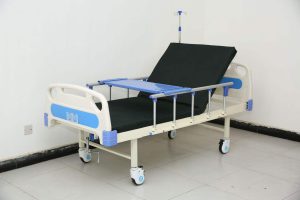
2. Importance for Patient Safety
Whether using master control or side rail control, patient safety is the top priority. Henyuan Medical beds are designed with integrated safety mechanisms to prevent falls and entrapment.
-
Fall prevention: Side rails act as physical barriers that reduce the risk of patients rolling out of bed.
-
Mobility support: Both control systems allow patients to reposition safely, reducing the need for manual assistance.
-
Entrapment reduction: Henyuan Medical beds follow safety guidelines similar to those recommended by FDA and HSE, ensuring proper spacing and locking mechanisms.
Case Study: In a rehabilitation center, patients using Henyuan Medical beds with side rail control experienced a 40% reduction in falls compared to standard beds without rails. Additionally, caregivers reported increased efficiency due to the easy adjustments provided by master control panels.
3. Types of Bed Rails and Their Functions
Types of bed rails and their functions
-
Full-Length Bed Rails:
- Function: Extend along the entire side of the bed to provide continuous, high-level fall protection. They prevent individuals from rolling out of bed during the night and are suitable for those at high risk of falling.
-
Half-Length Bed Rails:
- Function: Cover only a portion of the bed, typically at the head or foot. They provide a balance between safety and ease of access for getting in and out of bed. They are also useful for providing support while sitting up or raising legs.
-
Assistive Bed Rails:
- Function: Designed with additional features to assist with mobility challenges.
- Examples: These can include built-in grab bars, adjustable height settings, pivoting mechanisms, or storage pouches for personal items.
-
Adjustable Bed Rails:
- Function: Can be adjusted in height or position to meet changing needs.
- Examples: This category includes collapsible, swing-down, or multi-position rails that offer flexibility for different situations.
-
Bedside Assist Handles:
- Function: A simpler option that attaches to the bed frame to provide a secure handhold for getting in and out of bed. They are space-saving and useful for individuals who need minimal support.
Bed rails are closely related to control types. Henyuan Medical offers several options:
| Bed Rail Type | Description | Ideal Use Case |
|---|---|---|
| Full-length Rails | Extend the entire length of the bed | High-risk patients needing maximum fall protection |
| Half-length Rails | Cover half the bed length | Patients who require some independence while still supported |
| Split Rails | Adjustable sections | Flexible solution for repositioning or clinical access |
Side rails often include integrated control buttons for minor adjustments, while master controls remain centralized, giving caregivers full access to all bed functions.
4. Technical Specifications of Henyuan Medical Beds
| Specification | Detail |
|---|---|
| Material | High-strength steel frame with durable coating |
| Load Capacity | 200 kg for full bed; side rails rated 150 kg each |
| Bed Height Adjustment | 38–80 cm from floor |
| Backrest Elevation | 0–75° |
| Trendelenburg | 0–12° |
| Side Rail Controls | Up/down, backrest, partial leg support |
| Master Control Panel | Full bed functions with lock-out options |
These specifications ensure that Henyuan Medical beds are suitable for hospitals, nursing homes, and home care, offering both safety and flexibility.
5. Practical Usage Guidelines
Before installation
-
Consult a professional:A physician’s order is required, and the patient or their representative must give informed consent after understanding the risks and benefits.
-
Consider alternatives:Explore other options like lower beds, bed alarms, or fall mats, as these may be safer.
-
Select the right equipment:Choose a bed rail compatible with the specific mattress and bed frame, as not all are interchangeable. Avoid older designs with tapered ends if the person is at risk for entrapment.
-
Assess the user’s needs:Evaluate the individual’s physical and cognitive status to determine if bed rails are appropriate. Some individuals with confusion or agitation may be at higher risk of injury from rails.
Installation and maintenance
-
Follow instructions:Install the rail following the manufacturer’s instructions and secure any safety straps to the bed frame.
-
Fill all gaps:Ensure there are no gaps between the rail and the mattress, headboard, or footboard where a person could become trapped. Use firm padding, a mattress extender, or gap fillers if necessary.
-
Check the mattress:Ensure the mattress is properly sized and not so easily compressed that it creates a gap.
-
Inspect regularly:Regularly check that the rails are securely fastened, properly installed, and free of any damage.
Ongoing usage
-
Monitor regularly:Continuously monitor the rails and the user’s condition to ensure the equipment remains appropriate and safe. Reassess as needed.
-
Use as intended:Bed rails are not a substitute for supervision. Do not use them as a restraint unless specifically ordered by a physician.
-
Train staff and family:Educate both staff and family members on the proper use, risks, and benefits of bed rails.
When to choose master control:
-
For patients needing frequent caregiver-assisted adjustments
-
In hospital wards where multiple beds are monitored simultaneously
-
For post-operative patients requiring precise positioning
When to choose side rail control:
-
For independent patients
-
For home-care settings where the patient needs immediate, easy-to-reach adjustments
-
When simplicity and accessibility are priorities
Example Scenario: Mr. Thompson, recovering from hip surgery at home, uses a Henyuan Medical bed with side rail controls. He can safely raise his backrest to read or eat, while his caregiver uses the master control to adjust the bed height for transfers.
6. Henyuan Medical Buying Guide: Choosing the Right Control System
When selecting a hospital bed, consider these factors:
-
Patient Independence: Side rail control supports autonomous movements, while master control allows caregiver-led adjustments.
-
Caregiver Workflow: Master controls can improve efficiency in multi-bed wards.
-
Bed Functionality Needs: Ensure the chosen control system matches required features (height, tilt, Trendelenburg).
-
Safety Features: Anti-pinch mechanisms, lock-outs, and proper spacing are essential.
-
Compatibility with Home or Hospital Settings: Evaluate space, installation requirements, and patient accessibility.
7. Real-life Benefits and Case Studies
-
Hospital Setting: Henyuan Medical beds with master control panels reduced adjustment time per patient by 50%, improving nursing efficiency.
-
Home Care: Side rail controls allowed patients with mild mobility impairments to reposition safely without caregiver intervention.
Key Takeaway: Both control systems are valuable, but the choice depends on patient independence, care setting, and specific medical requirements.
8. Summary
Selecting between hospital bed master control and side rail control is a critical decision impacting patient safety, mobility, and caregiver workflow. Henyuan Medical beds provide versatile solutions:
-
Full-featured master control for caregivers and hospital settings
-
Accessible side rail control for independent patient use
-
High-quality materials, safety-compliant rails, and adjustable features
-
Practical technical specifications and flexible rail types
By understanding the differences and capabilities, healthcare providers and home-care users can maximize patient safety, comfort, and efficiency.
