

Hospital sleeper chairs play a critical role in modern healthcare environments. They provide comfort not only for patients, but also for family members and caregivers who need a place to rest overnight. However, many users are unsure how to recline hospital sleeper chairs properly, which can lead to discomfort, improper use, or even safety risks.
This comprehensive guide from Hengyuan Medical explains everything you need to know — from reclining mechanisms and step-by-step instructions to technical specifications, real-world usage scenarios, and professional buying advice.
What Is a Hospital Sleeper Chair?
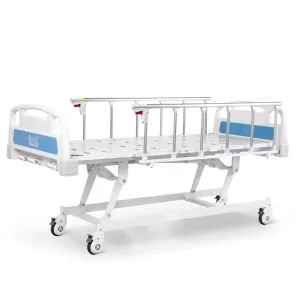
What Is a Hospital Sleeper Chair? (In-Depth Explanation)
A hospital sleeper chair is a specialized piece of medical furniture designed to function as both a reclining chair and a temporary sleeping surface. It is primarily used in hospitals, medical centers, and long-term care facilities to provide a comfortable resting solution for patients, family members, and caregivers, especially during overnight stays.
Unlike standard recliner chairs or residential sleeper sofas, hospital sleeper chairs are built to meet medical-grade requirements, including durability, hygiene, safety, and space efficiency.
Core Definition: What Makes a Chair a “Hospital Sleeper Chair”?
A hospital sleeper chair is defined by three essential characteristics:
-
Reclining Function
The backrest reclines to multiple angles, allowing users to sit upright, relax, or rest. -
Bed Conversion Capability
The chair can partially or fully convert into a flat or near-flat sleeping surface, often by extending a footrest or fold-out platform. -
Medical-Grade Construction
Designed for frequent use in clinical environments, with reinforced frames and easy-to-clean materials.
At Hengyuan Medical, hospital sleeper chairs are engineered to balance comfort, safety, and space optimization, making them ideal for high-traffic healthcare settings.
How a Hospital Sleeper Chair Differs from a Regular Recliner
While both may look similar at first glance, their functions and construction are fundamentally different.
| Feature | Hospital Sleeper Chair | Regular Recliner |
|---|---|---|
| Reclining Positions | Multiple, controlled | Limited |
| Converts to Bed | Yes | No |
| Weight Capacity | Medical-grade (higher) | Residential |
| Upholstery | Antimicrobial, easy-clean | Fabric or leather |
| Intended Use | Healthcare environments | Home use |
| Safety Standards | Medical compliance | Residential standards |
This distinction is important for both SEO clarity and buyer education, as many users search for sleeper chairs without understanding the difference.
Primary Uses of Hospital Sleeper Chairs
Hospital sleeper chairs are widely used across various healthcare scenarios:
1. Overnight Family Accommodation
In maternity wards, pediatric units, and ICU settings, sleeper chairs allow family members to stay close to patients overnight without bringing additional furniture into the room.
2. Patient Rest and Recovery
Some patients prefer a reclined or semi-flat sleeping position rather than a standard hospital bed, especially during short-term recovery or observation.
3. Space-Saving Medical Furniture
Hospitals often face space constraints. Sleeper chairs provide seating by day and sleeping space by night without increasing room footprint.
Common Types of Hospital Sleeper Chairs
Hospital sleeper chairs are not one-size-fits-all. Common variations include:
Manual Hospital Sleeper Chairs
-
Reclined using levers or mechanical controls
-
Highly durable and low maintenance
-
Common in high-use hospital rooms
Assisted Recline Sleeper Chairs
-
Use springs or assisted mechanisms
-
Smoother transition from chair to bed
-
Reduced physical effort for users
Electric Hospital Sleeper Chairs
-
Button-controlled reclining
-
Precise adjustment
-
Typically used in premium or specialized settings
Hengyuan Medical offers sleeper chairs across these categories to meet different facility requirements.
Typical Dimensions and Technical Parameters
Although dimensions vary by model, most hospital sleeper chairs are designed to remain compact when upright.
| Parameter | Typical Range |
|---|---|
| Chair Width | 28–32 inches |
| Chair Depth (Upright) | 32–36 inches |
| Sleeping Length (Extended) | 72–75 inches |
| Reclining Positions | 3–5 |
| Weight Capacity | 120–180 kg |
These specifications allow sleeper chairs to fit into standard patient rooms without interfering with medical equipment.
Materials and Hygiene Considerations
Hospital sleeper chairs must meet strict hygiene standards:
-
Frame: Powder-coated steel or reinforced metal
-
Padding: High-density foam for pressure distribution
-
Upholstery: Medical-grade vinyl or PU leather
-
Surface Design: Seam-minimized for easy cleaning
Hengyuan Medical sleeper chairs are designed to withstand frequent cleaning with hospital-approved disinfectants.
Why Hospital Sleeper Chairs Are Essential in Modern Healthcare
Hospital sleeper chairs are no longer optional accessories — they are increasingly seen as essential equipment because they:
-
Improve family satisfaction
-
Reduce caregiver fatigue
-
Enhance patient emotional well-being
-
Optimize room utilization
From a hospital management perspective, sleeper chairs also help standardize furniture layouts and reduce the need for temporary beds.
Common Misconceptions About Hospital Sleeper Chairs
-
❌ “They are just recliners”
→ In reality, they are convertible sleeping systems. -
❌ “They are only for visitors”
→ Many patients use them during recovery. -
❌ “All sleeper chairs recline the same way”
→ Reclining mechanisms vary significantly by design and manufacturer.
Addressing these misconceptions improves user trust and SEO topical authority.
How Hengyuan Medical Designs Hospital Sleeper Chairs
At Hengyuan Medical, hospital sleeper chairs are developed with:
-
Structural stability for repeated reclining
-
Smooth reclining mechanisms to avoid sudden movement
-
Reinforced hinges and joints
-
Ergonomic support for long-duration use
Each model is tested to ensure safe and intuitive conversion between chair and sleeper modes.
Key Takeaway
A hospital sleeper chair is a purpose-built medical chair that reclines and converts into a sleeping surface, designed specifically for healthcare environments. It provides a practical, safe, and space-efficient solution for overnight rest — far beyond what standard recliners can offer.
Understanding what a hospital sleeper chair truly is lays the foundation for knowing how to recline hospital sleeper chairs correctly, choose the right model, and use them safely in real-world medical settings.
A hospital sleeper chair is a multi-functional medical chair designed to serve two primary purposes:
-
A comfortable upright recliner chair
-
A fully or partially reclining sleeping surface that can convert into a bed-like position
Unlike ordinary recliners, hospital sleeper chairs are engineered for:
-
Medical-grade durability
-
Frequent reclining and conversion
-
Infection-control surfaces
-
Compact footprints in patient rooms
At Hengyuan Medical, hospital sleeper chairs are commonly used in:
-
Patient rooms
-
ICU waiting areas
-
Maternity wards
-
Long-term care facilities
How to Recline Hospital Sleeper Chairs: Step-by-Step Instructions
While designs may vary slightly, most hospital sleeper chairs follow a similar reclining process.
Step 1: Check the Chair Type
Identify whether the chair is:
-
Manual recline (lever or pull-handle)
-
Mechanical assisted recline
-
Electric recline (button-controlled)
Most Hengyuan Medical sleeper chairs use manual or assisted mechanical systems for reliability and ease of maintenance.
Step 2: Clear the Area
Before reclining:
-
Remove personal items
-
Ensure enough clearance behind and in front of the chair
-
Lock the chair wheels (if applicable)
This prevents obstruction during the reclining process.
Step 3: Engage the Reclining Mechanism
Depending on the model:
-
Pull the side lever
-
Lift the recline handle
-
Press the recline button (electric models)
This unlocks the backrest and allows it to recline smoothly.
Step 4: Recline the Backrest
Slowly lean back or guide the backrest downward until the desired angle is reached.
Most hospital sleeper chairs recline in multiple stages, rather than a single flat motion.
Step 5: Extend the Footrest or Sleeping Platform
For sleeper chair models:
-
Pull out the footrest panel
-
Extend the fold-out sleeping surface
-
Align all sections to create a flat or near-flat sleeping position
This is the key step that transforms a hospital chair into a bed.
Step 6: Adjust for Comfort and Safety
Make final adjustments:
-
Ensure all panels are locked
-
Check mattress alignment
-
Confirm stability before lying down
Common Reclining Mechanisms Explained
Understanding the mechanism helps users recline chairs more confidently.
Manual Reclining System
-
Lever-activated
-
Durable and low maintenance
-
Common in high-use hospital environments
Mechanical Assisted Recline
-
Spring-supported motion
-
Smooth transition between chair and bed
-
Reduced physical effort
Electric Recline System
-
Button-controlled
-
Precise angle adjustment
-
Requires power supply and backup safety systems
Technical Specifications (Typical Hengyuan Medical Sleeper Chair)
| Parameter | Specification |
|---|---|
| Chair Width | 28–32 inches |
| Sleeping Surface Length | 72–75 inches |
| Weight Capacity | 120–180 kg |
| Recline Angles | 3–5 adjustable positions |
| Frame Material | Powder-coated steel |
| Upholstery | Medical-grade vinyl or PU |
| Conversion Time | < 1 minute |
These parameters ensure stability, comfort, and long-term durability.
Safety Tips When Reclining Hospital Sleeper Chairs
Improper use can reduce comfort or cause injury. Follow these best practices:
-
Always recline slowly
-
Never force locked components
-
Keep hands clear of hinge points
-
Ensure children do not operate the chair alone
-
Confirm locks are engaged before sleeping
Hengyuan Medical sleeper chairs are designed with anti-pinch structures and reinforced hinges to improve user safety.
Real-World Use Cases
Case 1: Family Member Overnight Stay
In maternity wards, sleeper chairs allow partners to stay overnight. Proper reclining ensures full back support and reduces fatigue.
Case 2: ICU Waiting Rooms
Sleeper chairs provide quick conversion from seating to rest areas without occupying extra floor space.
Case 3: Long-Term Care Facilities
Visitors and caregivers benefit from adjustable recline angles during extended stays.
Manual vs Electric Reclining: Which Is Better?
| Feature | Manual Recline | Electric Recline |
|---|---|---|
| Reliability | Very high | High |
| Maintenance | Low | Moderate |
| Ease of Use | Simple | Very easy |
| Cost | Lower | Higher |
For most hospitals, manual or assisted reclining sleeper chairs from Hengyuan Medical offer the best balance between durability and usability.
Common Problems and Troubleshooting
Chair won’t recline
-
Check locking mechanism
-
Verify weight distribution
Footrest won’t extend
-
Inspect alignment
-
Ensure backrest is fully reclined first
Uneven sleeping surface
-
Reposition panels
-
Check mattress placement
How to Choose the Right Hospital Sleeper Chair
How to Choose the Right Hospital Sleeper Chair (In-Depth Buying Guide)
Choosing the right hospital sleeper chair is both an art and a science — because this piece of furniture must balance comfort, durability, safety, space efficiency, and ease of use. Whether you are a hospital administrator planning a patient suite, a caregiver preparing a family ward, or an individual purchasing for home care, understanding what separates a good hospital sleeper chair from a great one is essential.
Below, we break down the complete decision-making process so that you can confidently choose the most suitable hospital sleeper chair for any setting.
1. Understand Your Primary Use Case
The first step in the selection process is identifying how and where the sleeper chair will be used.
A. Patient Room Use
-
Frequent reclining
-
Potential for extended naps or recovery periods
-
Needs durable materials and smooth recline mechanisms
Example: In a post-operative recovery room, patients may rest in semi-recline for extended periods. A chair with multiple recline positions and strong ergonomic support is essential.
B. Visitor or Companion Use
-
Less frequent reclining
-
Focus on comfort
-
May prioritize sleeping surface length over adjustability
Example: A maternity ward companion may need a near-flat extension but only occasional repositioning.
C. Home Healthcare
-
Comfort and aesthetics matter
-
Frequent adjustments by non-medical users
-
Ease of operation should be prioritized
Example: A convalescing parent at home benefits from a chair that effortlessly transitions from upright to recline to sleeper mode.
2. Reclining Mechanism: Manual vs Assisted vs Electric
The reclining mechanism determines both ease of use and durability.
| Mechanism Type | Description | Best For | Typical Lifespan |
|---|---|---|---|
| Manual Recline | Lever or pull handle engages the reclining position | Long-term frequent use | Very high |
| Assisted Mechanical | Spring or mechanism aids motion | Smooth transitions | High |
| Electric Recline | Powered by motor with buttons | Minimal physical effort | Moderate |
Manual and assisted reclining systems are generally more robust and easier to maintain in a hospital environment. Electric systems, while user-friendly, may require extra maintenance and power systems.
3. Dimensions and Space Planning
Hospital sleeper chairs must fit within a room without obstructing:
-
Doorways
-
Walkways
-
Medical equipment zones
Common dimensions to consider:
| Feature | Typical Range |
|---|---|
| Chair Width (Upright) | 28–32 inches |
| Sleeping Length (Extended) | 72–75 inches |
| Recline Depth | 32–36 inches |
Ensure you measure room clearance before purchase, especially if the chair will convert to a full sleeper position.
4. Comfort and Ergonomics
A good hospital sleeper chair should provide:
-
Optimal lumbar support
-
Padded armrests
-
Adjustable headrest
-
Smooth backrest transition
Consider testing for:
-
Seat depth
-
Backrest angle range
-
Cushion firmness
A chair that reclines gently into a nearly flat position allows users to rest without pressure points, improving overall comfort during long use.
5. Material and Hygiene Considerations
Hospital environments demand high hygiene standards. When choosing a hospital sleeper chair, prioritize:
✔ Medical-grade upholstery
✔ Easy-to-clean surfaces
✔ Infection control–ready materials
Hengyuan Medical sleepers utilize antimicrobial vinyl or PU leather that withstands routine cleaning with hospital disinfectants — essential in high-traffic wards.
6. Safety Features to Look For
Safety is non-negotiable in healthcare settings. The right chair should include:
-
Stable locking mechanisms
-
Anti-pinch reclining joints
-
Anti-tip base design
-
Smooth edge finishes
-
Lockable casters (if mobile)
Locks and safety mechanisms should be intuitive, reducing risk during transition between upright and reclined positions.
7. Weight Capacity and Build Quality
A hospital sleeper chair must support a wide range of body types. Typical weight capacities include:
| Chair Type | Weight Capacity |
|---|---|
| Standard Hospital Sleeper | Up to 180 kg |
| Heavy-Duty / Bariatric | 200–300 kg |
Always choose a chair whose rated capacity exceeds the anticipated user weight — this ensures enhanced durability and safety margins.
8. Accessories and Additional Features
While not strictly necessary, the following features significantly enhance usability:
-
Built-in armrest trays
-
Side pockets for personal items
-
Removable cushions for cleaning
-
Footrest extension pedals
-
Fold-away headrest pillows
These elements improve convenience, especially for frequent use or extended stays.
9. Budget Considerations
Price can vary dramatically based on functionality and mechanisms:
-
Entry-Level Manual Chairs: Affordable, basic recline functions
-
Mid-Range Assisted Chairs: Smooth motion, higher comfort
-
Premium Electric Chairs: Simplest operation, precision recline
While electric chairs offer effortless control, they are more expensive and may require electrical safety inspections in some facilities. For most healthcare locations, a manual or assisted hospital sleeper chair offers the best balance of durability, cost effectiveness, and long-term value.
10. Real-World Case Studies
Case Study A — Rehabilitation Ward
A rehabilitation center chose Hengyuan Medical manual hospital sleeper chairs for day rooms because they offered:
-
High durability for frequent recline cycles
-
Easy cleaning with hospital disinfectants
-
Excellent patient comfort levels
Staff reported fewer complaints and improved visitor satisfaction.
Case Study B — Maternity Companion Rooms
A maternity ward equipped family rooms with wide-angle recline chairs that extended into nearly flat positions. Visitors could comfortably sleep beside new mothers, enhancing patient support and reducing stress.
11. Final Selection Checklist
Before buying, ensure:
✔ Recline mechanism fits user needs
✔ Dimensions match space constraints
✔ Material meets hygiene standards
✔ Weight capacity suits intended users
✔ Safety and locking features are robust
✔ Budget aligns with required features
This checklist helps reduce common mistakes made during hospital sleeper chair procurement.
Conclusion
Choosing the right hospital sleeper chair requires careful consideration of use case, mechanisms, ergonomics, hygiene, and safety. With informed selection criteria and the right priorities, you can ensure that your chosen hospital sleeper chair not only provides exceptional comfort but also meets clinical needs and facility standards.
Hengyuan Medical hospital sleeper chairs offer a range of options from basic manual recline models to more advanced assisted systems — ensuring that you can find the ideal match for your environment, whether it’s a patient care suite, family resting area, or home healthcare setting.
When selecting a hospital sleeper chair, consider:
1. Reclining Mechanism
Manual vs electric based on usage frequency.
2. Space Availability
Compact footprint is crucial in patient rooms.
3. Weight Capacity
Ensure suitability for all users.
4. Upholstery Material
Medical-grade, easy-to-clean surfaces.
5. Brand Reliability
Hengyuan Medical focuses on structural strength, safety testing, and long-term usability.
Frequently Asked Questions (SEO Boost)
How do you recline a hospital sleeper chair?
By engaging the recline lever or button, lowering the backrest, and extending the footrest or sleeping platform step by step.
Can all hospital chairs recline into beds?
No. Only sleeper chairs are designed to fully convert into sleeping surfaces.
Are hospital sleeper chairs safe for overnight use?
Yes, when reclined and locked correctly, they are designed for overnight rest.
Conclusion
Understanding how to recline hospital sleeper chairs correctly is essential for comfort, safety, and proper use. Whether for hospitals, caregivers, or family members, following the right steps and choosing high-quality products makes a significant difference.
Hengyuan Medical hospital sleeper chairs combine ergonomic design, reliable reclining mechanisms, and durable construction — making them a trusted solution in modern healthcare environments.
