

Risks of Half Rails on Hospital Beds: Comprehensive Safety Guide
Hospital beds are a cornerstone of patient care, offering comfort, mobility, and support in medical facilities and home care settings. However, the use of bed rails, particularly half rails, carries certain risks that healthcare providers, caregivers, and families must understand. Improper use can result in injuries, entrapment, falls, or even asphyxiation.
In this guide, HENYUAN Medical, a trusted manufacturer of hospital beds and medical equipment, provides an in-depth analysis of the risks of half rails on hospital beds, including safety considerations, technical guidelines, case studies, and best practices for selection and usage.
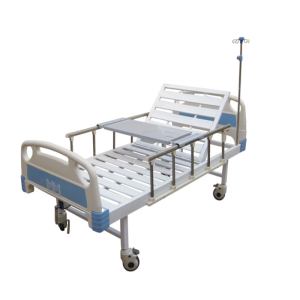
1. Understanding Half Rails and Their Purpose
Purpose of half rails
- Aid mobility and repositioning: Half rails provide a sturdy handhold for patients to use when sitting up, turning over in bed, or moving themselves into a more comfortable position.
- Assist with getting in and out of bed: Unlike full rails that can restrict movement, half rails allow patients with sufficient mobility to safely and independently enter or exit the bed by providing a support bar to grip.
- Prevent rolling out of bed: Half rails serve as a physical barrier to help prevent patients from accidentally rolling out of bed while they sleep.
- Maintain patient independence: By not fully enclosing the patient, half rails reduce the feeling of confinement and promote greater autonomy.
- Improve caregiver access: The open areas at the head and foot of the bed allow caregivers to more easily assist with patient transfers and other care tasks, such as hygiene and bed-making, without having to lower the entire rail.
- Provide a handy storage area: Half rails can be used to attach storage bags for personal items, such as TV remotes and bed controls, keeping them within easy reach.
Half rails vs. full rails
| Feature | Half Rails | Full Rails |
|---|---|---|
| Fall Protection | Moderate: Provides protection at the midsection, suitable for patients with a moderate fall risk and good cognitive awareness. | Maximum: Covers the entire length of the bed for patients at a high risk of falling or who experience disorientation. |
| Independence | High: Allows for easier, unassisted bed entry and exit, supporting patient independence. | Low: Restricts bed exit and entry, requiring a caregiver to lower them. This can increase dependency. |
| Entrapment Risk | Lower: Eliminates the entrapment zones at the headboard and footboard. However, risks still exist between the rail and mattress. | Higher: Creates more potential entrapment zones along the entire bed length. |
| Caregiver Access | Excellent: The open ends allow for quick patient access and make care tasks, like hygiene, easier. | Limited: Requires the caregiver to fully lower the rail for patient transfers and other care. |
| Best For | Patients who need assistance with repositioning and standing but can get in and out of bed with partial support. | Patients who require maximum fall protection due to high risk, limited mobility, or cognitive impairment. |
Bed rails are horizontal bars installed on the sides of hospital beds to:
-
Prevent accidental falls
-
Provide support for repositioning or mobilization
-
Assist caregivers in transferring patients
Half rails are shorter than full-length rails and typically cover only a portion of the bed’s side. While they offer some protection, they do not completely prevent falls and may introduce additional hazards if used improperly.
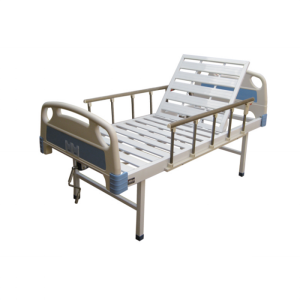
2. Core Risks of Half Rails
Patient entrapment
- What it is: A patient can get a body part—such as the head, neck, or a limb—stuck in the gaps between the mattress and the rail, between the rail bars, or between the rail and the headboard.
- Consequences: Entrapment can lead to strangulation, asphyxiation, severe bruising, fractures, or death. A study of entrapment incidents reported to the Food and Drug Administration (FDA) noted that head, neck, or face entrapments were more likely with half rails than with other rail types and were also more likely to result in death.
- High-risk individuals: The danger is highest for patients who are agitated, confused, or have limited mobility and may not be able to free themselves.
Falls and injuries
- Falls from a greater height: A patient may attempt to climb over a half rail to get out of bed. If they fall from the top of the rail, the distance to the floor is greater than from the mattress, which increases the risk of a serious injury, including head trauma and fractures.
- Misguided exit attempts: For patients with impaired cognition or dementia, a half rail can be interpreted as a barrier to be overcome, rather than a point of stability. This can lead to unsafe, impulsive exit attempts.
Psychological and emotional effects
- Agitation and anxiety: Some patients feel restricted or isolated when enclosed by rails, which can increase agitation or lead to combativeness.
- Feeling of confinement: The presence of rails can give patients a sense of being trapped, which can negatively affect their dignity and autonomy, especially in long-term care settings.
- Hindered mobility: For patients who are able to get out of bed, rails can prevent them from performing routine tasks, like going to the bathroom, which can also lead to incontinence or increased dependency on staff.
Factors that increase risk
- Incompatible equipment: The risk of entrapment is highest when the mattress does not fit snugly against the rails. This can occur with older beds, after replacing parts, or with soft, compressible mattresses.
- Cognitive or physical impairment: Patients with conditions like dementia, delirium, or poor balance are at a higher risk of entrapment and falls.
- Improper installation: Failing to securely attach the rails to the bed frame or improper maintenance can cause the rails to fail or create unsafe gaps.
Safer alternatives to half rails
- Low-height beds: These beds can be lowered close to the floor, significantly reducing injury risk if a patient falls.
- Bedside floor mats: Placing padded mats next to the bed can cushion a fall.
- Bed exit alarms: These pressure-sensitive devices alert staff when a patient attempts to leave the bed.
- Assistance handles: For patients needing help getting in and out of bed, small assist bars can provide support without enclosing the patient.
- Individualized assessment: The safest approach involves a careful risk-benefit analysis for each patient to determine if rails are truly necessary.
Several studies and regulatory guidelines, including FDA publications and research articles from PMC, highlight the main risks associated with half rails:
| Risk | Description | Source / Guidance |
|---|---|---|
| Entrapment | Patients may get trapped between the bed rail and mattress, side supports, or headboard/footboard, leading to injury or suffocation. | FDA, PMC |
| Falls | Patients may attempt to climb over half rails, increasing fall risk. | SA Health Fall Prevention Toolkit |
| Strangulation / Asphyxiation | Loose clothing, cords, or limbs can become trapped between the rail and bed frame. | FDA, The Consumer Voice |
| Bruising or Fractures | Contact with rail edges can cause injury if patient slips or mispositions. | ALF Boss |
| False Sense of Security | Caregivers may assume half rails fully prevent falls, leading to decreased monitoring. | American House Blog |
Key Point: While half rails provide some support, they do not replace caregiver supervision or proper bed placement strategies.
3. Regulatory Guidelines and Safety Standards
Healthcare organizations worldwide provide clear recommendations on bed rail use:
-
FDA Guidance: Half rails should be used only when clinically appropriate, with careful assessment of patient risk factors.
-
Joint Commission: Requires documentation and assessment of restraint and fall risk when rails are used.
-
SA Health (Australia): Recommends risk assessment and patient-specific planning to prevent entrapment and falls.
-
UK Regulations (Vivid Care): Bed rails must comply with national safety standards, and training is recommended for caregivers.
HENYUAN Medical ensures all bed rails, including half rails, meet CE and ISO13485 certifications, providing a baseline of design safety and compliance.
4. Identifying Patients at Risk
Certain patients are at higher risk when using half rails, including:
-
Elderly patients with limited mobility
-
Patients with cognitive impairment (dementia, memory care)
-
Individuals prone to seizures or sudden movements
-
Patients with small body sizes or low muscle tone
Clinical Tip: Before installing half rails, perform a comprehensive bed safety assessment considering physical, cognitive, and environmental factors.
5. Best Practices for Safe Half Rail Use
A. Positioning and Installation
-
Rails should be properly secured to the bed frame.
-
Ensure mattress fit is tight to reduce gaps between the mattress and rails.
-
Route all cords, tubing, or medical devices away from rails to prevent entrapment.
B. Supervision and Monitoring
-
Regularly check patients who use half rails, especially at night.
-
Use bed exit alarms or motion sensors for patients at high fall risk.
C. Technical Recommendations
| Component | Recommendation | Notes |
|---|---|---|
| Rail height | Minimum 15 inches above mattress | Prevents overreaching or climbing |
| Gap clearance | < 4 inches | Reduces entrapment risk |
| Padding | Optional, foam covers | Provides cushioning without compromising safety |
| Rail strength | ≥ 250 lbs force test | HENYUAN Medical rails meet industrial strength standards |
6. Case Study: Half Rails in a Memory Care Facility
A memory care unit recently transitioned to HENYUAN Medical hospital beds with half rails:
-
Initial Assessment: Patients at moderate fall risk were selected for half rail use.
-
Installation: Rails were fitted securely, and mattress gaps measured ≤ 4 inches.
-
Outcome: Fall incidents decreased by 30% due to combined rail use, patient monitoring, and motion sensors.
-
Lessons Learned: Half rails helped support patients but did not eliminate fall risk, reinforcing the need for supervision and risk assessment.
7. Selecting the Right Half Rail System
When choosing half rails, consider:
-
Compatibility: Ensure the rail fits your HENYUAN Medical bed model.
-
Material: Aluminum or reinforced polymer for durability.
-
Locking Mechanism: Easy for caregivers to operate but secure enough to prevent accidental lowering.
-
Padding / Covers: Optional but beneficial for frail patients.
-
Certification: CE, ISO13485, FDA compliance.
8. Alternative Safety Solutions
In some cases, half rails may not be appropriate. Alternatives include:
-
Full-length rails: Offer complete side protection.
-
Bed exit alarms: Alert caregivers when patients attempt to leave the bed.
-
Low beds: Reduce injury risk from falls.
-
Floor mats: Cushion falls in high-risk patients.
HENYUAN Medical provides both half and full rail systems, ensuring tailored solutions for different patient needs.
9. Common Myths About Half Rails
-
Myth 1: Half rails prevent all falls – FALSE.
-
Myth 2: Only elderly patients are at risk – FALSE; patients of all ages with mobility issues are at risk.
-
Myth 3: Padding solves all entrapment hazards – FALSE; correct gap clearance is critical.
Education and training of staff and family members are crucial to dispel misconceptions.
10. Maintenance and Inspection
Regular maintenance reduces risks:
-
Inspect rails monthly for cracks or loose attachments.
-
Check mattress-rail gap compliance.
-
Ensure locking mechanisms function correctly.
-
Document inspections and incidents.
11. Summary Table of Risks and Safety Measures
| Risk | Preventive Measure | Notes |
|---|---|---|
| Entrapment | Mattress fit check, gap <4 inches | Most critical hazard |
| Falls | Bed exit alarms, supervision | Combine with half rails |
| Strangulation | Remove cords/tubes from rail area | High-risk in home settings |
| Bruising | Optional foam padding | Avoid obstructing movement |
| False security | Staff training | Educate caregivers on limitations |
12. Final Thoughts
Half rails provide support and partial fall prevention but carry inherent risks that require careful management. By following HENYUAN Medical’s guidelines, performing risk assessments, and monitoring patients, caregivers can maximize safety while maintaining comfort and independence.
Always remember:
-
Conduct patient-specific assessments
-
Combine half rails with supervision, alarms, or alternative safety solutions
-
Follow regulatory and manufacturer guidelines for installation and maintenance
With the right combination of equipment, procedures, and monitoring, half rails can be a valuable component of a safe patient care strategy.
