

The Ultimate Guide to Hospital Bed Manual Crank – Choosing the Right Manual Hospital Bed for Comfort, Safety & Care
When it comes to selecting hospital bed manual crank solutions for patient care, understanding both the functionality and the key technical features is crucial. Unlike electric beds that depend on motors and controls, manual hospital beds rely on hand crank mechanisms to adjust the position of the bed frame, headrest, footrest, and sometimes even the overall height. This makes them cost-effective, reliable, and easy to maintain, ideal for hospitals, rehabilitation centers, homecare environments, and assisted living facilities.
In this comprehensive guide, we’ll explore everything you need to know about manual hospital beds, including real use cases, technical specifications from Hengyuan Medical, ergonomic benefits, and practical buying tips — all optimized for SEO around the keyword hospital bed manual crank and its related search terms.
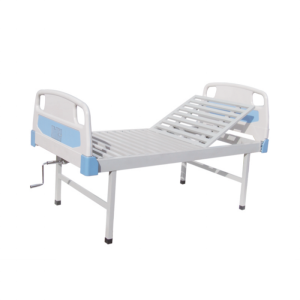
1. What is a Hospital Bed Manual Crank System?
A manual crank hospital bed uses one or more hand cranks to control different parts of the bed. These cranks are typically located at the foot of the bed and operate mechanical gears that adjust:
-
Headrest / backrest angle
-
Leg / knee section elevation
-
Overall bed height (depending on model)
Manual adjustment systems are especially valued because they do not require power, making them dependable even in low-resource environments or during power outages. They also allow caregivers and family members to quickly reposition the patient for comfort, medical procedures, or transfers.
What Is a Hospital Bed Manual Crank System?
A hospital bed manual crank system is a purely mechanical adjustment mechanism used in manual hospital beds to control patient positioning without relying on electricity, motors, or electronic controls. Instead of electric actuators, this system uses hand-operated cranks, steel transmission shafts, and gear assemblies to convert rotational force into linear lifting movement.
This design makes manual crank hospital beds one of the most reliable and cost-efficient patient care solutions, particularly in homecare, rehabilitation centers, emergency facilities, rural hospitals, and export markets.
How a Manual Crank Hospital Bed Works (Mechanical Principle)
At the core of a hospital bed manual crank system is a mechanical transmission structure consisting of:
-
Hand crank handle
-
Gearbox or worm gear
-
Drive shaft
-
Lifting rod or screw mechanism
-
Bed articulation linkage
When the caregiver turns the crank:
-
Rotational force is applied manually
-
The gear system multiplies torque
-
The drive shaft transfers motion
-
The lifting screw moves up or down
-
The bed section (head, foot, or height) adjusts smoothly
This mechanical conversion ensures precise positioning, stable load bearing, and long-term durability—even under continuous daily use.
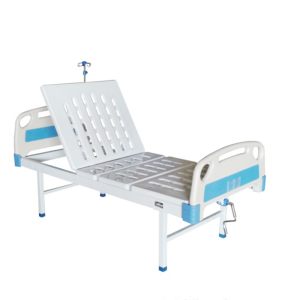
Types of Hospital Bed Manual Crank Systems
Different manual hospital beds use different crank configurations depending on care requirements.
1. Single Crank System
-
Controls head and foot section together
-
Simplest mechanical structure
-
Lower cost and easy maintenance
Best for:
-
Homecare beds
-
Short-term recovery
-
Basic nursing needs
2. Dual Crank System
-
One crank for head/backrest adjustment
-
One crank for knee/leg elevation
Advantages:
-
Independent positioning
-
Improved patient comfort
-
Better pressure redistribution
Best for:
-
Long-term care
-
Rehabilitation wards
-
Nursing homes
3. Triple (Multi) Crank System
-
Head adjustment
-
Foot adjustment
-
Overall bed height adjustment
This configuration allows caregivers to:
-
Raise the bed for treatment
-
Lower it for safe patient transfer
-
Reduce caregiver back strain
Best for:
-
Hospitals
-
Clinical environments
-
Professional medical facilities
Key Components of a Manual Crank System
A high-quality hospital bed manual crank system (such as those used by Hengyuan Medical) typically includes:
Crank Handle
-
Foldable or detachable design
-
Ergonomic grip
-
Rust-resistant coating
Gear Mechanism
-
Worm gear or reduction gearbox
-
Ensures smooth movement under heavy load
-
Prevents sudden drop or back-drive
Drive Shaft
-
High-strength steel
-
Transfers force evenly across bed sections
Lift Screw / Actuator Rod
-
Precision-threaded for smooth motion
-
Supports full patient weight
Safety Lock Structure
-
Maintains position once cranking stops
-
Eliminates unintended movement
Why Manual Crank Systems Are Still Widely Used
Despite the popularity of electric hospital beds, manual crank hospital beds remain essential because they offer:
1. Zero Power Dependency
-
Operates during power outages
-
Ideal for remote or low-infrastructure regions
2. Lower Failure Rate
-
No motors, control boards, or wiring
-
Fewer mechanical failure points
3. Cost Efficiency
-
Lower initial purchase cost
-
Minimal maintenance expense
4. Long Service Life
-
Heavy-duty steel construction
-
Designed for years of continuous use
These benefits make manual crank systems particularly popular in export markets, government tenders, NGOs, and disaster-relief healthcare projects.
Manual Crank vs Electric Adjustment – Structural Comparison
| Feature | Manual Crank Hospital Bed | Electric Hospital Bed |
|---|---|---|
| Adjustment Method | Hand-operated mechanical crank | Motorized actuator |
| Power Requirement | None | Electricity required |
| Failure Risk | Very low | Medium (electronics) |
| Maintenance | Minimal | Higher |
| Cost | Lower | Higher |
| Reliability | Extremely high | Depends on power & electronics |
Clinical & Practical Use Scenarios
Homecare Setting
Caregivers manually adjust the bed to:
-
Elevate head for feeding or breathing
-
Raise legs to improve circulation
-
Lower bed height for safer transfers
Hospital & Rehabilitation Centers
Manual crank systems support:
-
Patient repositioning during therapy
-
Stable support for examinations
-
Reliable use in high-traffic wards
Emergency & Temporary Medical Facilities
Manual hospital beds are preferred because they:
-
Function without power
-
Are easy to deploy
-
Require minimal technical support
Why Hengyuan Medical Manual Crank Systems Stand Out
Hengyuan Medical designs its hospital bed manual crank systems with:
-
Reinforced steel drive structures
-
Smooth, low-resistance crank operation
-
High load capacity (standard & bariatric)
-
Compatibility with side rails, IV poles, and hospital mattresses
This ensures consistent performance in both homecare and clinical environments.
2. Core Features of Manual Hospital Beds
Manual hospital beds, especially from reputable manufacturers like Hengyuan Medical, include features that improve patient comfort, safety, and caregiver efficiency. Typical features include:
Hand Crank Adjustment
The crank mechanism enables manual adjustment of:
-
Head elevation
-
Foot or knee angle
-
In multi-crank beds, overall bed height
Depending on the model, beds may have:
-
Single crank – simple and cost-effective
-
Dual crank – independent head and foot adjustment
-
Triple or multi-crank – adds height adjustment or specialized positioning
These configurations allow caregivers to tailor patient positioning without electric power.
Durable Bed Frame & Construction
Manual beds are typically built from:
-
Heavy-duty steel or aluminum frames
-
Powder-coated or enamel finishes for corrosion resistance
-
Mesh or perforated bed boards for airflow and pressure-sores prevention
Safety Side Rails
Foldable or removable side rails help prevent accidental falls — especially valuable for elderly or mobile-restricted patients.
Mobility & Stability
Lockable caster wheels allow for movement around a room, then secure locking when the bed is in place.
Core Features of Manual Hospital Beds (In-Depth Analysis)
Manual hospital beds are engineered to provide reliable patient positioning, safety, and durability without reliance on electricity. Their design focuses on mechanical precision, structural strength, and long-term usability, making them a preferred solution in hospitals, rehabilitation centers, nursing homes, homecare settings, and international healthcare projects.
Below is a detailed breakdown of the core features that define a high-quality manual hospital bed.
1. Manual Crank Adjustment System (Mechanical Precision)
At the heart of every manual hospital bed is the hospital bed manual crank system, which enables caregivers to reposition patients through purely mechanical force.
Key Capabilities
-
Head/backrest elevation
-
Knee and leg positioning
-
(Optional) overall bed height adjustment
Technical Advantages
-
Gear-driven motion ensures smooth, controlled movement
-
High torque output supports heavy patient loads
-
Position remains locked once cranking stops (anti-back-drive)
Unlike electric beds, manual crank hospital beds:
-
Do not suffer from motor burnout
-
Function reliably during power outages
-
Require minimal technical servicing
This makes them ideal for long-term care environments and export markets.
2. Multi-Section Bed Articulation (Patient Positioning Accuracy)
Manual hospital beds are designed with articulated bed decks, typically divided into:
-
Backrest section
-
Thigh section
-
Leg section
This multi-section structure allows:
-
Improved respiratory positioning
-
Reduced pressure points
-
Enhanced blood circulation
Independent articulation helps prevent:
-
Bed sores
-
Muscle stiffness
-
Prolonged immobility complications
High-quality beds allow fine-angle adjustment using manual cranks, enabling caregivers to meet both medical and comfort requirements.
3. Heavy-Duty Bed Frame Construction
Structural integrity is one of the most critical features of a manual hospital bed.
Frame Materials
-
High-strength steel or reinforced aluminum
-
Anti-corrosion powder coating or epoxy paint
Performance Benefits
-
High load-bearing capacity (standard & bariatric patients)
-
Resistance to bending or deformation
-
Long service life under continuous use
Manual hospital beds from manufacturers like Hengyuan Medical are designed to meet international healthcare durability standards, ensuring safe patient support across years of use.
4. Adjustable Bed Height (Caregiver Ergonomics)
Many advanced manual hospital beds include manual height adjustment via an additional crank mechanism.
Why Height Adjustment Matters
-
Reduces caregiver back strain
-
Improves safety during patient transfers
-
Allows wheelchair-level access
Manual height adjustment offers:
-
Precise control
-
Stable lifting under full load
-
No dependency on electrical actuators
This feature is particularly valuable in clinical wards and rehabilitation centers.
5. Safety Side Rails (Fall Prevention & Support)
Safety rails are a standard feature of professional manual hospital beds.
Types of Side Rails
-
Foldable aluminum side rails
-
Detachable steel side rails
-
Full-length or split-rail designs
Functional Benefits
-
Prevent accidental patient falls
-
Provide support for repositioning
-
Assist patients during entry and exit
Well-designed side rails lock securely in place yet fold down smoothly when needed, ensuring both patient safety and caregiver convenience.
6. Lockable Caster Wheels (Mobility & Stability)
Manual hospital beds typically include four medical-grade caster wheels.
Caster Specifications
-
Swivel casters for easy maneuverability
-
Individual or central locking system
-
Non-marking, noise-reduced materials
Clinical Benefits
-
Easy bed relocation during cleaning or transport
-
Secure immobilization during patient care
-
Improved workflow in hospital environments
This balance of mobility and stability is essential in busy healthcare facilities.
7. Mattress Compatibility & Pressure Relief Support
Manual hospital beds are designed to accommodate:
-
Standard hospital mattresses
-
Foam or spring mattresses
-
Pressure-relief and anti-decubitus mattresses
Bed decks often feature:
-
Ventilated steel mesh
-
Slatted or perforated platforms
These structures:
-
Improve airflow
-
Reduce moisture buildup
-
Enhance pressure distribution
This supports long-term patient comfort and skin integrity.
8. Modular Accessories & Expandability
A professional manual hospital bed supports a range of optional accessories, including:
-
IV poles
-
Urine bag hooks
-
Overbed tables
-
Bed extension frames
-
Trapeze bars
Modular design allows hospitals and distributors to:
-
Customize beds for specific patient needs
-
Upgrade functionality without replacing the bed
9. Low Maintenance & Cost Efficiency
One of the most valued features of manual hospital beds is their low lifetime cost.
Maintenance Advantages
-
No motors or control boards
-
Simple mechanical servicing
-
Low spare parts replacement rate
Economic Benefits
-
Lower upfront cost
-
Reduced long-term maintenance expenses
-
Ideal for bulk procurement and tenders
This makes manual hospital beds highly attractive for government projects, NGOs, and developing healthcare systems.
10. Compliance with Medical Standards
High-quality manual hospital beds are manufactured in compliance with:
-
ISO medical equipment standards
-
Hospital safety regulations
-
Infection control requirements
Features such as smooth surfaces, sealed joints, and corrosion-resistant coatings support easy cleaning and hygiene management.
Summary: Why Manual Hospital Beds Remain Essential
Manual hospital beds continue to play a critical role in global healthcare because they deliver:
-
Reliable hospital bed manual crank adjustment
-
Strong structural safety
-
Cost-effective patient care solutions
-
Long-term durability with minimal failure risk
Manufacturers like Hengyuan Medical focus on combining mechanical precision, ergonomic design, and clinical practicality, making manual hospital beds a dependable choice across diverse healthcare settings.
3. Hengyuan Medical Manual Hospital Bed – In-Depth Overview
As a specialized provider, Hengyuan Medical offers a range of manual hospital beds fine-tuned for performance and durability. Here’s a technical breakdown typical of their product line: 亨源医疗
Technical Specifications
| Feature | Specification / Description |
|---|---|
| Crank Type | Single, Double, Triple crank options |
| Weight Capacity | Standard: 150–450 lbs; Bariatric options up to 1000 lbs |
| Adjustable Sections | Head, Foot, Height (depending on model) |
| Material | Heavy-duty steel frame with powder coating |
| Side Rails | Foldable or detachable |
| Mattress Compatibility | Works with standard hospital mattresses |
| Optional Add-Ons | IV pole, drainage hooks, overbed tables |
These beds are designed to meet international safety standards while remaining cost-effective and easy to maintain.
4. Choosing the Right Manual Bed Type
Single Crank Manual Beds
-
Adjusts head and foot together
-
Best for: Homecare or short-term care settings
-
Pros: Simple design and low cost
-
Cons: Limited independent positioning
Dual Crank Manual Beds
-
Two independent cranks for head and foot
-
Best for: Hospital rooms, rehab wards
-
Pros: Greater comfort, precise positioning
Triple / Multi-Crank Beds
-
Adds height adjustment and more advanced positioning options
-
Best for: Clinical environments and long-term care
-
Pros: Ergonomic for caregivers and patients
Each type serves a purpose, and understanding patient needs is key when selecting the right manual hospital bed. 亨源医疗
5. Manual vs Electric Hospital Beds – Which Is Right for You?
While electric beds offer automated positioning, manual beds with crank mechanisms remain winners in many scenarios:
| Feature | Manual Beds | Electric Beds |
|---|---|---|
| Cost | Lower | Higher |
| Power Requirement | None | Requires electricity |
| Maintenance | Minimal | Requires motor/electronics upkeep |
| Ease of Use | Simple crank | Motorized controls |
| Durability | Highly durable | Sensitive electronics |
Manual beds are ideal for low-budget facilities, homecare settings, and areas with frequent power interruptions. 亨源医疗
6. Case Studies – Real Use Scenarios
Homecare Support
A family caring for an elderly patient uses a dual-crank manual hospital bed to:
-
Elevate the head for ease of eating and breathing
-
Raise the legs to reduce edema
-
Lower the bed for safe transfers in and out of bed
This model helps reduce caregiver fatigue while remaining affordable.
Rehabilitation Center
In a rehab unit, triple-crank beds allow:
-
Personalized adjustment during physical therapy
-
Ergonomic height tuning to reduce caregiver strain
-
Versatile positioning for therapeutic protocols
Both examples highlight how manual crank beds improve patient comfort and clinical workflow.
7. Expert Buying Guide & Tips
Here are key factors to consider before purchase:
1. Adjustability Needs
Decide whether you need:
-
Head and foot adjustment only
-
Height adjustment for transfers
2. Weight Capacity
Select beds rated for your patient’s weight — standard (150–450 lbs) or bariatric (>450 lbs). 亨源医疗
3. Safety Features
Ensure beds include:
-
Foldable side rails
-
Locking caster wheels
-
Sturdy frame
4. Additional Accessories
Look for:
-
IV poles
-
Overbed tables
-
Drainage hooks
-
Pressure-relief mattresses
5. Warranty & Support
Choose manufacturers with solid warranties and accessible technical support.
Conclusion
A well-chosen hospital bed manual crank system can dramatically improve patient comfort, caregiver efficiency, and long-term care costs. Manual beds from Hengyuan Medical offer a reliable blend of durability, ergonomic design, and cost-effectiveness — from simple single-crank homecare beds to multi-crank clinical models.
Understanding the types, technical specifications, and real-world applications outlined here will empower you to make an informed decision that supports both clinical demands and daily care routines.
