

The Ultimate Guide to 3-Crank Manual Hospital Medical Bed Wholesale
In the medical furniture market, the 3-crank manual hospital medical bed remains a cost-effective and reliable option for clinics, nursing homes, and budget-conscious healthcare facilities. When sourcing such beds in bulk, it’s vital to understand technical specifications, crank mechanisms, safety features, customization options, and wholesale supply dynamics.
At Henyuan Medical, we specialize in manufacturing and supplying high-quality manual hospital beds—including 3-crank models—directly from factory to distributors. In this guide, you will learn:
-
What defines a 3-crank manual hospital bed
-
Common specifications and performance metrics
-
Safety and structural features to watch for
-
How to source wholesale and OEM supply
-
Example case & buyer advice
Let’s dive in.
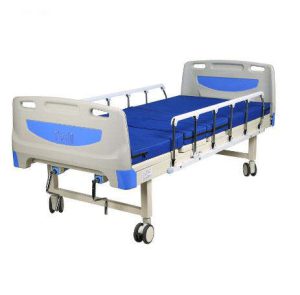
1. What Is a 3-Crank Manual Hospital Bed?
Key features of a 3-crank manual hospital bed
-
Adjustable functions:It has three separate cranks to adjust the backrest angle, the knee/leg rest angle, and the height of the entire bed.
-
Manual operation:All adjustments are made by turning the hand cranks, which means there is no risk of motor failure and no need for electricity.
-
Height adjustment:The third crank controls the “hi-low” function, making it easier for caregivers to assist patients or perform tasks without straining themselves.
-
Patient comfort and safety:These beds are designed for patient comfort and often include features like side rails, which are crucial for preventing falls.
-
Mobility:Most models are equipped with lockable casters for easy movement and stability.
-
Ease of cleaning:Many have removable head and footboards and a metal lying surface with ventilation holes, making them easier to keep clean.
-
Versatile use:They are suitable for use in hospitals, nursing homes, and home care settings.
A 3-crank manual hospital bed is a manually operated bed that uses three independent crank handles to control three functions:
-
Backrest (head elevation)
-
Knee section (leg elevation / knee gatch)
-
Overall height (hi-low adjustment)
Unlike single or two crank beds, the three-crank arrangement gives caregivers or users more positioning flexibility. In some designs, one crank might alternatively control Trendelenburg / Reverse Trendelenburg height instead of overall height.
Typical range of motion for cranks:
-
Backrest: 0° to ~75°
-
Knee section: 0° to ~40–45°
-
Height: often ranges from ~500 mm to 750 mm above floor, or similar ranges depending on model
Because no motors are involved, manual 3-crank beds are less expensive to maintain and not vulnerable to motor failure.
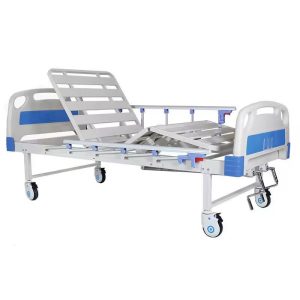
2. Key Specifications to Compare
When evaluating 3-crank manual hospital bed wholesale offers, these technical parameters are crucial:
| Specification | Typical Range / Values | Why It Matters |
|---|---|---|
| Overall Dimensions (L × W × H) | ~ 2100–2230 mm × 900–980 mm × adjustable height (≈ 500 to 750 mm) | Helps ensure fitting into your ward layout and compatibility with rooms |
| Mattress Platform (Surface) | ~ 1900 × 830 mm or similar | Must match mattress dimensions and avoid overhang |
| Backrest Angle | 0° ~ 75° | Enables Fowler or semi-Fowler positioning |
| Knee (Thigh) Angle | 0° ~ 40–45° | Adds comfort for leg elevation |
| Height Range (Hi-Lo) | Typical of ~ 575 mm to 750 mm | Assists patient transfer, caregiver ergonomics |
| Safe Working Load (SWL) | 135 kg, 175 kg, 195 kg, 250 kg etc. | Determines which patient weights the bed can safely support |
| Rail / Side Guard Features | Foldable aluminum rails or ABS side panels | Important for patient safety |
| Frame & Material | Powder-coated steel, welded frame | For durability and corrosion resistance |
| Caster & Brake System | Usually 4 castors with individual or central locking | Allows mobility and locking stability |
| Head & Foot Boards | Removable ABS or molded plastic heads/feet | Facilitates transport and replacement |
For example, a typical 3-crank manual bed offered by suppliers features these: 0–75° backrest, 0–40° knee, height adjustment, aluminum folding guard rails, detachable ABS boards, castors (~125 mm diameter)
3. Safety and Structural Features You Cannot Overlook
- Entrapment zones: The U.S. Food and Drug Administration (FDA) has identified seven zones of potential entrapment within a hospital bed system, such as between the rails and the mattress or within gaps in the rails themselves.
- Preventive measures: Look for bed rails designed to minimize these gaps. Some beds offer concealed, tuck-away, or full-length ABS (acrylonitrile butadiene styrene) rails, which are molded to prevent patients from getting a limb or head caught.
- Safe-use assessment: Be aware that bed rails are not safe for every patient, especially those who are confused or agitated and may attempt to climb over them.
Braking system
- Central locking system: A centralized braking system is a superior safety feature that allows a caregiver to lock all four casters (wheels) with a single, easy-to-use pedal.
- Individual wheel locks: For more precise maneuvering in tight spaces, some beds also offer individual locking mechanisms on each caster.
- Durable casters: The casters should be heavy-duty and equipped with a locking system that is robust enough to hold the bed securely in place without slipping.
Mattress compatibility
- Correct fit: Ensure that the mattress and bed frame you purchase are compatible as a system. The mattress should fit snugly within the bed’s frame and side rails.
- Mattress stoppers: Some beds include integrated, non-slip mattress stoppers to prevent the mattress from sliding as the bed is articulated.
- Support surface: A solid, perforated pan sleeping surface is often safer and more supportive than an older helical (spring-style) design, as it reduces pinch points and improves ventilation.
Structural and mechanical features
Sturdy construction and weight capacity
- Heavy-duty steel: A robust frame made of high-strength, powder-coated steel is standard for stability, durability, and corrosion resistance.
- Weight capacity: Standard beds can typically support around 250 kg (551 lbs), but heavy-duty bariatric models are also available for heavier patients. Verify that the bed’s capacity is appropriate for your intended use.
- Welded frame: A welded frame indicates a more stable and sturdy construction compared to a bolted one.
Crank mechanism reliability
- Smooth operation: The cranks should operate smoothly to allow caregivers to easily adjust the backrest, leg rest, and overall bed height.
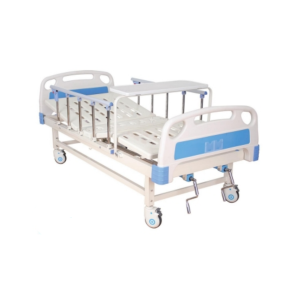
- Concealed cranks: Features like concealed or foldable cranks prevent them from being trip hazards when not in use.
- Pneumatic assist: Some models may incorporate a pneumatic cylinder assist to extend the life of the crank mechanism and make operation smoother.
Head and footboards
- Detachable and easy to clean: Look for boards made from ABS plastic that are durable, lightweight, and can be easily detached for cleaning or to assist with patient transfers.
- Bumpers: High-quality beds include bumper casters on the corners to protect walls and furniture from damage when moving the bed.
Quality and standards
Compliance with standards
- International standards: Reputable manufacturers should adhere to international medical device standards, such as ISO or CE, which certify the bed’s safety and effectiveness.
Manufacturer reputation
- Established vendors: When purchasing wholesale, it is vital to source from a reputable manufacturer or supplier with a proven track record to ensure consistent quality and access to support and warranties.
When buying wholesale, safety is non-negotiable. Here are critical features:
-
Side Rails / Guardrails
Full-length or partial aluminum folding rails help prevent accidental falls. Panels made of ABS or aluminum are common. -
Detachable Head & Foot Boards
Ease of shipment, replacement and installation. Many beds allow tool-free removal. -
Crank Mechanism Quality
Use reinforced steel cranks, ergonomic handles, possibly with gear or gas-spring assistance to ease operation. Some models feature pneumatic assist to reduce operator effort. -
Caster & Locking System
Central or individual locking brakes improve stability. Castors are often ~125 mm (5″) in diameter for hospital floors. -
Ventilated Bed Platform
Perforated steel or ABS panels allow airflow beneath mattress, reducing moisture accumulation. -
Finish & Corrosion Protection
Powder-coated or epoxy finishes protect steel frames. ABS and aluminum parts resist rust. -
Certification & Compliance
For international markets, beds often need CE, ISO13485, or local medical device registration.
4. Wholesale & OEM Supply: Advantages and Tips
When procuring 3-crank manual hospital beds in bulk, here’s what matters:
-
Factory Direct Pricing: Eliminates middlemen margin.
-
MOQ (Minimum Order Quantity): Many suppliers require lots of dozens or hundreds.
-
Customization / OEM: You can request bed dimensions, color, logos, paint, rails, etc.
-
Spare Parts Support: Ensure availability of cranks, rails, boards, hardware.
-
Quality Inspection & Samples: Always review a prototype before full production.
-
Packaging & Shipping: Flat pack, knock-down design, protective corners.
-
After-Sales Service: Guarantee frame, mechanical parts for specified years.
At Henyuan Medical, we offer flexible OEM support, spare parts availability, and global shipping for wholesale orders.
5. Sample Buyer Use Case
Use Case: A regional network of small clinics in Southeast Asia sought a reliable, economical manual bed solution. They ordered Henyuan Medical 3-crank manual hospital beds with:
-
SWL 200 kg
-
Dimensions ~ 2150 × 960 × (500–720) mm
-
Full-length folding side rails
-
Removable ABS head/foot boards
They received beds that could be locally maintained, with spare cranks available. The result was high durability, ease-of-use, and lower maintenance cost compared with motorized options.
6. Potential Challenges & How to Mitigate Them
Manufacturing and supply chain challenges
- Quality control issues: Defects in materials, welding, or the crank mechanisms can compromise patient safety and lead to product returns.
- Mitigation: Implement a rigorous quality assurance program, including on-site inspections at the factory. Perform random checks on finished beds to test functionality, durability, and weight capacity. Choose manufacturers with certifications like ISO 13485 for medical devices.
- Sourcing quality components: Sourcing substandard materials for bed frames, casters, or crank components can lead to premature wear and failure.
- Mitigation: Establish relationships with reliable, vetted suppliers for all components. Consider material testing on samples to ensure they meet specified strength and durability standards.
- Shipping and logistics damage: Beds can be damaged in transit due to their large size, weight, and multiple moving parts.
- Mitigation: Use robust packaging that secures all components. Provide clear “Fragile” and “Handle with Care” labels. Partner with experienced freight forwarders that specialize in medical equipment.
Operational and market challenges
- High storage and transport costs: Due to their bulky size, manual beds require significant warehouse space and can be expensive to ship, impacting profit margins.
- Mitigation: Explore partnerships with third-party logistics (3PL) providers that specialize in medical equipment. Offer beds with a knock-down or modular design to minimize storage and shipping volume.
- Competition from electric beds: The market is often dominated by more convenient, electrically operated beds, which may seem more attractive to some customers despite their higher cost.
- Mitigation: Emphasize the distinct advantages of manual beds, such as their reliability during power outages, lower maintenance costs, and durability. Clearly market them to target audiences like smaller clinics, home care providers, or regions with unreliable electricity.
- Price pressure from competitors: The wholesale medical equipment market is highly competitive, leading to constant pressure to offer the lowest price.
- Mitigation: Differentiate your offering with exceptional customer service, extended warranties, or bundle deals that include mattresses or overbed tables. Focus on the long-term value and low total cost of ownership of your products.
Sales and customer service challenges
- After-sales support: Handling customer inquiries, providing technical guidance, and managing warranty claims can be resource-intensive.
- Mitigation: Develop comprehensive assembly and troubleshooting guides to reduce customer service calls. Provide online tutorials or video support. Offer a tiered service package that includes technical assistance, or partner with a service provider to handle repairs.
- Difficulty with assembly and training: While simpler than electric beds, manual beds still require correct assembly and user training for safe operation.
- Mitigation: Supply clear, step-by-step assembly instructions with diagrams. Create training materials for caregivers on how to properly use the cranks and safety features.
- Managing product complexity: Variations in features, such as weight capacity or mattress compatibility, can create confusion for customers.
- Mitigation: Create a detailed product catalog that clearly outlines the specifications and features of each model. A simple online configuration tool can help customers select the right bed for their needs.
Financial and legal challenges
- Cash flow management: Large wholesale orders can strain cash flow, especially when dealing with long production and shipping times.
- Mitigation: Secure favorable payment terms with manufacturers, or negotiate a line of credit with a financial institution. Require a deposit on large orders from your customers to minimize upfront costs.
- Regulatory compliance: Ensure the beds meet all relevant medical device regulations, such as FDA or CE standards, to avoid legal issues and product recalls.
- Mitigation: Only source beds from manufacturers with the necessary certifications. Maintain a record of all compliance documents. Stay up-to-date on regulatory changes in your target markets.
- Liability for product failures: In the event of a bed failure that causes injury, your business could face significant legal liability.
- Mitigation: Carry comprehensive product liability insurance. Clearly communicate weight capacity limits and proper use to customers. Ensure all safety features, such as side rails and locking casters, are functioning properly before shipping.
-
Crank Fatigue: For extremely heavy patients, manual cranks may be difficult—some suppliers offer pneumatic or gear-assisted cranks.
-
Shipping Damage: Knock-down design helps; check boards and rails on delivery.
-
Spare Parts: Always secure spare cranks, rails, handles at order time.
-
Certification Delays: Make sure documentation (CE, ISO) is ready for regulatory compliance.
8. Final Thoughts & Buyer Checklist
To recap:
-
A 3-crank manual hospital bed allows adjustment of backrest, knee section, and height manually.
-
Key specs: dimensions, SWL, crank angles, rail system, finish, casters.
-
Wholesale buyers should ensure OEM support, spare parts supply, quality control, and regulatory compliance.
-
Henyuan Medical is positioned to supply factory-direct, customizable, durable 3-crank manual beds for global markets.
Buyer’s Quick Checklist:
-
Verify bed dimension & mattress compatibility.
-
Check SWL meets target user weight.
-
Confirm crank ranges (e.g. 0–75°, 0–40°, height range).
-
Inspect rail design—folding, locking, safety.
-
Ensure spare parts and warranty.
-
Request prototypes or sample before mass order.
-
Confirm compliance (CE, ISO) if exporting.
