

Wholesale Single Crank Manual Hospital Bed: Reliable, Affordable, and Built to Last
In the ever-evolving world of healthcare equipment, medical facilities are constantly seeking reliable and affordable solutions that balance patient comfort, nursing efficiency, and cost control. One of the most trusted products in hospital furniture is the single crank manual hospital bed — a simple yet essential piece that supports everyday patient care.
At Henyuan Medical, we specialize in the wholesale manufacture of single crank manual hospital beds, designed with precision engineering, durable materials, and ergonomic functionality. Whether for hospitals, nursing homes, or home care, our manual beds deliver unmatched reliability and value.
1. What Is a Single Crank Manual Hospital Bed?
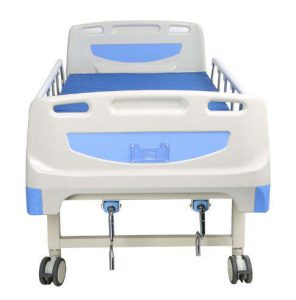
A single crank manual hospital bed is a medical bed equipped with one manual crank handle, typically located at the foot end of the frame. This crank allows caregivers to adjust the backrest angle between 0°–70°, providing comfortable positioning for patients who need to sit up, eat, or undergo certain procedures.
Compared with electric beds, the single crank manual design is:
-
Economical and easy to maintain
-
Reliable during power outages
-
Simple to operate
-
Lightweight for easy movement
The result is a cost-effective hospital bed ideal for general wards, home care, and rehabilitation centers.
-
Functionality:A single crank is used to raise or lower the head and back section of the bed.
-
Adjustments:This is the most basic type of manual hospital bed, with only one adjustment point for the backrest.
-
Height:The overall height of the bed is usually fixed, which is useful for easily moving patients in and out of the bed.
-
Cost:It is generally the most affordable type of adjustable hospital bed, making it a budget-friendly option.
-
Use:Suitable for basic patient care needs in both home and hospital settings.
2. Structural Design & Core Materials
Every Henyuan Medical single crank bed is engineered with a powder-coated steel frame for maximum durability, corrosion resistance, and hygiene. The surface finish is smooth and easy to clean — a must for maintaining a sterile hospital environment.
? Key Components Overview
| Component | Material | Features |
|---|---|---|
| Frame | Cold-rolled steel | Strong, rust-proof, long-lasting |
| Bed Surface | Mesh or punching steel board | Breathable, anti-bacterial, easy cleaning |
| Head & Foot Boards | ABS plastic | Lightweight, removable, aesthetic |
| Side Rails | Aluminum or steel foldable rails | Patient safety and easy access |
| Crank Handle | Manual mechanical system | Smooth lifting and lowering of backrest |
| Casters | 125 mm wheels with brakes | Stable and flexible movement |
| Finish | Electrostatic powder coating | Corrosion-resistant, eco-friendly |
These structural components ensure that the manual hospital bed not only meets medical-grade standards but also performs reliably for years of use.
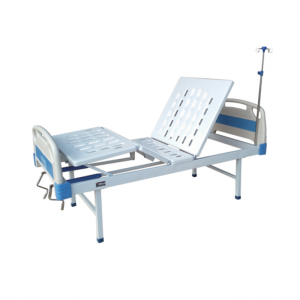
- Segmented sleeping platform: The surface is typically a four-section modular design made from cold-rolled steel. The backrest section is articulated, allowing it to be raised and lowered by a single crank.
- Stable base: The bed’s foundation uses square or tubular steel sections. Many models include wall-protection bumpers and integrated accessory sockets.
- Hand crank mechanism: The single crank is the bed’s primary control for adjusting the backrest angle. It is operated by a gearbox and a drive shaft. The system is designed to be lightweight and easy for caregivers to operate, with a two-way limit protection to prevent damage.
- Head and footboards: These are designed for quick detachment, which is necessary for emergency procedures like CPR.
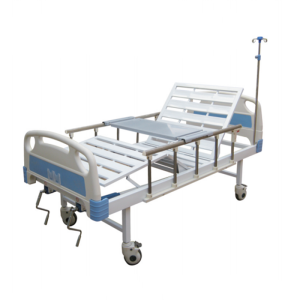
- Side rails: Collapsible or folding side rails are a key safety feature to prevent patient falls. They can be made of either aluminum alloy or stainless steel.
- Casters: Medical-grade casters are designed for silent, flexible movement and high safety. At least two of the four casters are fitted with a braking device to lock the bed securely in place.
- Bed frame and sleeping platform: Cold-rolled steel is the primary material. It provides excellent structural integrity, strength, and durability. For protection against corrosion and to meet hospital hygiene standards, the steel is finished with an electrostatic epoxy powder coating.
- Head and footboards: ABS engineering plastic is a common material choice because it is durable, impact-resistant, and easy to clean and disinfect. It can be formed in a single molding process and is often detachable for easy maintenance.
- Side rails: These can be made from either aluminum alloy for a lighter weight, or stainless steel for maximum strength and durability. Both are corrosion-resistant and easy to clean.
- Crank handle and components: Crank handles are often made from ABS plastic, while the internal drive shaft and gearbox components are made of durable steel or stainless steel for reliable, long-term use.
- Casters: High-quality casters are typically made with durable, wear-resistant thermoplastic rubber (TPR) or polyurethane (PU) to provide silent and flexible movement.
- Mattress: A specialized mattress is used with the bed. It can be a simple foam mattress or a more advanced pressure-relief surface, and it is usually designed to be antimicrobial and easy to sanitize.
3. Technical Specifications
| Specification | Description |
|---|---|
| Overall Size | 2050 × 900 × 500 mm |
| Backrest Adjustment | 0°–70° |
| Frame | Powder-coated steel |
| Bed Surface | Mesh or punching design |
| Safe Working Load | ≥ 250 kg |
| Head/Foot Board | ABS detachable |
| Side Rails | Aluminum foldable |
| Casters | 4 universal, with brake |
| Operation | Manual single crank |
| Accessories | IV pole, mattress, overbed table, bedside cabinet |
These specifications align with international hospital furniture standards and cater to global markets in Asia, Europe, and Africa.
4. Advantages of Henyuan Medical Single Crank Beds
? 1. Simplicity and Reliability
The manual crank system provides effortless adjustment without dependence on electricity. It’s ideal for remote areas or facilities with inconsistent power supply.
? 2. Affordable and Durable
Manual beds have low maintenance costs and long lifespans, making them perfect for wholesale buyers, distributors, and government healthcare projects.
? 3. Hygienic and Breathable Design
The mesh or punching bed board allows airflow, reducing heat and moisture buildup. This ensures patient comfort and hygiene — especially important for long-term care.
? 4. Safety First
Equipped with foldable aluminum side rails and ABS head/foot boards, the bed provides security for patients and easy access for caregivers.
? 5. Easy Mobility
With smooth universal casters and central lock options, the bed can be moved safely and conveniently across hospital floors.
Key advantages of single-crank beds
-
Cost-effective:Compared to electric models, single-crank beds are significantly cheaper to purchase and require no electricity to run.
-
Reliable and low maintenance:With no electrical components, there is no risk of motor failure or power loss, making them very durable and reliable with minimal maintenance needs.
-
Functional during power outages:Since they operate manually, these beds continue to function during power outages, ensuring consistent patient care.
-
Improved patient comfort:The hand cranks allow caregivers to easily adjust the patient’s position for comfort, which can include elevating the backrest to help with breathing or digestion and elevating the foot section to relieve leg swelling.
-
Promotes patient independence:Manual adjustment gives a patient the ability to change their own position with minimal effort, which can contribute to a sense of empowerment and independence.
-
Simple to operate:The straightforward design makes them easy to use and requires no specialized training, making them suitable for home or long-term care settings where trained medical staff may not be constantly present.
5. Applications in Healthcare and Home Care
Henyuan Medical’s single crank manual hospital beds are widely used in:
-
General hospital wards
-
Rehabilitation and therapy centers
-
Elderly care and nursing homes
-
Home care and private clinics
Their manual adjustability and compact structure make them ideal for small spaces while maintaining professional medical-grade performance.
Healthcare applications
- General wards: Provide a basic, adjustable bed for patients with mild symptoms requiring rest.
- Community health centers: Used for short-term bed rest and basic care.
- Small clinics: Ideal for simple diagnostic and treatment needs where electrical beds may not be necessary.
- Emergency medical settings: Offer reliable, basic bed support in temporary medical locations.
Home care applications
-
Elderly care:Supports the needs of older individuals who require long-term bed rest.
-
Long-term care:Essential for patients with chronic medical conditions that require prolonged periods in bed.
-
Post-surgery recovery:Provides a comfortable and adjustable surface to facilitate recovery after surgery.
-
Rehabilitation:Helps patients undergoing rehabilitation by allowing them to maintain proper positioning and mobility.
Benefits and features
- Adjustable positioning: The crank allows for easy adjustment of the head and foot sections to provide optimal comfort.
- Cost-effective: Generally less expensive and has lower maintenance costs compared to electric beds.
- Reliable: Lacks electrical components, removing the risk of power loss or motor failure.
- Supports circulation and breathing: Adjustable angles help improve breathing and blood circulation.
- Durable construction: Made with heavy-duty frames to provide sturdy and reliable support.
- Easy to use: The manual crank system is straightforward for caregivers to operate.
- Safety features: Can be equipped with side rails to prevent falls.
6. Case Study: Affordable Healthcare Project in South America
In 2024, a regional hospital group in South America selected Henyuan Medical as their exclusive hospital bed supplier for a 300-bed project.
The client required reliable and cost-effective beds for rural healthcare centers.
Results:
-
300 units of single crank manual mesh hospital beds delivered within 45 days
-
Positive feedback on quality and comfort
-
Maintenance-free operation for over one year
-
Future expansion planned for 500 additional units
This project demonstrates how manual hospital beds can deliver both functionality and long-term value, even in challenging environments.
7. Buying Guide: How to Choose the Right Single Crank Manual Bed
When selecting a wholesale single crank manual hospital bed, keep the following factors in mind:
| Factor | What to Check | Henyuan Medical Advantage |
|---|---|---|
| Material Quality | Cold-rolled steel frame, rust-proof coating | Industrial-grade steel, powder-coated finish |
| Bed Board Type | Mesh or punching type | Both options available |
| Safety Features | Side rails, head/foot boards | ABS & aluminum components |
| Mobility | Wheels with brake system | Central lock casters |
| Adjustability | Smooth crank operation | Ergonomic handle design |
| Accessories | IV pole, mattress, overbed table | Full customization available |
| Certification | CE, ISO | Provided upon request |
| Warranty & Support | After-sales service | Full global support |
By considering these points, hospitals and distributors can make informed purchasing decisions that balance cost efficiency and patient care.
Key factors to consider
1. Patient and usage needs
-
Patient’s weight:Ensure the bed’s weight capacity safely supports the user. Bariatric models are available if higher capacity is needed.
-
Health condition:A patient’s specific health needs will determine which features are most important. Some conditions may require features like a bed exit alarm or specific frame strength.
-
Comfort:While manual beds offer less customization, the mattress choice remains crucial for comfort.
2. Bed specifications
-
Durability:Look for beds with durable materials like a stainless steel or heavy-duty frame to ensure longevity under constant use.
-
Adjustability:Although manual, check that the bed allows for necessary adjustments to height and head/foot sections to promote proper positioning and comfort.
-
Mobility:If the bed needs to be moved, check for features like wheels with locking mechanisms for stability and safety when stationary.
3. Safety and accessories
-
Safety features:Confirm the bed has essential safety features like side rails and locking casters. Some beds may also offer optional add-ons like bed exit alarms.
-
Additional accessories:Consider if you’ll need extra equipment such as an over-bed table, IV pole attachment, or trapeze bar to assist the user and caregiver.
4. Space and budget
-
Space:Before purchasing, measure the available space to ensure the bed will fit comfortably and that there is enough room to operate it and for other necessary equipment.
-
Budget:Factor in the cost of the bed itself, as well as any necessary accessories like a mattress.
8. Wholesale Supply & Customization
As a leading hospital furniture manufacturer and exporter, Henyuan Medical provides:
-
OEM/ODM customization
-
Private label branding
-
Flexible packaging
-
Bulk order pricing
-
Global shipping and documentation
We serve a wide range of customers including distributors, importers, NGOs, and medical projects worldwide.
For bulk buyers, Henyuan Medical guarantees:
✅ Competitive factory-direct pricing
✅ Consistent quality assurance
✅ On-time delivery
✅ Technical support and spare parts supply
9. Comparing Single Crank vs. Double Crank Beds
While the single crank bed offers simplicity and affordability, it’s important to understand how it compares with two-crank manual beds:
| Feature | Single Crank Bed | Two Crank Bed |
|---|---|---|
| Adjustment | Backrest only | Backrest + Knee rest |
| Complexity | Simple | More advanced |
| Cost | Lower | Slightly higher |
| Ideal Use | Basic wards, home care | Hospitals, ICUs |
| Maintenance | Minimal | Moderate |
For many healthcare facilities focused on general care and rehabilitation, the single crank bed remains the best value-for-money choice.
10. Conclusion
The wholesale single crank manual hospital bed from Henyuan Medical represents the perfect balance of simplicity, durability, and affordability.
By combining a sturdy steel frame, breathable mesh bed board, and reliable manual crank system, these beds are ideal for both hospitals and home care environments.
If you are looking for a trusted manufacturer and wholesale supplier of manual hospital beds, Henyuan Medical offers proven quality, global reach, and dedicated after-sales support.
Contact Henyuan Medical
Henyuan Medical — Your Trusted Partner for Hospital Furniture and Patient Care Solutions.
